Modern manufacturing processes that are reshaping factory operations
What makes a manufacturing process modern?
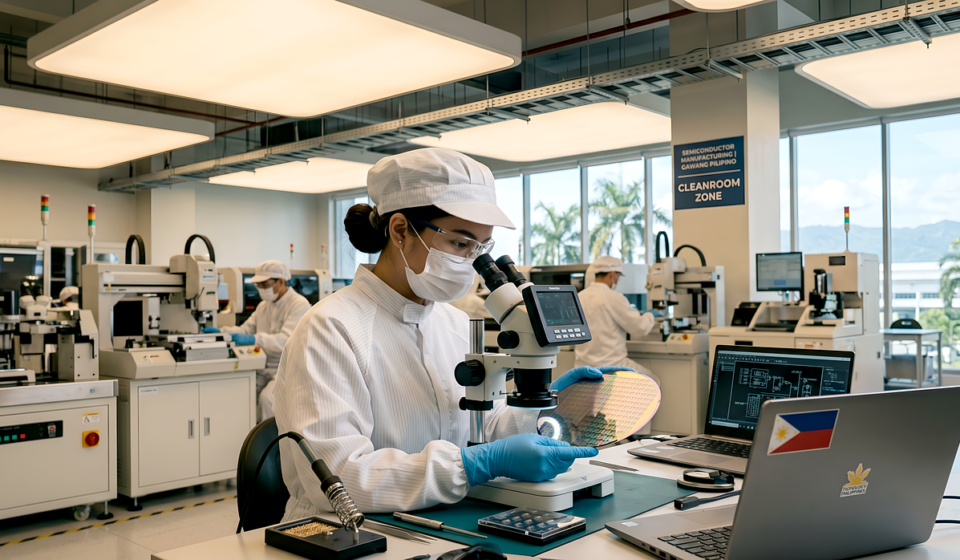
Modern manufacturing processes are not defined by a single machine, software platform, or factory slogan. They are production methods where material transformation is supported by automation, sensor data, digital planning, traceability, and faster feedback between design, production, inspection, and maintenance. A modern plant may still depend on CNC machining, forming, casting, welding, molding, or assembly. The difference is that these processes are increasingly managed through connected systems rather than isolated workstations.
The main shift is from a linear workflow to a more closed-loop operating model. Production data can inform tooling decisions, quality checks, scheduling, maintenance priorities, and future product designs. For readers comparing manufacturing processes, the practical question is not whether every plant needs the newest technology. The better question is which mix of process control, automation, material capability, and data visibility can improve quality, cost, delivery, and flexibility without adding unmanaged risk.
The core process families behind modern manufacturing
Modern production still starts with familiar process families: subtractive machining, forming, joining, molding, casting, finishing, inspection, and assembly. What has changed is how these processes are planned, controlled, measured, and connected. A CNC machining center, for example, becomes more capable when it is supported by CAM simulation, in-process probing, tool-life monitoring, and automatic inspection feedback. A stamping line becomes more resilient when press data, material variation, die wear, and quality results are reviewed together instead of separately.
This is why modern manufacturing is best understood as a layered system. The physical process creates the part. Automation improves repeatability. Sensors show what is happening during production. Software connects design, planning, execution, and quality records. Skilled operators, engineers, and maintenance teams still have to interpret the signals and decide how the process should be adjusted.
Digitally controlled machining and forming
CNC machining, laser cutting, bending, stamping, and grinding remain central to industrial production because they offer accuracy, material versatility, and well-established quality methods. The modern version adds simulation, adaptive control, digital work instructions, automated tool measurement, and production monitoring. These additions can reduce trial cuts, scrap, and unplanned downtime. They do not remove the need for tooling knowledge, fixturing discipline, stable material control, and verified programs.
Additive and hybrid manufacturing
Additive manufacturing builds three-dimensional geometry by adding material layer by layer, a definition reflected in ISO/ASTM 52900:2021. Its main role is not to replace machining, molding, or casting across mass production. Its strength is design freedom, fast iteration, complex internal features, lightweight structures, tooling aids, spare parts, and low-volume components where traditional tooling is expensive or slow.
Hybrid manufacturing combines additive and subtractive steps. A near-net-shape part may be printed, heat treated, machined, inspected, and finished within one controlled workflow. The limitation is that additive parts often still require support removal, surface finishing, process qualification, and material testing. For safety-critical applications, certification and repeatability matter as much as geometry.
Robotics and flexible automation
Industrial robots have moved well beyond repetitive welding and material handling. Vision systems, force sensing, collaborative applications, autonomous mobile robots, and flexible end-of-arm tooling now support machine tending, palletizing, inspection, dispensing, sorting, and assembly. The International Federation of Robotics reported in its World Robotics 2025 materials that global industrial robot installations reached 542,000 units in 2024, showing that automation remains a major direction for factories.
Robotics, however, is not only a productivity decision. Safety and integration must be engineered from the start. ISO 10218-1:2025 addresses safety requirements for industrial robots, while the related integration standard covers robot systems, cells, and applications. On the shop floor, risk assessment, guarding, emergency stops, safe speeds, training, and maintenance access can determine whether a robotic cell succeeds or becomes another source of disruption.
How the digital thread changes process planning
A major feature of modern manufacturing is the digital thread: the controlled flow of product and process information across design, engineering, production, inspection, service, and improvement. NIST has described smart manufacturing work in terms of cyber-physical infrastructure, sensor networks, computerized controls, production management software, and data integration across the product lifecycle.
In a traditional workflow, design data may be handed to manufacturing as drawings, programs, and work instructions. If production finds a problem, feedback can be slow, informal, or incomplete. In a digital-thread approach, CAD models, process plans, CAM programs, inspection results, nonconformance reports, and maintenance data are connected more deliberately. That connection helps teams investigate whether a quality issue is linked to design tolerance, tool wear, fixture movement, operator instruction, supplier variation, machine condition, or inspection method.
Digital twins are related, but they are not the same thing as a digital thread. A digital twin is a model that represents a product, machine, process, or production system and is updated using operational data. In manufacturing, a useful twin might simulate a machining cycle, predict the effect of line balancing, model energy use, or test changes before a live process is altered. Its value depends on data quality. A model built on incomplete or inaccurate data can create false confidence.
Modern process comparison by fit and limitation
The table below summarizes how several modern manufacturing processes typically fit into industrial operations. The purpose is not to rank them, but to clarify where each process can create value and where it needs careful control.
| Process or capability | What is modern about it | Strong fit | Key limitation |
|---|---|---|---|
| CNC machining with connected monitoring | CAM simulation, tool-life data, probing, and real-time machine status | Precision metal and plastic parts, prototypes, fixtures, production runs | Requires strong fixturing, tooling strategy, and verified programs |
| Additive manufacturing | Layer-by-layer production from digital models | Complex geometry, lightweight parts, tooling aids, low-volume spares | Post-processing, material qualification, and surface finish can add cost |
| Robotic automation | Programmable motion combined with sensing, vision, and flexible tooling | Repetitive handling, welding, palletizing, machine tending, inspection support | Needs safety engineering, stable inputs, and maintenance skills |
| Machine vision and automated inspection | Camera, sensor, and metrology data connected to quality systems | High-volume inspection, defect detection, traceability, process feedback | Lighting, part presentation, and false rejects must be controlled |
| Digital twins and simulation | Virtual models used to test products, processes, or factory layouts | Line balancing, process optimization, maintenance planning, design validation | Model accuracy depends on reliable operational data |
| Sustainable process engineering | Process choices evaluated by energy, scrap, rework, material yield, and lifecycle impact | Waste reduction, energy management, remanufacturing, circular design | Benefits must be measured with consistent boundaries and data |
Why data quality matters more than technology labels
Many factories now collect more data than they can use. Machine logs, operator entries, quality measurements, maintenance tickets, supplier records, and enterprise systems may all describe the same process from different angles. If these records are inconsistent, disconnected, or poorly governed, advanced analytics will struggle to produce reliable decisions. See also: buying guides.
Data readiness is therefore a manufacturing issue, not only an information technology issue. Part numbers, revision levels, machine IDs, tooling records, inspection plans, scrap codes, and operator instructions must be standardized enough to support analysis. Without that foundation, a plant may know that yield is falling but still be unable to tell whether the cause is material variation, tool wear, machine drift, operator training, or a design change.
Deloitte’s 2026 Manufacturing Industry Outlook reported that many manufacturing executives planned significant investment in smart manufacturing initiatives, with attention to foundational tools and technologies. Rockwell Automation’s 2026 State of Smart Manufacturing findings also pointed to growing use of AI-augmented operations in quality, cybersecurity, and process optimization. These surveys indicate direction, but they should not be read as proof that technology alone delivers results. Practical value comes from solving defined production problems with measurable baselines.
Risks that manufacturers should manage before scaling
Modern manufacturing processes introduce new dependencies. A connected machine can provide valuable production data, but it can also expand the cybersecurity surface of the factory. A robotic cell can improve repeatability, but it may fail if upstream variation is not controlled. An additive process can shorten development time, but it may require new inspection plans and material qualification. A digital twin can improve decisions, but only if its assumptions are checked against real production behavior.
Cybersecurity is especially important because operational technology environments include PLCs, SCADA systems, industrial networks, sensors, drives, and machine controllers. NIST’s manufacturing cybersecurity guidance has long emphasized that manufacturing security must consider physical process reliability, safety, and production continuity, not only data confidentiality. For a connected production line, downtime can quickly become a quality, delivery, and safety problem.
Workforce capability is another constraint. Modern manufacturing does not remove people from the process; it changes what people need to understand. Operators may need to interpret dashboards, confirm automated inspection results, respond to alarms, and follow digital work instructions. Maintenance teams may need skills in robotics, networks, sensors, drives, and software. Engineers may need to connect design intent with process capability and inspection evidence.
A practical adoption roadmap
Manufacturers can reduce risk by treating modernization as process improvement rather than technology shopping. A disciplined roadmap usually starts with a specific operational problem and moves toward scalable capability.
- Define the process problem. Start with measurable issues such as scrap, rework, downtime, late delivery, long setup time, labor bottlenecks, or inconsistent inspection results.
- Map the current workflow. Document material flow, data flow, decision points, handoffs, machines, inspection steps, and failure modes.
- Check data readiness. Verify whether part numbers, revisions, machine records, quality results, and maintenance data are consistent enough to support decisions.
- Select the smallest useful pilot. A pilot should prove a process improvement, not simply demonstrate a device. Define baseline performance before implementation.
- Engineer safety and cybersecurity early. Risk assessment, access control, backup plans, network segmentation, and recovery procedures should be part of the design.
- Train for the new work. Operators, maintenance technicians, quality teams, and engineers need practical training tied to the changed process.
- Scale only after measurement. Expand when the pilot shows repeatable improvement in quality, throughput, cost, flexibility, safety, or reliability.
This approach keeps attention on manufacturing outcomes. One company may find that a low-cost sensor program and better inspection feedback create more value than a large automation project. Another may discover that robotics is justified only after standardizing pallets, fixtures, part presentation, and upstream quality. The right answer depends on product mix, tolerance requirements, labor availability, volume, material behavior, and customer expectations.
Frequently asked questions
What are examples of modern manufacturing processes?
Examples include connected CNC machining, additive manufacturing, hybrid additive-subtractive workflows, robotic assembly, machine vision inspection, digital twin simulation, automated material handling, smart welding, and data-driven quality control. Many plants combine these with traditional processes rather than replacing everything at once.
Is additive manufacturing replacing CNC machining?
No. Additive manufacturing is valuable for complex geometry, rapid iteration, lightweight structures, and low-volume parts, but CNC machining remains important for precision, surface finish, material removal, tooling, and production parts. In many workflows, additive and CNC processes are complementary.
Why is the digital thread important in manufacturing?
The digital thread connects product and process information across design, planning, production, inspection, and service. It helps teams trace problems faster, compare planned performance with actual production, and use shop-floor evidence to improve future designs and process plans.
What is the biggest challenge in adopting modern manufacturing processes?
The biggest challenge is often not the technology itself. It is the combination of data quality, process discipline, workforce skills, safety engineering, cybersecurity, and change management. Modern systems only create value when they are connected to a clear manufacturing problem and measured against real performance.