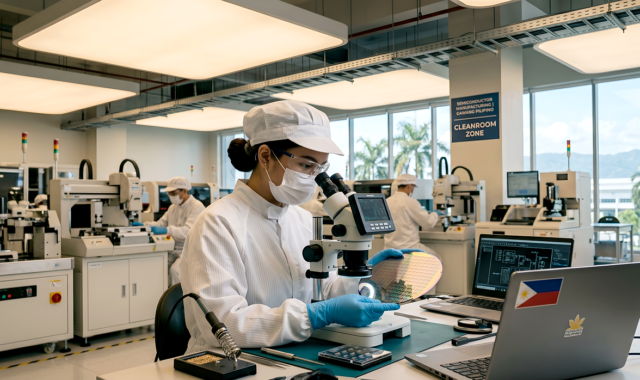
Innovative manufacturing processes that are reshaping modern production
Why process innovation now means connected manufacturing
Innovative manufacturing processes are no longer just a faster machine, a new cutting tool, or one automated cell added to an existing line. The larger shift is that production methods are now being linked with data, sensors, simulation, robotics, and energy management. A factory may still depend on machining, forming, casting, welding, molding, or assembly, but the way those processes are planned, controlled, verified, and improved is changing. Recent public sources, including NIST manufacturing research, the International Federation of Robotics, Deloitte manufacturing surveys, the International Energy Agency, and the U.S. Department of Energy, show a clear direction: process innovation is becoming more digital, more automated, and more constrained by quality, interoperability, workforce, and energy requirements.
For readers following manufacturing processes, the useful question is not whether every factory should adopt every new technology. It is which process changes solve measurable production problems, such as shorter lead time, lower scrap, faster changeover, better traceability, safer work, or lower energy intensity.

The main categories of innovative manufacturing processes
The following process categories are attracting attention because they change how parts are made, how production systems are controlled, or both. In practice, they often overlap. An additive manufacturing line, for example, may use digital twins for qualification, robotic handling for post-processing, and AI models for process monitoring.
Additive manufacturing for complex, low-volume, and lightweight parts
Additive manufacturing builds three-dimensional parts by adding material layer by layer, rather than removing material from a block or shaping it through a tool. ISO/ASTM 52900:2021 provides the current international vocabulary for additive manufacturing and defines the technology around this additive shaping principle. In production, the value is not simply that parts can be 3D printed. The stronger case appears when the process enables geometry, part consolidation, weight reduction, or short-run flexibility that would be difficult or uneconomic with conventional methods.
Even then, additive manufacturing is not a universal replacement for machining, casting, or molding. Build rate, material qualification, surface finish, dimensional repeatability, heat treatment, inspection, and post-processing can all limit the business case. For manufacturers, the practical question is whether additive manufacturing reduces total production complexity, not just whether it can produce a visually impressive part.
Hybrid manufacturing that combines additive and subtractive steps
Hybrid manufacturing combines processes such as directed energy deposition, milling, grinding, laser processing, and inspection within one workflow or production cell. It can be useful when a part needs near-net-shape deposition followed by precision finishing, or when repair and remanufacturing are more economical than producing a component from new stock.
The challenge is coordination. A hybrid process must control heat input, residual stress, machining allowance, tool access, datum strategy, and inspection sequence. Without a strong digital thread, hybrid manufacturing can become harder to validate than a conventional route. This is why hybrid production is often discussed together with digital twins, in-process sensing, and automated inspection.
AI-enabled process control and inspection
Artificial intelligence and machine learning are increasingly applied to production data, sensor signals, machine vision, tool wear prediction, anomaly detection, and scheduling. NIST’s 2026 Roadmap on Artificial Intelligence and Machine Learning for Smart Manufacturing identifies several areas where AI is already enabling advances, including industrial big data analytics, advanced sensing and perception, autonomous systems, additive and laser-based manufacturing, digital twins, robotics, logistics optimization, and sustainable manufacturing.
That does not mean AI can be added casually to any production line. Manufacturing data is often noisy, fragmented, machine-specific, and shaped by undocumented operator decisions. A useful model needs stable measurement, clear labels, known process limits, cybersecurity controls, and a plan for what happens when the model is uncertain. In high-tolerance manufacturing, an explainable and auditable process improvement is usually more valuable than a black-box prediction.
Digital twins for process planning and lifecycle control
A digital twin is a fit-for-purpose digital representation of a physical asset, process, or system. In manufacturing, it may model a machine tool, robot cell, additive build, assembly line, heat treatment process, or entire production flow. The intended value is better design, simulation, monitoring, and lifecycle management.
NIST’s 2026 Digital Twins Workshops Summary Report emphasized both the potential and the barriers. The report highlighted opportunities to improve design, production, and lifecycle management, while also identifying persistent challenges in interoperability, verification, validation, uncertainty quantification, cybersecurity, and workforce readiness. This distinction matters. A digital twin that cannot be validated against real process data is only a model. A digital twin that supports decisions must have known assumptions, traceable data, and a defined accuracy requirement.
Advanced robotics and flexible automation
Robotics continues to expand beyond high-volume automotive welding and material handling. Modern robot applications include machine tending, inspection, packaging, intralogistics, polishing, deburring, palletizing, and collaborative assembly. The International Federation of Robotics reported in its World Robotics 2025 data that industrial robot installations in the Americas exceeded 50,000 units in 2024 for the fourth consecutive year, although the regional total was down from 2023. The same report listed 34,200 installations in the United States in 2024, down 9% from the previous year.
This mixed picture is important. Robotics adoption is not a straight upward line in every region or sector. It depends on capital budgets, labor availability, system integrator capacity, product mix, and the difficulty of automating variable tasks. Flexible automation is strongest when the process is repeatable enough to control and valuable enough to justify the engineering effort.
Electrified, efficient, and circular process routes
Energy and material efficiency are now part of manufacturing process innovation. The International Energy Agency’s Energy Efficiency 2025 analysis reported that industry accounts for nearly 40% of global final energy consumption, with energy-intensive industries responsible for about three-quarters of industrial demand. This makes process heat, motors, compressed air, drying, melting, curing, and material waste central production issues, not only sustainability topics.
The U.S. Department of Energy’s Industrial Decarbonization Roadmap identifies energy efficiency, industrial electrification, low-carbon fuels and feedstocks, carbon capture, and material efficiency as major decarbonization pathways. For process engineers, that can translate into improved thermal management, advanced heat pumps, induction or radiative heating, better scheduling, waste heat recovery, recycling loops, lightweight design, and analytics that reduce off-spec production.
How these processes change factory decision-making
Innovative processes change more than the production step itself. They affect design rules, supplier qualification, workforce skills, quality systems, maintenance strategy, and cost accounting. A part designed for casting may not fully benefit from additive manufacturing unless the design is rethought. A robot cell may not improve throughput if upstream material presentation is inconsistent. A digital twin may not reduce downtime if the factory lacks reliable asset data.
Deloitte’s 2025 Smart Manufacturing and Operations Survey, based on 600 executives from large manufacturing companies with U.S. headquarters or operations, reported that 92% of respondents believed smart manufacturing would be the main driver of competitiveness over the following three years. The same survey reported average self-reported impacts including 10% to 20% improvement in production output, 7% to 20% improvement in employee productivity, and 10% to 15% in unlocked capacity after smart manufacturing initiatives. These figures should be read as survey results, not universal guarantees, but they help explain why manufacturers are prioritizing connected operations. See also: buying guides.
The investment question is therefore shifting from simply buying equipment to building capability. Equipment still matters, but the enabling layer often includes data architecture, process measurement, operator training, cybersecurity, maintenance planning, and management discipline. A new process that cannot be measured, maintained, or qualified will struggle to scale.
A practical comparison of process options
| Process approach | Where it can add value | Main limitation to check |
|---|---|---|
| Additive manufacturing | Complex geometry, lightweight structures, tooling, prototypes, spare parts, low-volume production | Qualification, surface finish, build speed, material consistency, post-processing |
| Hybrid manufacturing | Repair, near-net-shape parts, high-value components, combined deposition and finishing | Thermal distortion, process sequencing, inspection strategy, machine utilization |
| AI-enabled control | Anomaly detection, inspection, predictive maintenance, parameter optimization | Data quality, model drift, explainability, cybersecurity, operator trust |
| Digital twins | Simulation, line balancing, qualification support, lifecycle analysis, change validation | Interoperability, validation, uncertainty, data governance, maintenance effort |
| Robotics and flexible automation | Machine tending, handling, repetitive assembly, inspection, packaging, safer work cells | Part variability, fixturing, programming time, integration cost, changeover needs |
| Electrified and efficient process routes | Process heat, curing, drying, melting, material efficiency, emissions reduction | Electricity cost, power availability, temperature requirements, retrofit complexity |
Implementation risks that are easy to underestimate
The first risk is qualification. A process that works once in a pilot may still fail when it faces production variation, supplier changes, machine wear, or operator turnover. Qualification requirements are especially important in aerospace, medical devices, energy equipment, automotive safety parts, and precision machinery.
The second risk is interoperability. Many factories run a mix of old and new equipment, proprietary machine controls, spreadsheets, enterprise systems, and manual records. Without a practical data model, digital manufacturing projects can become isolated dashboards instead of process improvements.
The third risk is cybersecurity. Connected equipment, remote monitoring, cloud analytics, and supplier data exchange create new attack surfaces. NIST’s digital twin work repeatedly points to cybersecurity as a condition for trustworthy scaling, not an optional add-on.
The fourth risk is workforce readiness. Innovative manufacturing processes often require technicians who understand both physical production and digital systems. A machinist, quality engineer, maintenance technician, or robot programmer may need new skills in data interpretation, sensor calibration, simulation outputs, or automated inspection routines.
The fifth risk is the boundary of the calculation. A process may reduce machining scrap but require more energy-intensive post-processing. A robot may reduce manual handling but increase fixture cost. Additive manufacturing may shorten lead time for one part while creating bottlenecks in powder handling, heat treatment, or inspection. Strong decisions compare the total route, not a single operation.
How manufacturers can evaluate a new process before scaling
A disciplined evaluation starts with the production problem, not the technology name. The most useful questions are specific: Which defect mode should decrease? Which bottleneck should move? Which manual task should be safer? Which lead-time step should be removed? Which material loss should be reduced?
- Define the target metric. Use measurable outcomes such as scrap rate, first-pass yield, changeover time, machine utilization, energy per part, or inspection cycle time.
- Map the current route. Include design, procurement, setup, production, inspection, rework, post-processing, packaging, and data recording.
- Test the new process at the constraint. A pilot should be placed where it affects the real bottleneck, not where it is easiest to demonstrate.
- Plan qualification early. Define tolerances, inspection methods, material requirements, and approval responsibilities before the pilot produces parts.
- Calculate total cost and risk. Include tooling, software, training, maintenance, cybersecurity, energy, consumables, downtime, and integration.
- Decide whether to scale, revise, or stop. A failed pilot can still be valuable if it shows why the process does not fit the product mix.
For many manufacturers, the strongest near-term opportunity is not a fully autonomous factory. It is a focused process improvement supported by better measurement, better data flow, and a clear business case. That may be a robot tending a high-utilization machine, a digital twin used to validate a line change, additive tooling that shortens a fixture lead time, or process analytics that reduce repeat defects.
Frequently asked questions
What are innovative manufacturing processes?
They are production methods or process-control approaches that improve how products are made. Examples include additive manufacturing, hybrid manufacturing, AI-enabled process control, digital twins, advanced robotics, electrified process heating, and circular material flows.
Are innovative processes only for large manufacturers?
No. Large companies may have more capital for full smart factory programs, but smaller manufacturers can adopt targeted improvements such as machine monitoring, additive fixtures, automated inspection, collaborative robots, or energy-efficiency upgrades. The key is to match the process to a measurable production problem.
Is additive manufacturing replacing traditional manufacturing?
In most cases, additive manufacturing complements rather than replaces conventional processes. It is strongest where design complexity, low volume, lightweighting, rapid iteration, or spare-part flexibility justify the cost and qualification effort.
Why are digital twins important in manufacturing?
Digital twins can help manufacturers simulate, monitor, and improve production systems before or during physical operation. Their value depends on trustworthy data, validation, uncertainty management, and integration with real decision-making workflows.
What is the biggest barrier to adopting new manufacturing processes?
The biggest barrier is often not the technology itself. It is the combination of qualification requirements, data quality, integration with existing equipment, cybersecurity, workforce capability, and unclear return on investment.