How to choose a laser cutting machine for metal fabrication
Start with the job, not the laser source
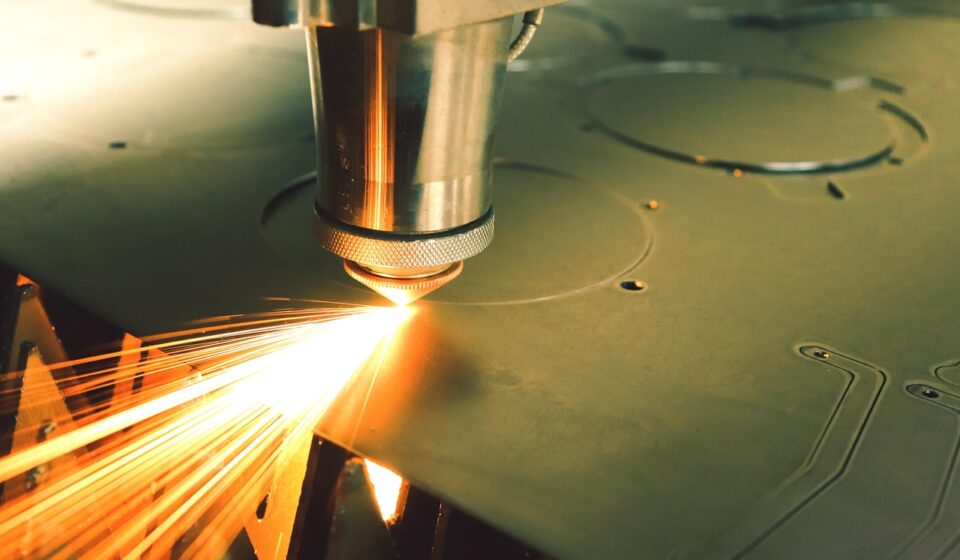
Choose a laser cutting machine around the parts you need to produce every week: material, thickness, tolerance, edge requirement, batch size, and the finishing steps that follow cutting. For most sheet metal fabricators, the first question is not simply fiber versus CO2. It is whether the machine can handle the daily material mix at the required quality and cost without creating bottlenecks in gas supply, loading, nesting, extraction, maintenance, or safety control.
A low purchase price can become expensive if the machine needs constant operator intervention, uses assist gas inefficiently, lacks reliable service support, or cannot hold cut quality across the thickness range that drives revenue. Before requesting quotes, define the work in measurable terms. List the top five materials by monthly volume, the thickness range for each, the largest sheet size, the smallest hole diameter, typical tolerances, required edge condition, and whether parts go directly to welding, bending, coating, or assembly.
That information becomes the purchasing brief. It also helps avoid a common mistake: buying on maximum advertised thickness when most production hours are spent on thinner material.
For more machinery procurement articles, visit the buying guides section.
Match the laser type to your material mix
Industrial cutting systems commonly use fiber or CO2 laser sources. Tube lasers, 3D laser cells, and laser-punch combinations serve more specific production needs. Public technical guidance from organizations such as TWI and major machine builders consistently shows that the laser source, wavelength, optics, assist gas, and material absorption all affect the final cutting result.
| Machine type | Typical fit | Key advantages | Watch points |
|---|---|---|---|
| Fiber laser cutting machine | Sheet metal production, especially stainless steel, mild steel, aluminum, brass, and copper depending on machine specification | High speed on thin to medium sheet, efficient beam delivery, strong fit for reflective metals when properly specified | Gas supply, piercing strategy, optics protection, and operator training become more important as power increases |
| CO2 laser cutting machine | Non-metal materials and some legacy sheet metal applications | Useful for materials such as acrylic, wood, textiles, glass, and plastics where appropriate | Less common for new sheet metal production lines than fiber; requires careful maintenance of beam path and optics |
| Tube or pipe laser | Round, square, rectangular, and profile tube fabrication | Combines cutting, hole making, slotting, and notching in one workflow | Chuck capacity, loading length, profile library, seam detection, and support of long workpieces must be checked |
| Laser-punch combination | Parts requiring laser contours plus formed features, louvers, embosses, or repeated holes | Can reduce secondary operations for suitable sheet metal parts | More complex programming, tooling, maintenance, and capital planning |
If the workload is mainly carbon steel, stainless steel, and aluminum sheet, a fiber laser will usually be the first machine to evaluate. If the work is signage, acrylic displays, wood, leather, paper, or textiles, a CO2 system may still be more relevant. If you cut both metal and organic non-metals, do not assume one machine can process everything safely and efficiently. Confirm material compatibility with the machine builder, especially for coated, laminated, painted, or unknown materials.
Choose power by production thickness, not headline thickness
Laser power affects cutting speed, piercing ability, thickness range, and process stability. Higher power, however, is not automatically the best choice. A shop cutting mostly thin stainless steel may benefit from faster processing. A shop cutting occasional thick plate may find that material handling, gas consumption, pierce time, and edge cleanup limit the gain. The practical question is simple: what thickness will the machine cut every day, and what quality must it hold?
Use three thickness groups when comparing machines:
- Core thickness: the thickness range that represents most paid production hours.
- Occasional thickness: work that appears regularly but does not define machine utilization.
- Maximum thickness: the upper limit needed for rare jobs, prototypes, or emergency work.
Quotes often highlight maximum cutting capacity, but maximum thickness is usually slower, more sensitive to setup, and more dependent on gas quality, nozzle condition, focus control, and plate condition. Ask suppliers for cutting data on your core thicknesses, not only a catalog maximum. A useful comparison should include material grade, thickness, assist gas, nozzle type, pressure, feed rate, pierce method, estimated gas consumption, kerf width, and expected edge condition.
Power selection also affects the rest of the factory. High-power fiber lasers can process material quickly enough that loading, unloading, part sorting, deburring, bending, and inspection become the constraint. If downstream operations cannot keep up, extra laser capacity may sit idle. In that case, automation or better scheduling may create more value than simply buying more kilowatts.
Evaluate bed size, motion system, and cutting quality
The working area should match your sheet purchasing formats and nesting strategy. A 3000 mm by 1500 mm table is common in sheet metal fabrication. Larger formats can reduce remnant handling and improve yield if suppliers deliver large sheets and the shop has enough space for the machine, shuttle table, extraction unit, gas equipment, and maintenance access. For small batches and frequent material changes, ease of loading can matter as much as bed size.
Cutting quality depends on more than the laser source. The motion system, machine frame, drives, focusing head, nozzle alignment, height control, piercing strategy, software database, and operator discipline all contribute. When evaluating sample cuts, do not check only the top surface. Inspect the bottom edge, dross, taper, heat affected zone, corner detail, hole roundness, small slot accuracy, and consistency across the sheet.
For parts that go to press brake forming, also check whether burrs or thermal marks could affect tooling, bending accuracy, or coating quality. A practical sample test should use your own drawings and materials. Include at least one dense nest, one part with small holes, one long contour, one sharp internal corner, and one part that represents your normal tolerance requirement.
Ask the supplier to record the actual settings used during the test. If the sample is produced by an expert technician under ideal conditions, ask what changes are needed for a normal operator to repeat the result on your shop floor.
Plan assist gas, extraction, and utilities early
Assist gas is a major operating factor in laser cutting. Oxygen is widely used for cutting mild and low-alloy steels because it reacts with hot iron and adds heat to the process. Nitrogen is commonly used where an oxide-free edge is required, such as stainless steel, aluminum, or parts going directly to high-quality finishing. Compressed air can reduce gas cost in suitable applications, but edge appearance, oxidation, moisture control, and downstream coating requirements must be tested.
The machine quote should not be separated from the gas plan. Confirm whether you will use cylinders, bulk liquid supply, a nitrogen generator, an oxygen system, or high-quality compressed air. Each option has cost, purity, pressure, flow, floor space, maintenance, and safety implications. A high-power machine may expose weak points in pipe sizing, regulators, dryers, compressors, filters, and storage. Ask for expected gas consumption for your material mix rather than relying on general claims.
Fume extraction is equally important. OSHA laser hazard guidance notes that high-power laser systems can create beam, skin, fire, and airborne contaminant hazards. The actual fume risk depends on material, coating, cutting parameters, and enclosure design. Cutting galvanized, painted, oily, or coated metals can require additional evaluation. Plastics and unknown materials should not be processed without confirming that fumes, residues, and fire risks can be controlled.
In purchasing terms, the extraction unit, ducting, filters, spark protection, airflow monitoring, and maintenance schedule are part of the machine package, not optional afterthoughts. Utility planning should also cover electrical capacity, chiller requirements, shop air quality, floor loading, ambient temperature, humidity, dust, network access, and safe service clearance. A machine that fits on the layout drawing may still fail as a project if the building cannot support it without costly upgrades. See also: factory planning.
Check automation, software, and shop integration
Automation should be justified by production flow, not by appearance. A shuttle table may be enough for one-shift, low-mix production. An automatic loader, tower, sorting system, or flexible manufacturing cell can be valuable when the laser would otherwise wait for material handling. The more powerful the laser, the more important it becomes to prevent idle time between nests.
Software is a major part of the buying decision. Nesting efficiency affects material yield, while programming databases affect repeatability. Check whether the software supports common CAD formats, automatic nesting, remnant management, lead-in control, micro-joints, common-line cutting, bevel or tube modules if needed, barcode workflows, and integration with ERP or production scheduling systems. If operators must manually rebuild parameters for every job, the machine will not perform like the demonstration.
Service access matters as much as software features. Ask how cutting parameters are updated, whether remote diagnostics are available, what data can be exported, and how user permissions are managed. In multi-shift shops, traceability of parameter changes can help identify whether quality issues come from material variation, nozzle damage, gas pressure, programming, or operator adjustment.
Review safety and compliance before signing
Laser cutting machines are not ordinary cutting tools. In the United States, FDA laser product performance requirements are covered under 21 CFR 1040.10, while OSHA guidance identifies Class 4 lasers as serious eye, skin, reflection, fire, and airborne contaminant hazards. ANSI Z136.1-2022 is widely used as a laser safety reference, and ISO 11553-1:2020 addresses laser radiation hazards and safety requirements for laser processing machines. As of September 2026, ISO 11553-2:2026 is also relevant when evaluating hand-held or hand-operated laser processing machines.
For an enclosed industrial laser cutting machine, review interlocks, viewing windows, access doors, emergency stops, key control, warning labels, beam containment, fire detection or suppression options, fume extraction, and maintenance procedures. The goal is not only to satisfy a checklist. It is to prevent unsafe access during cutting, cleaning, alignment, troubleshooting, and service.
Ask the supplier for documentation in plain language: operation manual, maintenance schedule, recommended personal protective equipment, laser classification information, electrical diagrams, spare parts list, training plan, and service response terms. If the machine is imported, confirm who is responsible for installation, commissioning, compliance documentation, warranty service, and replacement parts in your country.
Use total cost of ownership to compare quotes
The purchase price is only one part of the decision. A realistic total cost comparison should include the machine, laser source, chiller, extraction, compressor or gas system, software licenses, installation, freight, rigging, operator training, spare nozzles, lenses, protective windows, filters, maintenance contracts, electricity, gas, floor space, and downtime risk.
Create a side-by-side worksheet for each supplier:
- Core materials and thicknesses tested with your drawings
- Estimated cutting time per representative nest
- Assist gas type, pressure, purity, and expected consumption
- Edge quality requirements and expected secondary finishing
- Automation level and loading/unloading labor
- Software capability and post-processor support
- Safety documentation and applicable standards
- Local service availability and guaranteed response terms
- Consumable prices and normal replacement intervals
- Building upgrades required before installation
The strongest quote is usually the one that explains assumptions clearly. Be cautious when a supplier promises broad material capability without sample data, avoids gas consumption details, or treats extraction and safety as afterthoughts. For a production shop, the right machine is the one that can repeatedly deliver acceptable parts at the required cost with manageable risk.
Frequently asked questions
Is a fiber laser cutting machine better than a CO2 laser?
For most modern sheet metal fabrication, fiber is usually the first option to evaluate because it performs well on common metals and is widely used in new production systems. CO2 remains relevant for many non-metal materials and some legacy applications. The better choice depends on material mix, thickness, edge requirement, maintenance capability, and budget.
How much laser power do I need?
Choose power based on the thickness range you cut most often, not the thickest plate listed in a brochure. Ask suppliers to cut your own parts and provide cutting data for your core materials. Higher power can increase throughput, but it may also require better gas supply, extraction, automation, and process control.
What assist gas should I plan for?
Oxygen is commonly used for carbon steel, nitrogen for stainless steel and aluminum when an oxide-free edge is required, and compressed air for selected cost-sensitive applications. The right choice depends on material, thickness, finish requirement, coating process, and the machine builder’s cutting database.
What should I test before buying?
Test real drawings, real material, and real thicknesses. Include small holes, sharp corners, long contours, dense nesting, and the edge quality required by downstream processes. A useful test records the settings, gas use, cut time, and any finishing required after cutting.
What safety documents should come with the machine?
Request the laser classification, operation manual, maintenance procedures, interlock information, warning label details, training plan, recommended protective measures, electrical documentation, and guidance for fume extraction and fire risk control. These documents should be reviewed before installation, not after production begins.