How to choose a drill machine for home use
Quick answer for home buyers
A drill machine for home use should match the material you drill most often, the accuracy you need, and how frequently the tool will be used. For most households, a cordless drill/driver is the most flexible first purchase. It can drill pilot holes, drive screws, assemble furniture, hang shelves, and handle light repair work. If you regularly drill concrete, brick, or block, choose a hammer drill instead. If you need straight, repeatable holes in wood, plastic, or metal parts, a benchtop drill press is usually a better fit than a hand-held drill.
Motor power is only one part of the decision. Chuck size, speed control, torque settings, battery platform, bit quality, work holding, and safety features often have a bigger effect on day-to-day results. For readers comparing small workshop equipment, the machine tools category also covers related equipment and machining topics.
What does drill machine mean for home use?
In consumer searches, drill machine often means any powered drilling tool used around the house. In a workshop or manufacturing context, the same term may also include drill presses and other fixed drilling machines. That distinction matters because a compact cordless drill and a benchtop drill press are designed for different jobs.
A hand-held drill is portable and useful when the workpiece cannot be moved, such as a wall, cabinet, door frame, deck board, or assembled furniture. A drill press keeps the spindle on a fixed vertical path, which improves repeatability and helps produce cleaner perpendicular holes. It also allows the workpiece to be clamped to a table, an important point when drilling metal or small parts.
For home users, the practical question is not which type is universally better. It is which task comes up most often. Hanging pictures, driving screws, and assembling flat-pack furniture point toward a drill/driver. Installing anchors into masonry points toward a hammer drill. Making accurate holes in a hobby workshop points toward a small drill press.
Main types of drill machines for home projects
Cordless drill/driver
A cordless drill/driver is usually the most practical starting point. It combines drilling and screwdriving, normally includes a clutch for torque control, and runs on a rechargeable battery. The clutch helps reduce stripped screws and overdriven fasteners, especially in softwood, cabinet hardware, and furniture assembly.
For home use, look for variable speed, forward and reverse control, an adjustable clutch, a comfortable grip, and a battery system that can support future tools. A compact model may be easier to control than a high-power model if most jobs are light-duty. In apartments, storage space and noise are also worth considering.
Corded drill
A corded drill is useful when long run time matters more than portability. It does not require battery charging and can be cost-effective for occasional heavy drilling in wood or metal. The trade-off is the power cord, which limits movement and can create a trip or snag hazard in a crowded workspace.
For home use, a corded drill can make sense in a garage workshop where outlets are close to the bench. It is less convenient on ladders, outdoors, or in rooms where extension cords would cross walkways.
Hammer drill
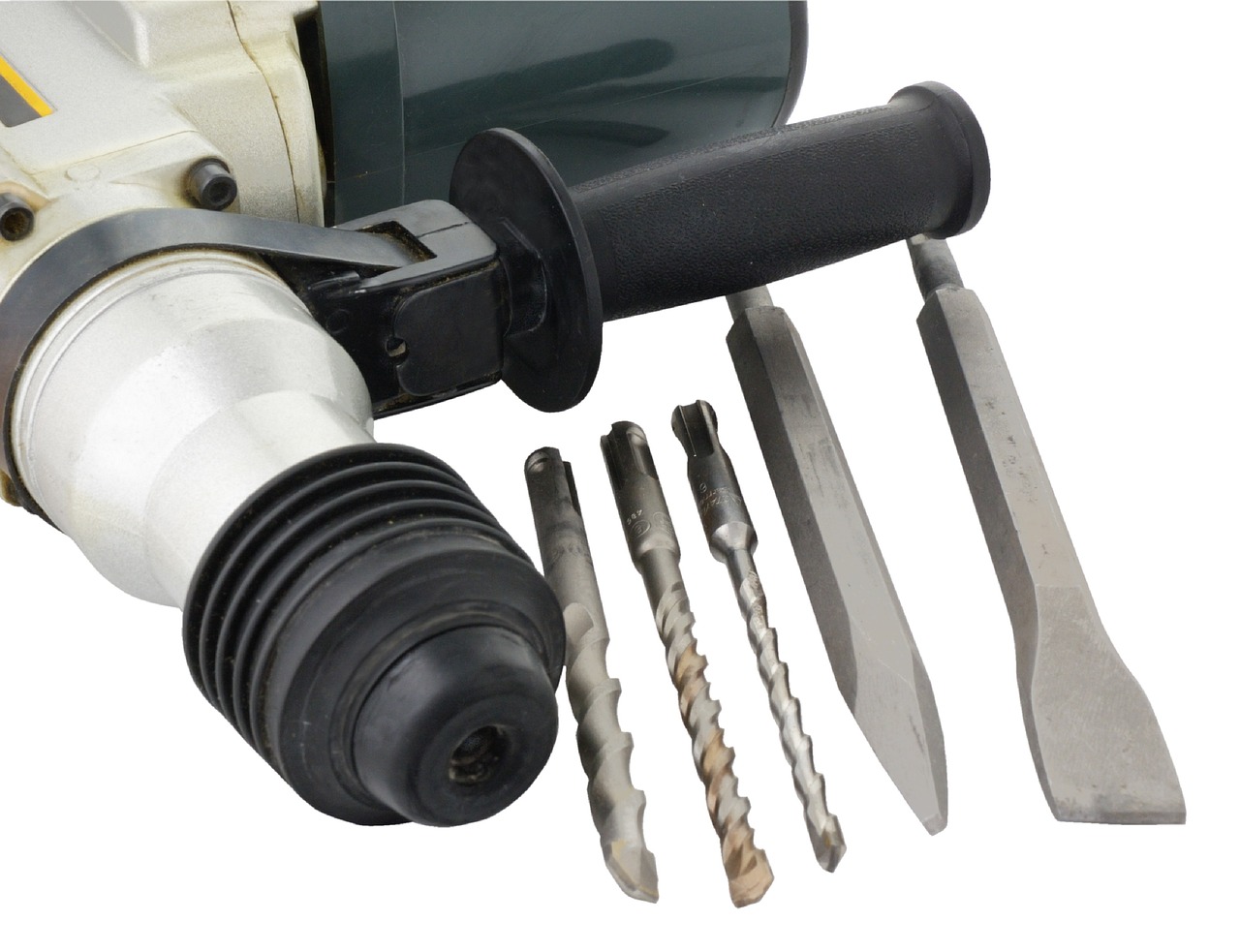
A hammer drill adds a rapid forward hammering action to rotation. This helps the bit break up brittle masonry materials such as brick, concrete block, and some concrete surfaces. It is not the same as a rotary hammer, which is typically heavier and designed for more demanding concrete work.
If your projects include curtain rods on concrete walls, masonry anchors, or exterior fixtures on brick, a hammer drill is worth considering. If you mostly work with wood, drywall, plastic, and light metal, a standard drill/driver may be easier to use and less expensive.
Impact driver
An impact driver is excellent for driving screws and bolts, but it is not a direct replacement for a drill machine. It uses rotational impacts to drive fasteners with high torque and usually accepts hex-shank accessories. It can drill with compatible bits, but it is less precise than a drill/driver and typically does not offer the same clutch control.
A useful home setup is a drill/driver for holes and delicate screws, plus an impact driver for long screws, deck screws, or tougher fastening work. If you are buying only one tool, choose a drill/driver first unless fastening is the main task.
Benchtop drill press
A benchtop drill press is a stationary machine for controlled drilling. It is better for repeated holes, perpendicular drilling, countersinking, and some hobby or repair tasks involving metal, wood, or plastic. Because the workpiece can be clamped and the spindle path is fixed, the result is usually more consistent than hand drilling.
The limitations are space, weight, setup time, and reduced portability. A drill press is not useful for holes in walls or assembled structures. It also requires careful guarding, work holding, speed selection, and bit management because rotating parts and chips can cause injury.
Comparison table for common home tasks
| Home task | Recommended tool | Why it fits | Important limitation |
|---|---|---|---|
| Assembling furniture | Cordless drill/driver | Adjustable clutch helps control screw depth | Too much torque can strip screws or damage panels |
| Hanging shelves in drywall or wood studs | Cordless drill/driver | Good for pilot holes, screws, and light anchors | Use correct anchors and avoid hidden wiring or pipes |
| Drilling brick or concrete block | Hammer drill | Hammer action improves masonry drilling | Not ideal for large concrete holes or demolition work |
| Driving long screws | Impact driver | High fastening torque with less wrist strain | Less precise for clean holes and delicate screws |
| Repeated vertical holes in small parts | Benchtop drill press | Better alignment and repeatability | Requires clamping, setup, and workshop space |
| Occasional heavy drilling near an outlet | Corded drill | Continuous power without battery changes | Cord management affects safety and convenience |
Key specifications that actually matter
Voltage and battery platform
Voltage is often treated as a simple power ranking, but it should be considered alongside tool size, motor design, battery capacity, and intended duty. A compact 12 V class drill may be enough for furniture, light repairs, and pilot holes. An 18 V or 20 V max class drill is more versatile for larger bits, tougher wood, and mixed household work.
For cordless tools, the battery platform is a long-term decision. Batteries and chargers can represent a significant share of the tool cost. If you expect to add a saw, impact driver, sander, or outdoor tool later, choosing a stable battery platform can reduce future spending and storage clutter.
Chuck size and bit compatibility
Most home drill/drivers use a keyless chuck, commonly in 3/8 inch or 1/2 inch sizes in the U.S. market. A larger chuck can accept larger shank bits, but it is usually found on heavier tools. For basic home work, bit quality and the correct bit type often matter more than maximum chuck capacity.
Use twist bits for general wood and metal drilling, brad-point bits for cleaner wood holes, masonry bits with hammer mode for masonry, and hole saws only within the tool’s rated capacity. For metal, cutting fluid, correct speed, and firm clamping improve results and reduce bit damage.
Speed ranges and torque control
Variable speed helps start holes accurately and match drilling conditions. Lower speed is generally better for larger bits and many metal drilling tasks, while higher speed can work well for small bits in wood. A two-speed gearbox gives more control than a single-speed tool. See also: buying guides.
Torque settings are especially useful for screwdriving. The clutch does not make the tool safe by itself, but it helps prevent overdriving screws, splitting wood, and damaging fasteners. For new users, this feature is often more valuable than simply buying the highest-torque drill available.
Weight, balance, and ergonomics
A drill that is too heavy becomes tiring and less accurate, particularly overhead or on a ladder. A compact, well-balanced tool may produce better results for home projects than a larger professional model. Check the grip size, trigger control, LED placement, and whether the battery makes the tool feel rear-heavy.
If possible, compare tools with the battery installed. A tool that feels comfortable for ten seconds in a store can feel very different after drilling several holes overhead.
Safety and standards to consider before drilling
Public guidance from OSHA repeatedly emphasizes that hand and power tools can cause serious injury when they are used or maintained improperly. Although OSHA rules are written for workplaces, the practical lessons also apply to home workshops: inspect tools, use the right protective equipment, secure the work, and keep guards or safety features in place where the tool is designed to use them.
For drill presses, OSHA woodworking guidance notes that guarding at the point of operation can be difficult because of the nature of drilling. That makes safe setup especially important. Clamp the workpiece, keep hands away from the bit, remove the chuck key before starting, tie back long hair, avoid loose sleeves, and use eye protection. Small parts should not be held by hand because a rotating bit can catch the material and spin it suddenly.
Battery safety also deserves attention. UL Solutions guidance for lithium-ion tool systems focuses on evaluating the tool, battery pack, and charger as a system. For a home user, the practical takeaway is straightforward: use the manufacturer-specified battery and charger, avoid damaged packs, keep batteries away from excessive heat, and follow disposal instructions. Mixing unknown chargers and packs may seem convenient, but it can create avoidable risk.
- Wear suitable eye protection whenever drilling, especially in metal, masonry, or overhead work.
- Clamp small workpieces instead of holding them by hand.
- Use the correct bit for the material and replace damaged bits.
- Disconnect power or remove the battery before changing accessories when appropriate.
- Check walls for hidden wiring, pipes, or structural elements before drilling.
- Keep the work area dry, well lit, and clear of cords or loose debris.
A practical buying framework
Start with the material, then choose the tool. If you mainly work with wood, drywall, plastic, or furniture panels, a cordless drill/driver with variable speed and clutch control is the most sensible first purchase. If masonry comes up often, choose a hammer drill/driver or add one as a second tool. If workshop accuracy matters more than portability, look at a benchtop drill press.
Next, decide how often the tool will be used. For occasional household tasks, a compact model with a modest battery may be enough. For frequent repairs, garage projects, or heavier bits, a stronger drill with two batteries can save time. For long sessions near a bench, a corded drill or drill press may make more sense than relying only on batteries.
Then consider accessories. A mid-priced drill with good bits, anchors, clamps, and safety glasses is usually more useful than an expensive drill paired with poor accessories. Bits wear out, anchors must match the wall material, and clamps are essential for many workshop tasks.
Finally, avoid buying based only on maximum torque numbers. High torque is useful for some jobs, but it can also make a tool harder to control. For home projects, control, comfort, speed range, and accessory compatibility are often the features that produce better results.
Common mistakes when choosing a home drill
- Buying an impact driver as the only drilling tool. It is excellent for fasteners, but a drill/driver is more versatile for accurate holes.
- Ignoring masonry needs. A standard drill may struggle in brick or concrete block without hammer action and the correct bit.
- Choosing a tool that is too large. Extra weight can reduce control in cabinets, corners, and overhead work.
- Using the wrong bit speed. Large bits and many metal applications usually need slower speeds than small wood holes.
- Holding small parts by hand. A bit can catch and spin the workpiece, especially in metal or plastic.
- Mixing batteries and chargers without checking compatibility. Battery systems should follow the manufacturer’s instructions.
Frequently asked questions
Is a 12 V drill enough for home use?
For light home tasks such as assembling furniture, drilling pilot holes, and installing small hardware, a compact 12 V class drill can be enough. For larger holes, frequent use, tougher timber, or mixed repair work, an 18 V or 20 V max class drill usually provides more flexibility.
Do I need a hammer drill for an apartment?
You need a hammer drill only if you drill masonry such as concrete, brick, or block. Many apartment tasks involve drywall, wood studs, furniture, or light fixtures, where a standard drill/driver is usually easier to control. Always check building rules before drilling into walls, ceilings, or structural surfaces.
Can a drill press replace a hand drill?
No. A drill press is excellent for accurate holes in movable workpieces, but it cannot drill into walls, cabinets already installed in place, or large assembled structures. It is a workshop tool, not a portable household drill.
What accessories should I buy with a first drill?
A practical starter set includes twist bits, screwdriver bits, a countersink bit, masonry bits if needed, wall anchors suited to the wall material, clamps, a tape measure, a level, and eye protection. For workshop use, add a center punch and cutting fluid for metal drilling.
What is the safest drill machine for beginners?
The safest option is usually a controllable tool matched to the job, not the most powerful one. A compact drill/driver with variable speed, clutch control, a comfortable grip, and the correct bit is a good starting point. Safe technique, work holding, and protective equipment are still essential.
Bottom line
For most households, the first drill machine for home projects should be a cordless drill/driver with variable speed, clutch control, and a reliable battery system. Add hammer capability if masonry drilling is common. Choose a drill press only when workshop accuracy and repeatable holes are more important than portability. The best decision comes from matching the tool to the material, frequency of use, and level of control required.