How to choose a welding machine for fabrication and repair work
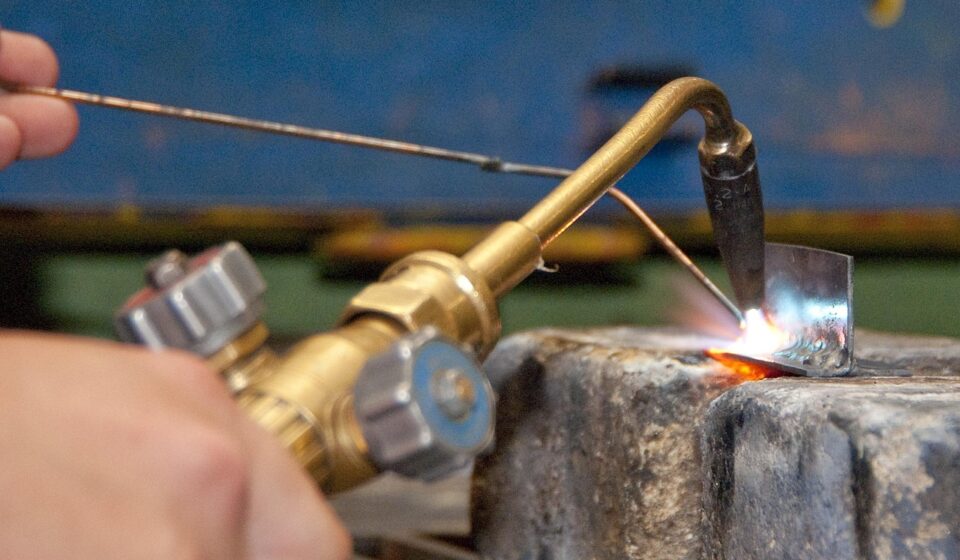
Choosing a welding machine is not only about amperage or purchase price. For fabrication and repair work, the right choice depends on the welding process, base material, thickness range, joint access, production pace, available power, and the controls needed for fumes, heat, UV radiation, electrical hazards, and fire risk. A compact inverter may be enough for light repair. Repeated structural, pipe, or production welds usually call for a higher duty cycle, steadier arc performance, reliable feeding, and a safer workstation. International and workplace references point to the same practical lesson: equipment selection should be tied to the process and the working environment, not treated as a standalone purchase. IEC 60974-1 addresses safety and performance requirements for professional arc welding power sources, while ISO 4063:2023 standardizes welding process names and reference numbers. (webstore.iec.ch)
Start with the work, not the machine
The most useful way to select a welding machine is to define the work before comparing models. A shop repairing brackets, frames, guards, and occasional machinery parts has different requirements from a production cell making repeat welds on prepared fixtures. Field maintenance needs portability and tolerance for imperfect conditions. Bench fabrication benefits from stable power, good cable management, shielding gas control, and repeatable settings.
Start with four questions. What materials will be welded most often? Carbon steel, stainless steel, aluminum, and cast repair each create different demands. What thickness range is normal, and what is the maximum thickness that must be welded without excessive preheating or multiple slow passes? Will welding be done indoors, outdoors, in tight access, or on clean fixtures? Finally, is the goal occasional repair, daily fabrication, code-related work, or production throughput?
This planning step avoids two common mistakes. One is buying a small machine that can strike an arc but cannot maintain productivity at the required amperage. The other is overbuying a machine with advanced process controls that will not be used. For broader equipment planning around cutting, forming, machining, and joining, the machine tools category provides related context for shop decision-makers.
Match the welding process to the job
A welding machine is usually selected around a welding process. The same shop may need more than one process because no single process is ideal for every material, access condition, and productivity target.
Shielded metal arc welding
Shielded metal arc welding, often called stick welding or SMAW, remains useful for field repair, outdoor work, maintenance, and jobs where shielding gas is inconvenient. It is relatively tolerant of wind compared with gas-shielded processes, and the equipment can be simple and portable. Its limitations are lower deposition rate, slag removal, higher operator skill requirements, and more stop-start work. For a repair crew, a good SMAW-capable inverter can be a practical first machine. For high-volume shop fabrication, it is often slower than wire processes.
Gas metal arc welding
Gas metal arc welding, commonly called MIG or GMAW, uses a continuously fed wire electrode with shielding gas. AWS describes GMAW as an electric arc welding process using a continuously fed wire electrode and shielding gas to join metals, which explains why it is widely used for general fabrication and repeatable shop work. (aws.org) Compared with stick welding, it can reduce stop time and make it easier to maintain production rhythm, especially on clean carbon steel parts. Its weaknesses are sensitivity to wind, dependence on shielding gas, and the need for a stable wire feed system.
Flux-cored arc welding
Flux-cored arc welding is often chosen when higher deposition rates or outdoor capability are important. Some flux-cored wires are self-shielded, while others require shielding gas. The process can be productive for heavier fabrication, structural repair, and field work, but fume generation, slag removal, and wire selection need careful review. A machine promoted as MIG capable may not automatically be ideal for flux-cored work unless it supports the right polarity, output range, drive rolls, gun, and duty cycle.
Gas tungsten arc welding
Gas tungsten arc welding, commonly called TIG or GTAW, is selected for control, appearance, thin sections, stainless steel, aluminum, and work where heat input must be carefully managed. AWS describes GTAW as an arc process using a non-consumable tungsten electrode with inert shielding gas protecting the molten weld pool. (aws.org) GTAW is usually slower than MIG for general fabrication, but it gives precise control. If aluminum TIG is part of the workload, AC capability and suitable high-frequency start functions may be important.
Read specifications that actually affect performance
Machine specifications can look impressive, but several numbers matter more than headline amperage. Rated output, duty cycle, input power, output type, and process support should be read together.
Duty cycle is one of the most misunderstood terms. Miller defines duty cycle as the number of minutes in a 10-minute period that an arc welding machine can operate at rated output. A 60 percent duty cycle at a stated amperage means six minutes of welding and four minutes of cooling in that cycle. (millerwelds.com) This matters because a machine that reaches a high maximum amperage for a short period may still be unsuitable for long beads, thick sections, or repeated welds in production.
Input power is another practical constraint. Light machines may operate on common single-phase shop power, while higher-output machines may need 240 V or three-phase service. The branch circuit, plug, extension lead, grounding, and installation should be checked against local electrical rules and the manufacturer manual. A machine that cannot be powered safely in the actual shop is not a bargain.
Output mode also matters. Constant current output is typical for stick and TIG. Constant voltage output is typical for wire-feed processes such as MIG. Multi-process machines can be useful, but buyers should verify whether each process is fully supported or only available in a limited form. For example, a multi-process unit may perform stick and DC TIG well but still lack AC TIG for aluminum or use a light-duty wire feed system.
| Specification | Why it matters | What to check |
|---|---|---|
| Rated amperage | Controls practical thickness range and heat input | Look at rated output, not only maximum output |
| Duty cycle | Shows how long the machine can weld before cooling | Compare duty cycle at the amperage you actually need |
| Input power | Determines installation and portability | Confirm voltage, phase, breaker, plug, and cable limits |
| Process support | Determines whether the machine fits SMAW, GMAW, FCAW, or GTAW | Check polarity, gas control, wire feed, AC or DC output, and torch compatibility |
| Feeder and torch quality | Affects arc stability and downtime | Review drive rolls, gun rating, consumable availability, and liner changes |
Build safety and compliance into the selection
Welding equipment cannot be separated from workplace safety. OSHA identifies health hazards from welding, cutting, and brazing as including metal fumes and ultraviolet radiation, and its general industry welding, cutting, and brazing requirements are organized under 29 CFR 1910 Subpart Q. (osha.gov) AWS/ANSI Z49.1:2021 also covers protection of personnel and the surrounding area, ventilation, fire prevention, and confined spaces. (pubs.aws.org)
Fume control should be considered before the machine goes into daily service. The UK Health and Safety Executive advises a control order that starts with avoiding or reducing exposure, then using local exhaust ventilation to remove fume at the source for indoor work, and then using suitable respiratory protective equipment where needed. (hse.gov.uk) This hierarchy is useful even for buyers outside the UK because it shows why a cheaper welding machine can become expensive if the workstation lacks ventilation, extraction, screens, PPE, training, and maintenance. See also: buying guides.
Materials also change the risk profile. Stainless steel, coated metals, painted parts, galvanized components, and confined spaces require greater care than clean mild steel in open shop conditions. The machine buyer should therefore involve the person responsible for safety before finalizing equipment. A higher-output welder, faster process, or new consumable can increase production, but it can also change fume, spatter, noise, heat, and fire exposure.
Think in total cost, not purchase price
The visible price of a welding machine is only one part of the cost. Consumables, shielding gas, contact tips, nozzles, electrodes, tungsten, liners, drive rolls, PPE, extraction filters, power installation, torch repairs, downtime, and operator training can cost more over time than the initial unit.
For occasional maintenance, simple controls and rugged portability may be more valuable than advanced pulse programs. For daily shop welding, wire feed consistency, parts availability, service support, and duty cycle can matter more than saving a small amount at purchase. In production work, the question is not whether the machine can weld once. It is whether it can produce acceptable welds repeatedly with manageable rework, predictable consumable use, and safe work practices.
There is also a training cost. A shop already skilled in MIG may gain productivity quickly from a better MIG platform. A move into TIG aluminum, pulse MIG, or flux-cored structural work may require procedure development and operator practice. If welds are subject to inspection, the machine decision should be aligned with applicable welding procedure specifications, filler metal requirements, and inspection criteria rather than treated as a general equipment upgrade.
A practical selection checklist
Use this checklist before requesting quotes or comparing product pages.
- Define the main welding process and any secondary processes required.
- List the common materials and maximum thickness range.
- Confirm whether work is indoor, outdoor, bench, field, confined, or fixture-based.
- Estimate the amperage range used most often, then compare duty cycle at that range.
- Check whether available input power matches the machine requirements.
- Confirm cable length, ground clamp quality, torch rating, feeder capacity, and consumable availability.
- Plan fume extraction, ventilation, fire prevention, screens, PPE, and training before production use.
- Verify whether the machine supports the exact process needs, such as AC TIG for aluminum or correct polarity for flux-cored wire.
- Consider serviceability, spare parts, and downtime risk.
- Avoid relying on maximum amperage alone when the actual need is repeated welding at a stable output.
For many mechanical workshops, the most balanced decision is a process-specific machine for the dominant workload, not the widest possible feature list. A multi-process unit can be excellent for maintenance and small-batch work, but a dedicated production MIG or TIG platform may be easier to standardize when weld quality and cycle time are critical.
Frequently asked questions
What size welding machine is enough for a small fabrication shop?
There is no universal size because material thickness, joint design, process, and duty cycle control the answer. A small repair shop may work effectively with a portable inverter for stick, TIG, or light MIG. A fabrication shop welding thicker sections every day should look for higher rated output, a duty cycle that matches real bead length, and a wire feed or torch system built for daily use.
Is a multi-process welding machine a good choice?
A multi-process machine is useful when one shop needs flexibility for repair, prototypes, and varied materials. It is less ideal when one process dominates production and repeatability is more important than versatility. Before buying, confirm the limits of each process rather than assuming MIG, TIG, and stick performance are equal.
Why does duty cycle matter if the machine has thermal protection?
Thermal protection can help prevent damage, but it does not make an undersized machine productive. If the machine repeatedly pauses for cooling during normal work, the shop loses time and may rush welding technique. Duty cycle should be chosen for the actual amperage and work rhythm, not treated as an emergency feature.
Can one welding machine handle steel, stainless steel, and aluminum?
Sometimes, but the process and accessories matter. Carbon steel and stainless steel are commonly handled by MIG, TIG, or stick with suitable filler and shielding choices. Aluminum often requires AC TIG or a MIG setup with appropriate wire feeding equipment, shielding gas, and technique. The machine label alone is not enough; confirm the full setup.
What should be checked before installing a new welder?
Check input power, grounding, circuit capacity, ventilation, fume extraction, fire controls, PPE, cable routing, gas cylinder storage, operator training, and the manufacturer manual. If the shop has confined spaces, coated metals, stainless steel, or heavy production welding, involve a qualified safety or industrial hygiene professional before routine use.