Lathe machine guide to types, operations, selection, and safety
What a lathe machine does
A lathe machine is a machine tool that rotates a workpiece while a cutting tool removes material. It is used to produce cylindrical, conical, threaded, faced, drilled, bored, and grooved features. In simple terms, the part spins and the tool cuts.
That basic principle makes the lathe a core machine in metalworking, repair workshops, toolrooms, woodworking, education, and production machining. Choosing the right lathe is not only a question of size. Buyers also need to consider part diameter and length, material, tolerance, batch volume, operator skill, workholding, tooling, guarding, power, and inspection requirements. For many shops, the real decision is not simply manual versus CNC. It is which machine configuration can make the required parts safely, repeatably, and at a sustainable total cost.
This guide focuses on practical selection and operating considerations for industrial users, especially readers comparing different machine tools for manufacturing, maintenance, or small-batch production.
How a lathe machine works
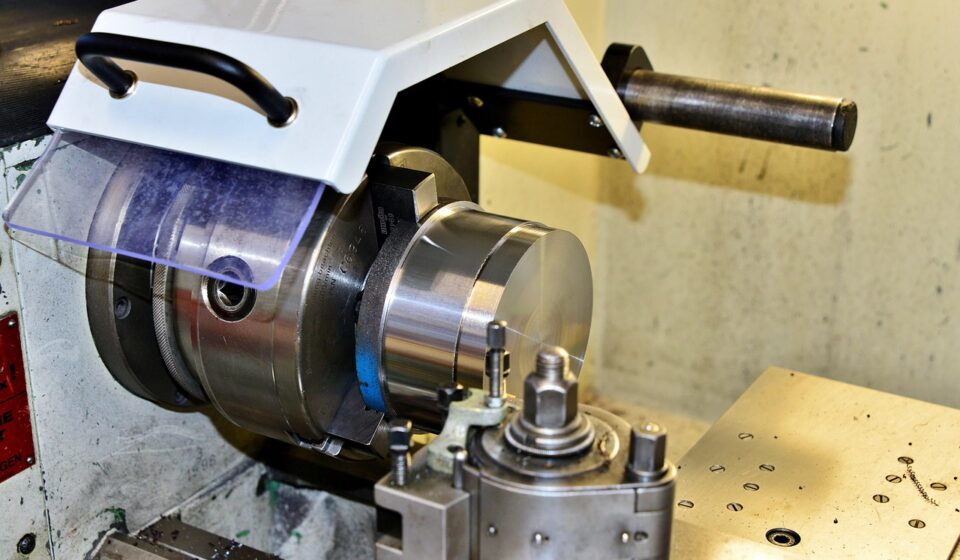
The operating principle is straightforward, although the machine design can be highly specialized. A workpiece is held in a chuck, collet, faceplate, between centers, or in another fixture connected to the spindle. The spindle provides rotation. A cutting tool, drill, boring bar, threading tool, parting blade, or form tool is then moved into the rotating workpiece in a controlled direction.
On a manual engine lathe, the operator sets speed, feed, depth of cut, and tool movement using handwheels, levers, gears, and feed controls. On a CNC lathe or turning center, these movements are controlled by a programmed toolpath. The CNC control coordinates spindle speed, turret indexing, feed rate, tool offsets, coolant, and, on some machines, live tooling or sub-spindle transfer.
The main mechanical areas are the bed, headstock, spindle, carriage or turret, tailstock, feed system, and guarding. The bed provides alignment and rigidity. The headstock houses the spindle drive. The carriage or turret carries the cutting tools. The tailstock supports long work or holds drills and reamers on many manual machines. Chip control, coolant delivery, and safe access to the cutting zone also affect real machine performance, even when they receive less attention in basic specifications.
A lathe differs from a milling machine because the workpiece usually rotates while a single-point cutting tool removes material. In milling, the cutting tool rotates and the workpiece is often held stationary or moved under the cutter. Modern turn-mill centers blur this distinction, but the basic turning principle remains the foundation of lathe machining.
Main types of lathe machines
Different lathe types serve different production goals. A workshop repairing shafts does not need the same machine as a high-volume supplier of small precision connectors. Understanding the main categories helps prevent overbuying, underbuying, or selecting a machine that is difficult to guard, maintain, or use efficiently.
Manual engine lathe
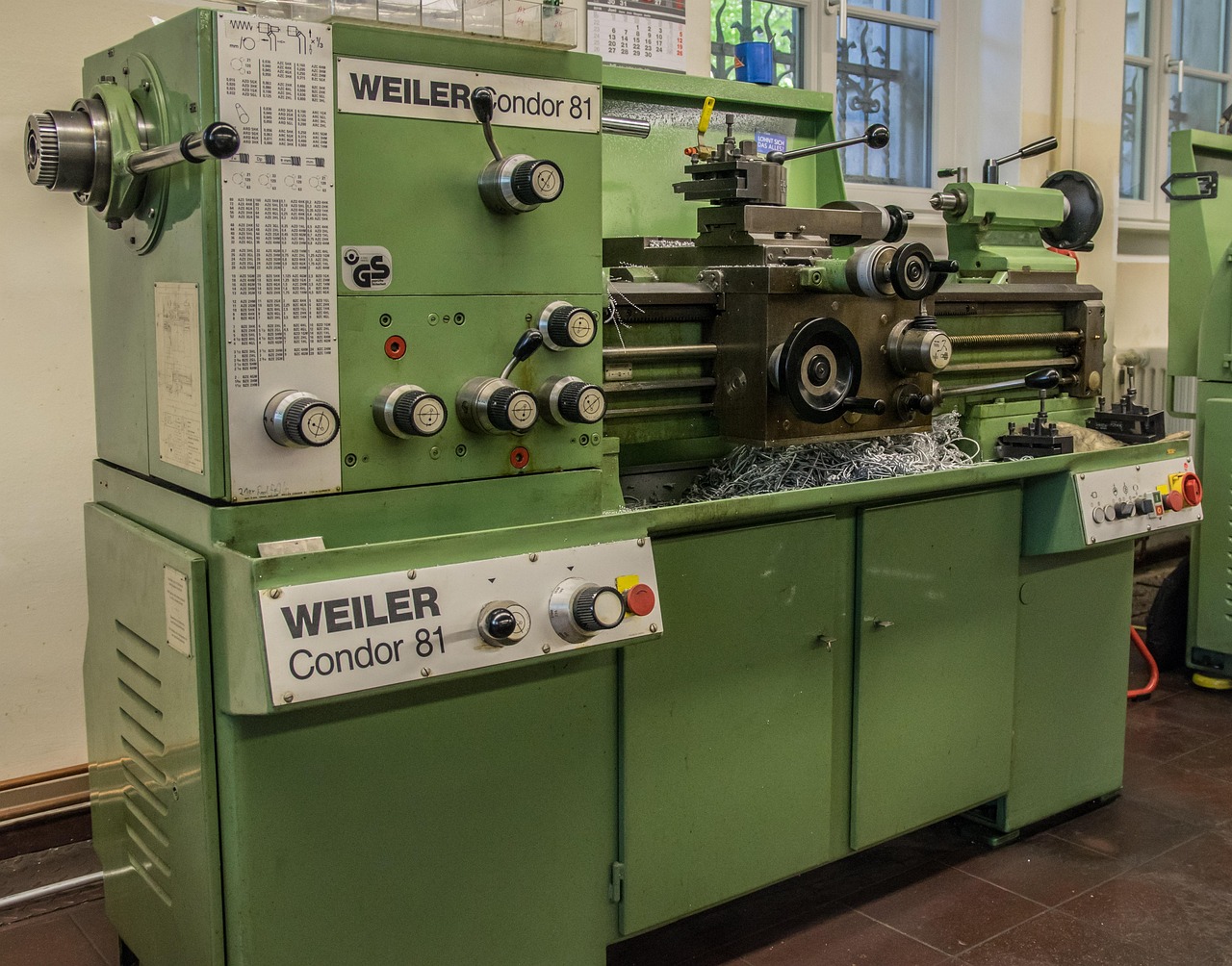
The manual engine lathe is common in maintenance shops, schools, toolrooms, and general repair work. It is flexible, relatively easy to understand, and useful for one-off parts, bushings, shafts, spacers, prototypes, and rework. Its limitations include operator dependency, slower repeatability in batch work, and greater exposure to rotating work during setup and operation.
Toolroom lathe
A toolroom lathe is generally built for accuracy, smooth control, and versatility rather than high-volume output. It is often used for gauges, tooling, fixtures, small precision components, and development work. Buyers should pay close attention to spindle runout, bed condition, leadscrew wear, taper attachment options, and available metric or inch threading capabilities.
CNC lathe and turning center
A CNC lathe is designed for repeatable production. A turning center may add a tool turret, automatic tool changing, programmable tailstock or steady rest functions, live tooling, C-axis control, Y-axis motion, bar feeding, part catching, or a sub-spindle. These features can reduce secondary operations, but they also increase the need for programming, maintenance, tooling management, coolant filtration, and operator training.
Swiss-type lathe
A Swiss-type lathe supports the workpiece close to the cutting zone with a guide bushing. It is often selected for long, slender, small-diameter parts where deflection would be difficult to control on a conventional lathe. Typical applications include precision medical, electronics, connector, and miniature mechanical components. The machine can be very productive, but only when the part family, bar stock quality, tooling, and setup discipline fit the process.
Vertical turning lathe
A vertical turning lathe, also called a vertical turret lathe in many shops, holds the workpiece on a horizontal table with the spindle axis vertical. This layout is useful for large, heavy, short parts such as wheels, rings, housings, flanges, and large castings. Gravity helps with loading and support, but floor space, crane access, guarding, and chip evacuation become major planning issues.
Common lathe operations and where they fit
A lathe machine can perform many operations, but each one has limits. A stable setup, correct tool geometry, suitable cutting parameters, and reliable workholding are more important than simply having enough motor power.
| Operation | What it does | Common use | Key limitation |
|---|---|---|---|
| Facing | Creates a flat end surface | Squaring stock, preparing a datum | Tool deflection and poor workholding can leave an uneven face |
| Straight turning | Reduces outside diameter | Shafts, pins, rollers, sleeves | Long parts may need tailstock or steady rest support |
| Taper turning | Creates a conical surface | Machine tapers, fittings, tooling components | Requires accurate angle control and measurement |
| Boring | Enlarges or finishes an internal diameter | Bushings, bearing seats, housings | Boring bars can chatter if too long or undersized |
| Threading | Cuts internal or external threads | Fasteners, pipe fittings, mechanical assemblies | Pitch control, tool form, and synchronization are critical |
| Grooving and parting | Cuts grooves or separates a part from stock | Retaining ring grooves, cutoff operations | Chip packing and tool rigidity can cause failure |
| Knurling | Forms a textured surface | Hand grips, knobs, adjustment screws | High forming pressure can stress light machines |
Process planning should also account for what happens before and after the turning cut. Sawing stock accurately, deburring edges, washing parts, inspecting dimensions, controlling chips, and documenting offsets can affect delivery time as much as the cutting cycle itself.
How to choose the right lathe machine
A useful specification review starts with the part, not the catalog. The first questions should be: What is the maximum swing diameter? What is the distance between centers? What are the normal working diameter and length? What materials will be cut? What tolerances and surface finishes are required? How many parts will be made per setup? These answers quickly narrow the machine type.
For manual lathes, check swing over bed, swing over cross slide, spindle bore, spindle nose type, speed range, feed range, thread range, bed width, tailstock taper, motor power, and available accessories. A large swing is useful only if the machine also has enough rigidity, safe workholding, and suitable low-speed torque for the job.
For CNC lathes, check chuck size, maximum turning diameter, maximum turning length, spindle bore, bar capacity, spindle power and torque curve, turret station count, tool shank size, rapid traverse, control system, axis configuration, chip conveyor, coolant pressure, and automation options. If live tooling or Y-axis milling is needed, confirm whether the machine can truly eliminate a second operation or only perform light features. See also: buying guides.
Accuracy claims need careful reading. Repeatability, positioning accuracy, thermal stability, spindle runout, and surface finish are not the same thing. A machine may repeat well after warming up but still require compensation for thermal growth. For higher-value work, inspection planning should include micrometers, bore gauges, surface finish checks, thread gauges, or coordinate measuring equipment as appropriate.
| Selection factor | Manual lathe priority | CNC lathe priority |
|---|---|---|
| Production volume | Best for one-off and repair work | Best for repeatable batches and production |
| Operator skill | Requires hands-on machining experience | Requires programming, setup, and offset control |
| Part complexity | Good for simple turning and fitting | Better for profiles, repeated features, and multi-tool cycles |
| Changeover | Fast for simple jobs | Efficient when programs, jaws, and tools are organized |
| Cost structure | Lower purchase cost but more operator time | Higher investment but stronger repeatability and automation potential |
Safety and standards should shape the purchase
Lathe safety should be considered before the machine is installed, not after a near miss. Rotating workpieces, chuck jaws, projecting bar stock, lead screws, belts, gears, flying chips, sharp tools, and entanglement hazards all require control.
In the United States, OSHA machine guarding requirements under 29 CFR 1910.212 address protection from hazards such as point of operation, rotating parts, flying chips, and sparks. OSHA rules for mechanical power-transmission apparatus are also relevant where belts, pulleys, shafts, gears, or similar moving components are exposed. For turning machines, ISO 23125:2015 is a recognized international safety standard that covers requirements and risk-reduction measures for turning machines and turning centers. The UK Health and Safety Executive also warns about the hazards of using emery cloth on metalworking lathes and emphasizes risk assessment and safer methods when polishing or deburring rotating parts.
Practical safety measures include guarding the chuck and point of operation where feasible, enclosing power transmission, controlling access to rotating bar stock, using chip shields, removing chuck keys immediately, securing long hair, avoiding gloves near rotating parts, keeping loose clothing away from the spindle, and stopping the machine before measuring, cleaning, or adjusting the work. Compressed air should not be treated as a substitute for proper chip handling because it can spread chips and coolant mist toward people and equipment.
Training is also part of machine selection. A shop that buys a CNC turning center needs procedures for program prove-out, safe single-block operation, tool offset verification, jaw boring, part clamping checks, collision recovery, maintenance lockout, and coolant handling. A shop that relies on manual lathes needs equally clear rules for speed selection, work support, tool setup, polishing, filing, and emergency stopping.
Productivity factors that are easy to miss
Many lathe purchases focus on spindle power and maximum swing, but day-to-day productivity often depends on smaller details. Workholding is one example. Soft jaws, collets, expanding mandrels, face drivers, steady rests, and custom fixtures can determine whether a part runs true and whether changeover is repeatable.
Tooling strategy matters as well. Carbide inserts, high-speed steel tools, boring bars, grooving systems, threading inserts, drills, and toolholders all influence cycle time and scrap risk. A light lathe with poor tool overhang can chatter even when the catalog horsepower appears sufficient. Coolant delivery, filtration, chip conveyor design, and sump maintenance also affect finish quality, tool life, and operator workload.
Digital manufacturing adds another layer. NIST has described smart manufacturing test beds that combine CNC turning, inspection equipment, and data collection to study connected production systems. For ordinary shops, the practical lesson is not that every lathe needs advanced analytics. It is that machine data, tool life records, inspection results, downtime notes, and maintenance history can help identify where time and quality are being lost.
Total cost of ownership should include foundation and leveling, electrical service, air supply, tooling packages, measuring tools, chip handling, coolant, training, software, spare parts, preventive maintenance, and guarding upgrades. A lower purchase price can become expensive if the machine cannot hold tolerance, is unsafe to operate, lacks local support, or creates avoidable secondary operations.
Frequently asked questions
What is the main use of a lathe machine?
The main use of a lathe machine is to make round or rotationally symmetrical features by rotating the workpiece against a cutting tool. Typical parts include shafts, bushings, pins, rollers, threaded components, rings, fittings, and prototype parts.
Is a CNC lathe always better than a manual lathe?
No. A CNC lathe is usually better for repeatable production, complex profiles, and multi-tool cycles. A manual lathe can be more practical for repair work, simple one-off parts, training, and jobs where the operator must make quick adjustments without programming.
What size lathe machine do I need?
Start with the largest and most common part diameter, length, and material. Then check swing, distance between centers, spindle bore, chuck capacity, rigidity, speed range, torque, and workholding options. Avoid choosing only by the largest possible part if most jobs are much smaller.
What is the biggest safety risk on a lathe?
Entanglement with rotating parts is one of the most serious risks. Chuck jaws, rotating stock, lead screws, tools, and workpieces can catch clothing, hair, gloves, emery cloth, or measuring tools. Guarding, training, safe setup, and stopping the spindle before adjustment are essential.
Can a lathe machine do milling?
A basic manual lathe is not a milling machine, although limited milling-like work may be possible with attachments. A CNC turning center with live tooling, C-axis control, and sometimes Y-axis travel can machine flats, slots, holes, and light milled features, but its capability depends on the machine design and tooling.
Conclusion
A lathe machine remains one of the most versatile machine tools because it solves a basic manufacturing need: producing accurate round parts. The best choice depends on the workpiece, tolerance, material, volume, safety requirements, and the people who will set up and run the machine. Manual lathes offer flexibility and direct control. CNC lathes and turning centers offer repeatability, automation, and multi-operation capability. In both cases, the strongest purchase decision balances cutting performance with guarding, training, workholding, tooling, inspection, and long-term support.