Milling machine tools in 2026 and what manufacturers should evaluate before upgrading
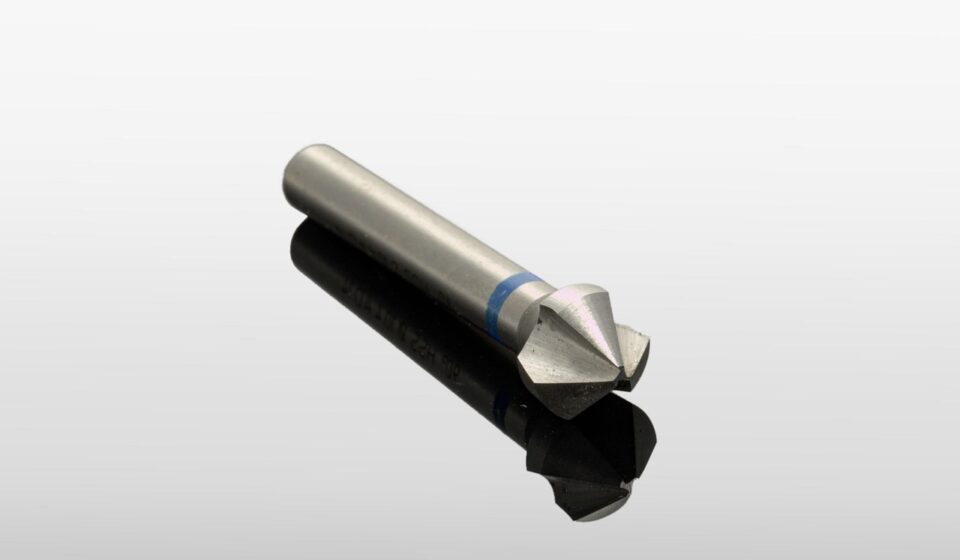
Milling machine tools convert CAD data and process planning into accurate slots, pockets, profiles, holes and complex surfaces. In 2026, the upgrade question is not simply whether a shop should buy a faster mill. The machine structure, spindle, control, tooling, workholding, coolant management, safety system and inspection plan all need to match the parts the shop actually produces.
Recent U.S. manufacturing technology order data from AMT points in the same direction. Order value has increased strongly, while unit growth has been more restrained. That suggests buyers are spending on more capable and more automated systems, not just adding more machines to the floor.
For more background on the broader equipment category, see our machine tools section.
What counts as milling machine tools
Milling machine tools remove material with a rotating cutting tool while the workpiece, the tool, or both move along controlled axes. The category includes manual milling machines, CNC milling machines, vertical machining centers, horizontal machining centers, five-axis machining centers and special-purpose milling systems used in production lines.
ISO 16090-1:2022, the international safety standard for machining centres, milling machines and transfer machines, helps define the scope of modern milling equipment. It covers manually operated boring and milling machines, machines with limited numerical control, numerically controlled milling machines and machining centres, and transfer or special-purpose machines designed for predetermined machining sequences.
That scope matters because buyers often use the term milling machine for very different equipment: a knee mill in a maintenance shop, a CNC mill in a job shop, or an enclosed CNC machining center with a tool changer, chip conveyor and automated pallet handling.
The practical difference is control and repeatability. A manual mill depends heavily on operator skill. A CNC mill repeats programmed motion and can integrate tool length compensation, cutter radius compensation, probing and networked production data. A machining center adds production features such as automatic tool changing, enclosure, coolant delivery, chip evacuation and, in many cases, pallet or robotic loading.
2026 market signals show demand for higher-value equipment
The latest public U.S. Manufacturing Technology Orders release available in early September 2026 covered June 2026 and was published by AMT on August 10, 2026. It reported $672.7 million in new orders of metalworking machinery for June 2026, up 15.6% from May 2026 and up 56.8% from June 2025. For the first half of 2026, orders totaled $3.44 billion, a 36.0% increase over the first half of 2025 and the strongest half-year by order value since the USMTO program began collecting data in 1998.
For milling buyers, the headline value is only part of the story. AMT also noted that the number of machines ordered in the first half of 2026 was lower than in the second half of 2025, even while order value reached a record half-year level. In practical terms, the market appears to be paying for more automation, broader capability packages and more sophisticated machine configurations. A shop planning a milling upgrade should therefore compare complete systems, not only base machine prices.
| Period or release | Reported signal | Why it matters for milling buyers |
|---|---|---|
| December 2025, released February 2026 | AMT reported $814.3 million in orders, the highest monthly value on record at that time. | Capital equipment demand was already recovering strongly before 2026. |
| March 2026, released May 2026 | First-quarter 2026 orders reached $1.61 billion, up 27.8% year over year. | Demand was not limited to one unusually strong month. |
| May 2026, released July 2026 | Orders totaled $583.4 million, up 47.8% from May 2025. | Industrial machinery demand remained elevated going into midyear. |
| June 2026, released August 2026 | First-half 2026 orders totaled $3.44 billion, up 36.0% year over year. | Machine availability, automation scope and service capacity may affect purchasing decisions. |
Main types of milling equipment and where they fit
The right milling platform depends on part geometry, tolerance, material, batch size and the level of unattended production required. Buying too little machine creates bottlenecks. Buying more capability than the work requires can tie up capital in features the shop rarely uses.
| Machine type | Typical fit | Key limitation |
|---|---|---|
| Manual knee or bed mill | Toolroom work, repair, training, simple one-off parts and fixture modification. | Repeatability and throughput depend heavily on operator skill. |
| Three-axis vertical machining center | General prismatic parts, plates, brackets, molds with moderate complexity and flexible job-shop work. | Multiple setups may be needed for features on several faces. |
| Horizontal machining center | Production parts needing efficient chip evacuation, palletization and machining on multiple sides. | Higher initial cost and more complex fixture planning. |
| Five-axis machining center | Aerospace, medical, die and mold, impellers, complex contours and parts where fewer setups improve accuracy. | Requires stronger programming, simulation, workholding and collision-control discipline. |
| Gantry or bridge mill | Large molds, structural components, energy equipment and oversized workpieces. | Floor space, foundation, thermal control and installation planning become major factors. |
| Transfer or special-purpose milling system | High-volume production of a narrow part family with defined operations. | Low flexibility if product design or demand changes. |
A common mistake is treating five-axis capability as a universal upgrade. Five-axis milling can reduce setups and improve access to complex surfaces, but it also raises the requirements for CAM strategy, toolpath verification, fixture clearance, probing and operator training. For many shops, a rigid three-axis vertical machining center with reliable tooling and probing may produce more value than a poorly supported five-axis machine.
Technical criteria to evaluate before an upgrade
Machine travel and table size are the most visible specifications, but they are not enough. Buyers should compare the real work envelope after fixtures, tool holders, rotary tables, vises and probes are installed. A machine that looks large enough on paper can become restrictive once the full setup is considered.
Spindle selection is just as important. High-speed spindles suit aluminum, graphite electrodes and small tools. Higher-torque spindles are often better for steel, stainless steel, titanium and heavy roughing. The decision should be based on common materials, cutter diameters, depth of cut, surface finish requirements and expected cycle times.
Rigidity, thermal behavior and calibration deserve close attention. NIST research on machine tool calibration emphasizes that measurement, modeling and compensation choices should be selected with accuracy, complexity and cost in mind. In production, accuracy is affected not only by the control system but also by thermal expansion, tool wear, fixture stiffness, axis geometry, maintenance condition and shop temperature. A machine with advanced compensation features still needs a practical verification routine.
Controls and software should be evaluated as part of the full process chain. The control must support the shop’s CAM output, probing cycles, tool management, macros, networking and data collection needs. If the machine will run complex surfacing or five-axis paths, look-ahead performance and toolpath smoothing become more important than they are for simple drilling and pocketing. See also: buying guides.
Tooling and workholding often determine whether a new milling machine reaches its expected output. Shrink-fit, hydraulic, milling chuck and mechanical holder choices affect runout and rigidity. Modular fixturing, zero-point systems and pallets can reduce setup time, but they add cost and require standardization. Coolant pressure, filtration, chip conveyor design and mist control should also be specified early, especially when machining aluminum, cast iron, stainless steel or high-temperature alloys.
Safety and compliance should be designed into the process
Milling creates rotating-tool hazards, flying chips, sharp edges, mist and energy-control risks. OSHA’s machine guarding guidance describes guarding as a way to protect workers from hazards such as rotating parts, flying chips and sparks. For CNC milling, full enclosure and interlocked doors are now common expectations. For manual mills, point-of-operation guarding, shields, safe workholding and operator training remain important.
ISO 16090-1:2022 addresses technical safety requirements and protective measures for milling machines, machining centres and transfer machines across stages such as installation, setting, operation, cleaning, maintenance and dismantling. The standard’s broad scope is useful because many real hazards occur outside normal cutting time, including setup, tool change, chip removal, troubleshooting and maintenance.
Metalworking fluids also need attention. NIOSH has described metalworking fluid aerosols as mist and contaminants generated during machining operations, and has associated exposure with a range of potential health effects. Practical controls include appropriate fluid concentration management, tramp-oil control, sump maintenance, mist collection, ventilation, splash control, gloves selected for the fluid chemistry and worker training. These controls are not optional extras when high-pressure coolant or long unattended cycles are part of the process.
When retrofitting makes sense and when a new machine is justified
Retrofitting can make sense when the machine iron is sound, the accuracy requirement is moderate and the main need is a better control, digital readout, servo update, guarding improvement or reliability repair. Toolroom mills, maintenance equipment and low-volume fixture work are often candidates for limited upgrades rather than full replacement.
A new milling machine is easier to justify when the current equipment cannot hold tolerance reliably, setup time is the main bottleneck, guarding is inadequate, spare parts are difficult to obtain, or the shop needs automation that the old platform cannot support. Newer machining centers may offer better enclosure design, faster tool changing, improved chip management, probing integration, data connectivity and pallet or robot readiness.
The decision should be made with total cost in mind. Base price is only one line item. A realistic budget includes freight, rigging, foundation or leveling work, electrical and air supply, coolant and filtration, chip handling, tooling, holders, probes, fixtures, CAM posts, training, maintenance spares and downtime during installation. In many projects, the best upgrade is not the machine with the longest option list. It is the system whose options directly remove the shop’s current constraint.
A practical workflow for selecting milling machine tools
- Collect representative parts. Use drawings, models, material grades, tolerances, surface finish requirements and annual volumes from real work, not ideal future assumptions.
- Identify the main bottleneck. Separate spindle cutting time from setup time, inspection delay, tool change time, chip removal, rework and operator availability.
- Define the required process. Decide whether the parts need three-axis, 3+2 positioning, full five-axis, palletized horizontal machining or a special-purpose system.
- Check the full setup envelope. Include fixtures, vises, rotary axes, tool length, probes, chip clearance and operator access.
- Plan tooling and workholding with the machine. Avoid buying a capable machine and then limiting it with weak holders, unstable fixtures or unmanaged tool data.
- Review safety and maintenance before purchase. Confirm guarding, interlocks, lockout procedures, coolant controls, chip handling and access for service.
- Compare return by constraint removed. Estimate how the machine changes throughput, scrap, setup labor, inspection load, delivery reliability and the range of parts the shop can quote.
This workflow turns the purchase from a specification contest into a manufacturing decision. It also helps explain why 2026 market data points toward higher-value orders: shops are not only buying mills, they are buying more complete production capability.
Frequently asked questions
Are milling machine tools the same as machining centers?
Not always. A machining center is a type of milling machine tool, usually CNC controlled and equipped with features such as an automatic tool changer, enclosure and coolant system. The broader term milling machine tools also includes manual mills, CNC mills and special-purpose milling systems.
Is a five-axis milling machine always better than a three-axis machine?
No. Five-axis capability is valuable for complex geometry, multi-face machining and setup reduction, but it requires stronger programming, simulation, tooling and operator skills. For many prismatic parts, a rigid three-axis vertical machining center can be the more economical and reliable choice.
What is the most important specification when comparing milling machines?
There is no single most important specification. Work envelope, spindle performance, rigidity, thermal stability, control capability, tooling interface, workholding strategy, chip management and service support all affect real productivity.
How should a shop use 2026 machine tool order data?
Order data should be treated as a market signal, not a direct buying instruction. Strong order value suggests active investment and possible competition for higher-end machines, automation and service capacity. Each shop still needs to justify an upgrade with its own parts, labor constraints, quality requirements and capital plan.