What is an EDM machine and when should manufacturers use one?
EDM machine basics for modern machining
An EDM machine—EDM stands for electrical discharge machining—removes material with a series of controlled electrical sparks between an electrode and an electrically conductive workpiece. Unlike milling, turning, or drilling, EDM does not use a sharp cutting edge to push through metal. That makes it useful for hardened tool steels, carbide, titanium, nickel alloys, mold cavities, die details, fine slots, and fragile features where cutting force can cause deflection or tool breakage.
The trade-off is important. EDM is usually slower than conventional machining for simple stock removal. It also requires dielectric fluid and can leave a recast layer that may need finishing, depending on the part specification.
For manufacturers comparing options in machine tools, EDM is best understood as a precision process for difficult conductive materials and complex geometry, not as a universal replacement for milling or grinding.
How an EDM machine removes material
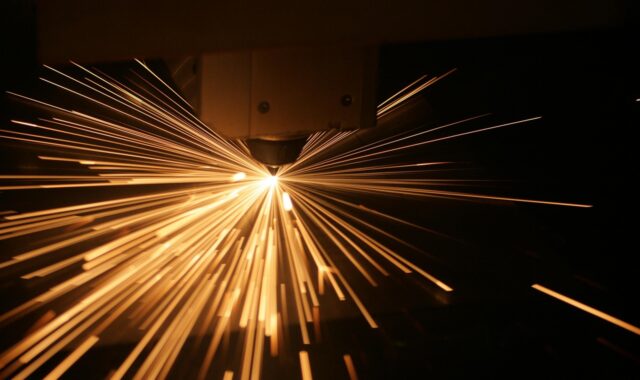
In EDM, the tool electrode and the workpiece are separated by a very small spark gap filled with dielectric fluid. The machine power supply sends pulsed electrical energy across that gap. Each discharge creates intense localized heat, melting and vaporizing a tiny amount of material. The dielectric fluid helps control the discharge, cools the machining zone, and flushes away debris so the next spark can occur under stable conditions.
The process depends on electrical conductivity. Standard EDM is used on conductive materials such as tool steel, stainless steel, copper alloys, aluminum, titanium, carbide, graphite, and many nickel-based alloys. Some research and specialized processes address difficult nonconductive materials, but everyday production EDM should normally be specified for conductive workpieces.
Because EDM does not rely on a conventional cutting edge, it can machine very hard materials after heat treatment. This is one reason it remains important in moldmaking, die production, aerospace component work, medical tooling, small-hole drilling, and repair operations such as removing broken taps or drills from expensive parts.
Main types of EDM machines
Wire EDM
Wire EDM uses a continuously fed metal wire as the electrode. The wire travels through the workpiece and cuts a programmed profile, similar in concept to a very precise contour saw, but without mechanical tooth contact. The workpiece is commonly submerged or flushed with deionized water. Because the wire must pass through the part, wire EDM is most suitable for through-cuts, punches, dies, profiles, gears, splines, narrow slots, and complex 2D shapes in thick conductive stock.
Wire EDM is especially useful when the part is already hardened or when the profile includes internal corners smaller than practical end mills can produce. However, the wire has a diameter and a spark gap, so it cannot create a perfectly sharp inside corner. Corner strategy, skim cuts, wire size, and machine compensation all affect final accuracy and surface finish.
Sinker EDM
Sinker EDM, also called ram EDM or die-sinking EDM, uses a shaped electrode that is fed into the workpiece to create a matching cavity. The electrode is commonly made from graphite or copper, depending on the application, finish requirement, wear target, and shop practice. Sinker EDM is widely used for blind cavities, ribs, lettering, mold details, deep pockets, and shapes that cannot be reached by a rotating cutter.
The key planning issue is electrode design and electrode manufacturing. For one-off work, this can add lead time. For repeated mold or die features, however, the method can be highly effective because the electrode form can reproduce complex geometry with a controlled spark gap allowance.
Small-hole EDM drilling
Small-hole EDM drilling uses a tubular electrode to produce very small, deep, or difficult holes in conductive materials. It is often used for start holes before wire EDM, cooling holes, vent holes, and removal of broken tooling. The process can reach areas where twist drills are impractical because of hardness, depth-to-diameter ratio, or risk of drill breakage.
Where EDM creates the most value
EDM is not selected only because it is accurate. Its strongest value appears when geometry, material condition, or part risk makes conventional machining expensive or unreliable. A hardened stamping die block, for example, may be difficult to mill after heat treatment, while EDM can shape it without high cutting force. A mold insert with deep ribs may be possible with long-reach milling cutters, but EDM can reduce chatter and tool deflection risk. A carbide punch may be too hard for standard cutting tools, while EDM can machine it as long as conductivity and setup conditions are suitable.
Common high-value EDM applications include:
- Tool and die components made from hardened steels or carbide.
- Plastic injection mold cavities, ribs, gates, text, logos, and fine details.
- Precision punches, extrusion dies, blanking dies, and form tools.
- Aerospace and power-generation parts made from titanium or nickel alloys.
- Medical tooling and miniature conductive components with delicate features.
- Broken tap, drill, or stud removal when the base part must be saved.
- Start holes and fine holes that are difficult to drill conventionally.
In practice, the decision is rarely EDM versus milling as a whole. A stronger process plan uses EDM for the features that milling, drilling, broaching, or grinding cannot produce economically, while conventional processes handle the geometry they can remove faster.
Advantages and limitations to consider
The main advantage of an EDM machine is its ability to machine conductive materials regardless of hardness, with very low mechanical cutting force. This helps protect thin walls, small pins, delicate profiles, and already heat-treated components. EDM also makes it possible to create narrow slots, intricate cavities, and fine features that would require special cutters or multiple operations by conventional methods.
EDM also has clear limitations. Material removal rate is generally lower than aggressive milling or turning. The process consumes wire or wears electrodes. Dielectric fluid must be maintained, and flushing conditions can determine whether the cut is stable or inconsistent. Workpieces must be conductive. Heat from the discharge can create a recast layer, also called a white layer, along with a heat-affected zone. For critical fatigue, sealing, biomedical, or aerospace surfaces, this layer may require additional finishing, polishing, grinding, or process validation. See also: buying guides.
| Factor | EDM strength | EDM limitation |
|---|---|---|
| Material hardness | Can machine hardened conductive materials | Not suitable for ordinary nonconductive materials |
| Cutting force | Very low mechanical force on the part | Thermal effects must be controlled |
| Geometry | Excellent for fine profiles, cavities, slots, and ribs | Wire EDM needs a through path; sinker EDM needs an electrode |
| Productivity | Efficient for otherwise difficult features | Often slower than milling for simple bulk removal |
| Surface condition | Can produce fine finishes with proper settings and skim passes | May leave recast layer or microstructural change |
How to choose the right EDM process
Start with the geometry. If the feature is a through-cut profile, wire EDM is usually the first process to evaluate. If the feature is a blind cavity, rib, logo, sharp internal form, or mold detail, sinker EDM is the more likely choice. If the requirement is a small deep hole or a start hole for wire cutting, EDM drilling should be considered.
Next, review the material and heat-treatment stage. EDM often makes sense after hardening because it avoids distortion from rough machining after the final heat-treatment step. However, the shop must still manage residual stress, clamping, flushing, and thermal surface effects. For large material removal, rough milling before heat treatment followed by EDM finishing after heat treatment can be more economical than burning the entire shape from solid.
Surface finish and tolerance should be specified realistically. Wire EDM may use roughing and skim passes to improve accuracy and finish. Sinker EDM may use roughing electrodes, finishing electrodes, polarity changes, and fine generator settings. Asking for unnecessary ultra-fine finishes can increase machine time sharply, so the drawing should define what actually matters: functional surface, cosmetic surface, sealing area, sharp corner, or clearance feature.
Finally, evaluate the total workflow rather than the EDM machine capability alone. EDM cost includes programming, workholding, electrode design, electrode machining, wire or electrode consumption, dielectric maintenance, inspection, and possible post-processing. The best EDM plan is often a hybrid route in which CNC milling removes accessible stock, grinding controls datum surfaces, and EDM completes the features that justify the process.
Safety, maintenance, and process control
EDM is a controlled industrial process, but it involves electrical energy, dielectric fluids, moving axes, fumes or mist, filtration, and sometimes combustible oil-based fluids. Safety references such as ISO 28881 for electrical discharge machines and OSHA guidance on metalworking fluids emphasize risk assessment, guarding, fluid handling, ventilation, maintenance, and operator protection. The exact obligations depend on jurisdiction, machine design, fluid type, and shop conditions, so manufacturers should follow machine-builder documentation and applicable local standards.
From a production standpoint, dielectric condition is more than a maintenance detail. Poor filtration, contaminated fluid, weak flushing, or unstable conductivity can reduce cutting speed, worsen surface finish, increase wire breaks, and create inconsistent burns. Good EDM practice includes monitoring filters, checking fluid level and quality, maintaining wire guides or electrode holders, verifying workpiece grounding, and keeping the tank and fixtures clean.
Process control should also include inspection planning. EDM can hold precise features, but final results depend on calibration, thermal stability, flushing access, electrode wear compensation, wire offset, and programming strategy. Critical parts should be verified with suitable measurement methods rather than assuming that a programmed path automatically equals a finished dimension.
Frequently asked questions
What materials can an EDM machine cut?
Standard EDM can machine electrically conductive materials. Common examples include tool steel, stainless steel, titanium, aluminum, copper alloys, carbide, graphite, and nickel alloys. Conductivity is the key requirement; hardness is usually less of a barrier than it is in conventional machining.
Is EDM more accurate than CNC milling?
EDM can be highly accurate, especially for fine conductive features, hardened materials, and profiles that would deflect under cutting force. However, accuracy depends on machine condition, programming, flushing, electrode wear, wire compensation, thermal stability, and inspection. CNC milling may be faster and sufficiently accurate for accessible features in softer or pre-hardened material.
What is the difference between wire EDM and sinker EDM?
Wire EDM uses a moving wire to cut through a workpiece along a programmed path. It is best for through profiles and internal cutouts. Sinker EDM uses a shaped electrode to burn a cavity into the workpiece, making it better for blind pockets, mold details, ribs, and complex 3D cavities.
Does EDM damage the surface?
EDM is a thermal process, so it can leave a recast layer and heat-affected zone. For many tooling applications, this is acceptable after proper finishing settings. For fatigue-critical or highly regulated parts, the drawing or process plan may require skim cuts, polishing, grinding, or validation to remove or control the affected layer.
When should a shop not use EDM?
EDM may not be the best option for simple bulk stock removal, nonconductive materials, loose-tolerance parts that can be milled quickly, or features where electrode manufacturing would cost more than an alternative machining route. It is strongest when conventional tools struggle with hardness, geometry, fragility, or access.
Bottom line
An EDM machine is most valuable when a conductive part is hard, delicate, detailed, or geometrically difficult for conventional cutting tools. Wire EDM, sinker EDM, and EDM drilling each solve different manufacturing problems, so the right choice depends on whether the feature is a through profile, a blind cavity, or a small deep hole. Manufacturers should weigh precision benefits against slower removal rates, consumable costs, dielectric maintenance, safety requirements, and possible surface finishing. Used selectively, EDM remains one of the most important precision processes in the machine tool field.