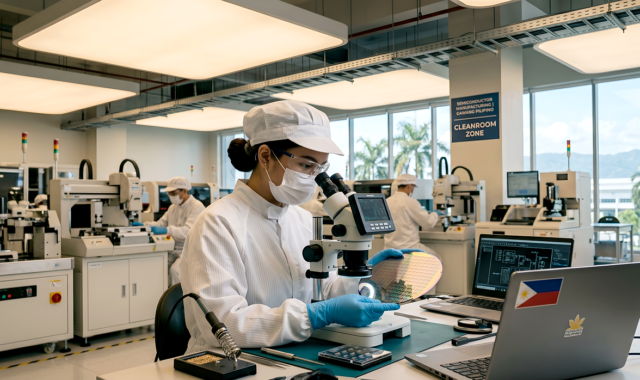
Advanced manufacturing processes explained for modern factory production
Advanced manufacturing processes are less about buying a single new machine and more about changing how production is designed, controlled, inspected, and scaled. In a factory setting, the question is practical: does the process shorten lead time, improve repeatability, enable a geometry or material that conventional methods cannot handle, or reduce risk across the production lifecycle? This guide reviews the main process families, how they compare, and what manufacturers should verify before investing. For more practical coverage of industrial production methods, see our manufacturing processes section.
What makes a manufacturing process advanced?
A process becomes advanced when it uses modern technology to improve an existing production route or to make products that were previously difficult, slow, or uneconomical to produce. The 2022 U.S. National Strategy for Advanced Manufacturing describes advanced manufacturing as improved methods for existing products and the production of new products enabled by advanced technologies. That definition is intentionally broad because the same technology can play different roles in machining, forming, additive manufacturing, assembly, inspection, and packaging.

In practice, advanced manufacturing processes usually have several traits in common. They use sensors or digital controls to reduce variation. They connect design, production, and quality data instead of treating each department as a separate island. They may automate repetitive or hazardous work, but they still depend on skilled operators, engineers, programmers, and maintenance teams. Most importantly, they do not replace process knowledge. They amplify it. A poorly understood welding, casting, machining, or molding process does not become reliable simply because it is connected to software.
Core advanced manufacturing processes to understand
Additive manufacturing
Additive manufacturing builds parts by adding material layer by layer rather than cutting it away from a larger workpiece. ISO/ASTM 52900:2021 defines the terminology used across additive manufacturing, helping distinguish consumer-style 3D printing from industrial processes such as powder bed fusion, directed energy deposition, binder jetting, material extrusion, and vat photopolymerization.
Additive manufacturing creates the most value when a part benefits from geometric freedom, part consolidation, lightweighting, internal channels, fast iteration, or low-volume production without dedicated tooling. Aerospace brackets, medical implants, tooling inserts, heat exchangers, and repair applications are common examples in industry literature. However, additive manufacturing is not automatically cheaper than machining or casting. Build speed, powder handling, post-processing, heat treatment, inspection, and qualification can dominate the total cost.
Hybrid manufacturing and advanced machining
Hybrid manufacturing combines additive and subtractive steps in a coordinated workflow. A machine may deposit material and then mill critical surfaces, or a production cell may combine near-net-shape fabrication with high-precision finishing. This approach is useful when a part needs complex features but still requires tight tolerances, surface finish, or datum accuracy that additive processes alone may not deliver.
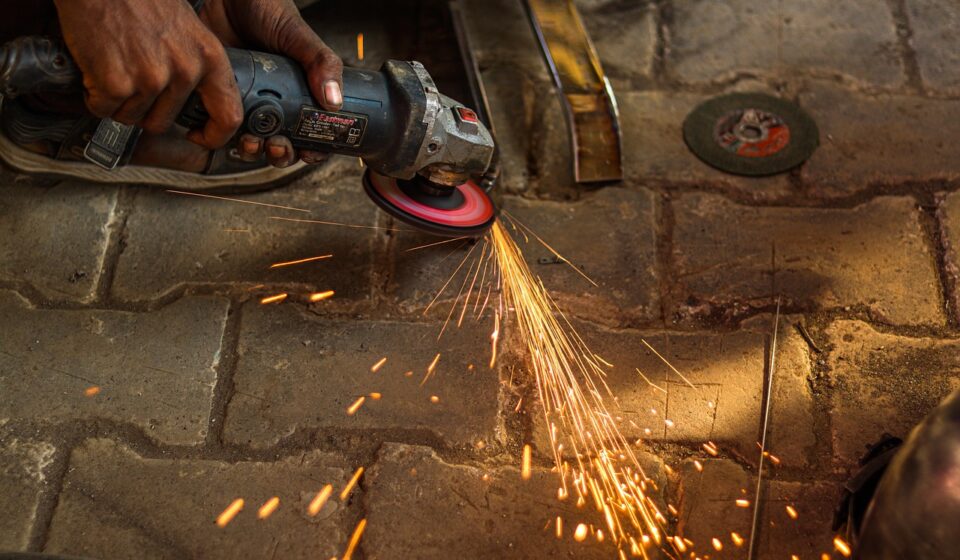
Advanced machining also includes high-speed milling, multi-axis machining, laser-assisted machining, ultrasonic machining, precision grinding, and digitally optimized toolpaths. These methods are not always as visually dramatic as additive manufacturing, but they remain essential because many high-performance parts still depend on controlled material removal and stable process windows.
Robotics and flexible automation
Industrial robots, collaborative robots, autonomous mobile robots, and automated inspection systems are now central to the advanced manufacturing discussion. The International Federation of Robotics reported in its World Robotics 2025 industrial robot materials that 2024 was the second-highest year for annual industrial robot installations globally, slightly below the record level reached two years earlier. The same source reported an average manufacturing robot density of 177 robots per 10,000 employees in 2024.
The important shift is from fixed automation toward flexible automation. Instead of designing one hard-to-change line around one product, manufacturers increasingly use reprogrammable cells, vision-guided robots, modular fixtures, and digital work instructions. This supports product variation, shorter runs, and faster changeovers. It also raises the importance of programming discipline, safety validation, and maintenance planning.
Digital twins and simulation-driven processes
A digital twin is a synchronized digital representation of a physical asset, process, or system. NIST describes digital twins for advanced manufacturing as a way to represent, diagnose, predict, and optimize operations, while also noting that standards, validation, and interoperability remain major barriers. ISO 23247-1:2021 provides general principles for a digital twin framework for manufacturing, including terms and requirements.
In production, a digital twin can support process design, virtual commissioning, predictive maintenance, anomaly detection, and closed-loop improvement. A machining cell, for example, may use sensor data to monitor spindle load and tool wear. An additive process may collect melt pool, temperature, atmosphere, and layer imaging data. A factory-level model may simulate bottlenecks before equipment is moved. The limitation is straightforward: a model is only useful when its data, assumptions, and update frequency match the decision being made.
AI-enabled process control and quality inspection
Artificial intelligence and machine learning are increasingly used for defect detection, predictive maintenance, scheduling, parameter optimization, and image-based inspection. NIST’s work on advanced informatics and AI for additive manufacturing emphasizes reference data, models, metrics, and best practices rather than treating AI as a black box. That distinction matters. A model that performs well in a pilot may fail when materials, operators, suppliers, machine condition, or environmental conditions change.
AI-enabled manufacturing is most credible when it is tied to measurable process variables, clear acceptance criteria, version-controlled datasets, and human review. The objective is not to remove engineering judgment. It is to make variation visible earlier and help teams act before scrap, rework, or downtime grows.
How these processes compare
The table below summarizes where several advanced manufacturing processes tend to create value and what must be controlled before they can be trusted in production.
| Process family | Where it creates value | Key data or control need | Main limitation |
|---|---|---|---|
| Additive manufacturing | Complex geometry, rapid iteration, part consolidation, repair | Material traceability, build parameters, post-processing, inspection records | Qualification, surface finish, build rate, and cost can be challenging |
| Hybrid manufacturing | Near-net-shape parts with precision finishing | Alignment between deposition, machining, and inspection steps | Requires strong process planning and equipment integration |
| Advanced machining | Tight tolerances, high-performance materials, repeatable finishing | Tool condition, vibration, thermal stability, coolant control | Material waste and tool wear can remain significant |
| Robotics and automation | Repeatable handling, welding, assembly, inspection, packaging | Safety validation, programming standards, fixture repeatability | Less effective when product variation is unmanaged |
| Digital twins | Simulation, predictive maintenance, virtual commissioning, optimization | Validated models, clean sensor data, interoperability | Model accuracy and maintenance effort are often underestimated |
| AI-enabled inspection | Visual defect detection, anomaly detection, process prediction | Representative datasets, acceptance criteria, drift monitoring | False confidence can appear if training data is too narrow |
Why adoption is accelerating
Several pressures are pushing manufacturers toward advanced manufacturing processes. Product lifecycles are shorter, customers expect more variation, skilled labor is constrained in many regions, and supply chains remain sensitive to geopolitical, logistics, and cost disruptions. Advanced processes can help companies move away from large batches and rigid lines toward more responsive production systems. See also: buying guides.
Industry programs also reinforce the trend. Manufacturing USA’s 2026 strategic planning materials emphasize technology transfer, systems integration, robotics, sustainable manufacturing, process measurement, quality assurance, interoperability, and additive manufacturing. The World Economic Forum’s Global Lighthouse Network has also highlighted factories using industrial IoT, advanced analytics, robotics, and AI to improve productivity, delivery, and cost performance. These examples do not prove that every manufacturer should copy the same technology stack. They do show a clear direction: factories are increasingly evaluated by how quickly they can learn from production data and convert that learning into stable output.
The strongest business cases usually combine process improvement with operational resilience. A digital inspection system may reduce escapes, but it may also create traceability for regulated customers. Additive manufacturing may reduce tooling dependence, but it may also support faster spare part response. Robotics may reduce manual handling, but it may also stabilize quality across shifts. The value often comes from the system effect, not from one standalone machine.
How to evaluate an advanced manufacturing investment
Before selecting a technology, manufacturers should define the production problem in measurable terms. A useful starting point is to ask whether the goal is lower cost, shorter lead time, better quality, higher mix, improved safety, material efficiency, or a capability that cannot be achieved with the current process.
- Start with the part or process constraint. Identify whether the bottleneck is geometry, tolerance, material, labor, inspection, changeover, documentation, or throughput.
- Compare the full process chain. Include programming, fixturing, post-processing, inspection, maintenance, operator training, and quality documentation.
- Validate with production-like data. Lab demonstrations are useful, but they may not include real variation in material lots, shifts, temperature, machine wear, or supplier inputs.
- Plan for standards and qualification. Regulated or safety-critical parts may require formal qualification, traceability, and repeatability evidence before production release.
- Build a data governance routine. Sensor data, AI models, inspection images, and simulation results need ownership, version control, cybersecurity, and retention rules.
One practical approach is to run a staged evaluation. First, benchmark the current process. Second, test the advanced method on a representative part family. Third, compare the full cost and risk profile, not just cycle time. Fourth, define the skills and maintenance model needed for daily operation. This sequence reduces the risk of buying a sophisticated system that solves a narrow demonstration problem but fails to improve the real production environment.
Common risks and limitations
The first risk is over-automation. If part variation, fixture design, inspection criteria, or upstream quality are unstable, automation may simply make defects faster. The second risk is underestimating integration. Advanced manufacturing depends on connections between CAD, CAM, MES, ERP, quality systems, sensors, controllers, and inspection equipment. A machine that performs well alone may add limited value if its data cannot flow into decision-making systems.
The third risk is treating AI or digital twins as substitutes for process capability studies. Predictive models can help, but they still require calibration, validation, and monitoring. The fourth risk is workforce mismatch. Advanced processes need operators who understand equipment behavior, technicians who can maintain connected systems, and engineers who can interpret data without ignoring shop-floor reality.
Finally, sustainability claims should be evaluated carefully. Some advanced processes reduce material waste or enable lighter products, while others consume significant energy or require additional post-processing. A credible sustainability case should compare the full lifecycle impact, not only the material removed or saved during one operation.
Frequently asked questions
Are advanced manufacturing processes only for large factories?
No. Large factories may have more capital and data infrastructure, but small and medium-sized manufacturers can still adopt advanced processes in focused areas such as inspection, CNC optimization, collaborative robotics, additive tooling, or digital work instructions. The key is to target a specific constraint rather than attempting a full smart-factory transformation at once.
Is additive manufacturing replacing machining?
In most production environments, additive manufacturing complements machining rather than replacing it. Additive methods can create complex forms and reduce tooling needs, while machining is still widely used for tight tolerances, controlled surfaces, holes, threads, and critical datums. Many production parts require both approaches.
What is the difference between automation and advanced manufacturing?
Automation performs tasks with reduced manual intervention. Advanced manufacturing is broader. It may include automation, but it also includes improved materials, additive and hybrid methods, simulation, digital twins, AI-enabled inspection, advanced machining, and connected quality systems. Automation is one tool inside a wider production strategy.
How should a manufacturer choose the first process to upgrade?
The best starting point is usually a painful, measurable bottleneck: high scrap, long setup time, inspection delays, unstable quality, ergonomic risk, or limited capacity. A technology choice should follow the problem definition. If the constraint is unknown, a process audit and data collection project may be more valuable than immediate equipment purchase.
The practical takeaway
Advanced manufacturing processes matter because they connect physical production with digital control, better measurement, and faster learning. Additive manufacturing, hybrid production, robotics, digital twins, AI-enabled inspection, and advanced machining each solve different problems. The strongest results appear when manufacturers combine them with disciplined process knowledge, clear qualification requirements, and realistic cost analysis. The goal is not to chase every new technology. It is to build production systems that are more capable, flexible, traceable, and resilient than the processes they replace.