Wire arc additive manufacturing for large metal parts and repair
What wire arc additive manufacturing is
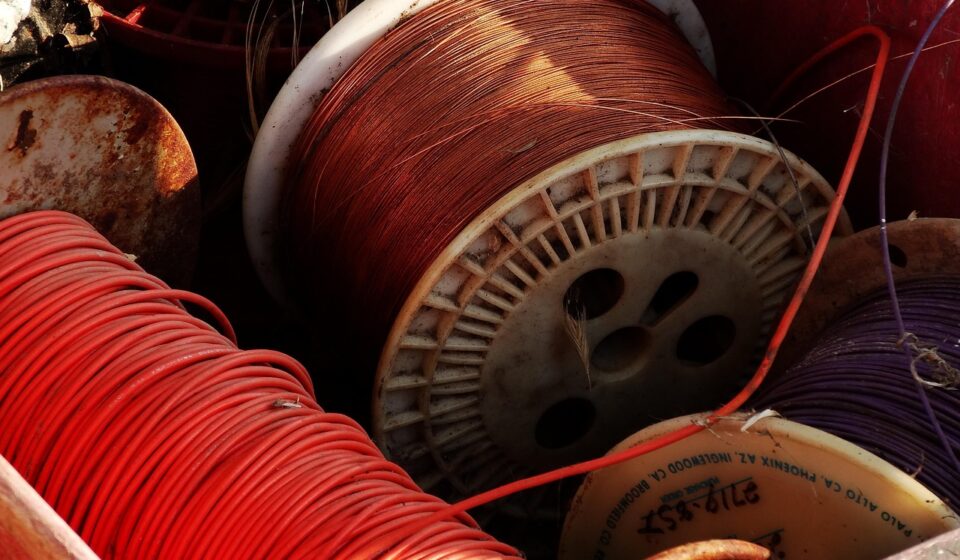
Wire arc additive manufacturing, often shortened to WAAM, is a metal additive manufacturing process that uses an electric arc to melt wire feedstock and deposit material in layers. It is also commonly described as directed energy deposition using wire and arc, or DED-arc. The practical appeal is clear: WAAM adapts familiar welding equipment, wire consumables, robotic motion and CNC control to make or repair large metallic components that may be inefficient to machine entirely from billet. It is not a universal replacement for casting, forging, machining or powder-bed metal printing. It fits best where large build size, material utilization and repair capability matter more than a fine as-printed surface finish.
In standards language, ISO/ASTM 52900:2021 provides the general additive manufacturing vocabulary, while ISO/ASTM 52943-2:2024 addresses aerospace process characteristics and performance for directed energy deposition using wire and arc. That 2024 standard identifies wire as the feedstock and arc processes such as gas metal arc, tungsten inert gas and plasma arc as the main energy sources. For manufacturers, this terminology matters because WAAM decisions often involve qualification, inspection, traceability and documentation, not deposition alone.
How the WAAM process works
A WAAM cell normally combines a welding power source, wire feed system, shielding gas, deposition head, robot or CNC gantry, substrate plate, sensors and process planning software. The machine deposits a bead of molten metal, follows a programmed toolpath and repeats the sequence until the part reaches a near-net shape. After the build, the component commonly needs heat treatment, stress relief, machining, non-destructive testing and dimensional inspection before it can be released for service.
The process can sound simple because it borrows heavily from welding, but production WAAM is not just automated welding in a different direction. Each layer changes the thermal condition of the part. Heat accumulates, the previous bead geometry influences the next bead, and toolpath decisions affect distortion, surface waviness, residual stress and final dimensional accuracy. Technical notes from TWI describe WAAM as promising for efficient engineering structures, while also emphasizing that it is not yet a fully net-shape or fully automatic process in many applications. Skilled process planning remains important.
The common arc variants are selected according to material, deposition stability and control requirements. Gas metal arc-based systems can offer relatively high productivity. Tungsten inert gas approaches can provide more controlled heat input in some applications. Plasma arc can be relevant where arc concentration and process stability are priorities. In all cases, the goal is not simply to deposit as much metal as possible, but to create repeatable beads that can be qualified for the intended part.
Why manufacturers consider WAAM for large metal components
The strongest interest in WAAM usually comes from engineers comparing it with machining, casting, forging and other metal additive processes. The main reason is scale. Laser powder bed fusion is valuable for small, complex, high-detail metal parts, but its build chamber and powder handling requirements can limit practicality for large structures. WAAM, by contrast, can be configured around robotic arms or gantry systems with a much larger working envelope.
Another reason is feedstock efficiency. Wire is widely available in many engineering alloys, easier to handle than fine metal powder, and can reduce raw material waste when compared with subtractive machining from oversized forgings or billets. The advantage is especially relevant when conventional machining creates an unfavorable buy-to-fly or buy-to-use outcome, with a large share of the purchased alloy removed as chips. In aerospace, marine, energy and heavy equipment work, reducing waste from expensive alloys can make near-net-shape deposition attractive.
WAAM is also useful for repair and feature addition. Instead of replacing a high-value metal component, a controlled deposition process may rebuild worn surfaces, add reinforcement or restore geometry before finish machining. This does not mean every repair is automatically economical or certifiable. The base material condition, service history, defect tolerance and inspection plan still determine whether repair is viable.
For readers comparing WAAM with related manufacturing processes, the key point is that WAAM is primarily a near-net-shape manufacturing route. It can reduce waste and shorten some fabrication paths, but it still depends on conventional manufacturing knowledge in welding metallurgy, machining, fixturing and inspection.
Where WAAM fits among metal manufacturing processes
WAAM should be evaluated against the job it is expected to perform. It is usually strongest when the part is large, metallic, relatively open in geometry and expensive to produce by fully subtractive methods. It is weaker when the part requires very fine internal channels, thin delicate lattices, tight as-built tolerances or smooth surfaces straight from the machine.
| Decision factor | WAAM is often suitable when | WAAM may be less suitable when |
|---|---|---|
| Part size | The component is medium to large and exceeds the practical size range of powder-bed systems. | The part is small, highly detailed and already economical by powder-bed fusion or machining. |
| Geometry | The design is near-net-shape, ribbed, structural or repair-oriented. | The design depends on fine lattice structures, sealed internal channels or micro-scale features. |
| Surface finish | Post-machining is already planned. | The as-built surface must be close to final specification. |
| Material use | Conventional machining wastes a high volume of costly alloy. | Raw material waste is already low or material cost is not a major driver. |
| Qualification | The team can control parameters, document build history and inspect the final part. | The application cannot tolerate process variation and lacks a qualification path. |
Compared with casting, WAAM can reduce tooling needs and support design iteration, but casting remains effective for high-volume parts with stable geometry and established foundry routes. Compared with forging, WAAM may reduce lead time for some shapes, while forging can provide proven grain flow and mechanical performance for critical applications. Compared with machining, WAAM can reduce material removal, yet machining still provides the final tolerance and surface quality in most industrial WAAM workflows.
Materials, parameters and controls that shape part quality
WAAM can be applied to several weldable metallic material families, including steels, stainless steels, aluminum alloys, nickel alloys and titanium alloys, depending on wire availability and metallurgical compatibility. The word weldable is important. If an alloy is difficult to weld, WAAM will not automatically make it easy to print. Hot cracking, oxidation, porosity, dilution, phase transformation and anisotropy can still appear if the process is not controlled.
Important process variables include wire feed speed, travel speed, current, voltage, arc mode, interpass temperature, shielding gas, torch angle, bead overlap, layer height, dwell time and toolpath strategy. These variables interact. For example, increasing deposition rate without managing heat input may raise the risk of distortion or unstable bead geometry. Reducing heat input too much may reduce fusion quality. The practical process window is therefore material-specific and machine-specific.
Monitoring is becoming more important because WAAM geometry develops over time. A small error in bead height can accumulate over dozens or hundreds of layers. Sensors may track temperature, arc behavior, melt pool condition, bead profile or part geometry. NIST research on digital-twin approaches for WAAM reflects a broader industry direction: linking physical process data with digital models so that deposition can be better understood, adjusted and documented. This is an engineering trend, not a guarantee that every WAAM cell has closed-loop control today.
Interpass temperature control is another practical issue. If the part remains too hot, microstructure and distortion can drift. If it cools too much, build time rises and thermal cycling changes. The correct approach depends on alloy, wall thickness, fixture stiffness, target properties and inspection requirements.
Quality risks and qualification issues
The main WAAM risks are familiar welding risks repeated through a three-dimensional build. Porosity, lack of fusion, cracking, residual stress, distortion, surface waviness and inconsistent bead geometry can all affect the final part. Peer-reviewed reviews of WAAM consistently identify heat input, thermal accumulation and process stability as major challenges for industrial adoption. See also: buying guides.
Residual stress deserves particular attention. Because the part is repeatedly heated and cooled, internal stresses can build up and cause distortion during deposition, after removal from the fixture or during machining. Stress relief, fixture design, balanced toolpaths and machining allowance are therefore part of the manufacturing plan, not afterthoughts.
Qualification is application-dependent. A demonstration wall or bracket is not the same as a flight-critical aerospace component or a pressure-containing part. ISO/ASTM 52943-2:2024 is specifically framed for aerospace directed energy deposition using wire and arc, which shows how regulated industries are moving from general process interest toward documented requirements. For non-aerospace sectors, owners and manufacturers may also look to customer specifications, welding codes, additive manufacturing guides and inspection standards that match the risk level of the part.
A practical qualification plan may include material certificates for wire, machine calibration records, parameter windows, build logs, interpass temperature records, witness coupons, destructive testing, non-destructive examination, heat treatment records, dimensional inspection and final machining verification. The cost of this work must be included when comparing WAAM with casting, forging or machining.
Practical applications in manufacturing and repair
WAAM is most often discussed for large structural metal parts, tooling, marine components, aerospace preforms, energy equipment, heavy machinery repair and near-net-shape blanks for machining. In these cases, the process can create a metal form close to the final geometry, then machining brings critical surfaces to tolerance. This hybrid route is one of the most realistic ways to use WAAM in production because it combines additive material efficiency with the precision of established subtractive methods.
Repair applications can be equally important. Turbine-related parts, shafts, dies, molds and heavy equipment components may have localized damage or wear that can be rebuilt if the substrate condition and service requirements allow. The value proposition is strongest when the original component is expensive, long-lead-time or difficult to replace. However, repair work needs careful metallurgical assessment because the deposited material, heat-affected zone and original part must function together.
WAAM also supports design iteration. When a large metal component is still being developed, avoiding hard tooling can shorten the feedback loop. Engineers can test a near-net-shape design, machine the functional surfaces, inspect the result and revise the design without waiting for a full casting or forging route. This advantage is not the same as mass-production efficiency, but it can be valuable in low-volume and high-mix manufacturing.
What to check before adopting WAAM
A realistic WAAM decision starts with the part, not the machine. The first question is whether the geometry, material and production volume match the strengths of wire-fed arc deposition. The second question is whether the organization can manage welding metallurgy, robotics, programming, inspection and machining as one connected workflow.
- Define the real business driver. Is the goal material savings, lead-time reduction, repair, design flexibility or supply chain resilience?
- Confirm material weldability. Wire availability alone does not prove that the alloy will build with acceptable properties.
- Plan machining allowance early. WAAM parts usually need finish machining, so the deposited geometry must leave enough stock without wasting the additive advantage.
- Control heat and distortion. Fixtures, toolpaths, interpass temperature and stress relief should be planned before the first build.
- Match inspection to risk. A prototype, tool insert and safety-critical component do not need the same qualification burden.
- Document the process window. Repeatability depends on stable parameters, traceable feedstock and recorded build conditions.
The practical conclusion is straightforward: WAAM is a serious manufacturing option when the problem is large metal deposition, repair or near-net-shape preforms. It becomes risky when it is treated as a shortcut around welding procedure development, metallurgical validation or final machining.
Frequently asked questions
Is wire arc additive manufacturing the same as 3D printing?
Yes. WAAM is a form of metal additive manufacturing because it builds geometry by adding material layer by layer. More precisely, it is usually categorized as directed energy deposition using wire feedstock and an arc energy source.
Does WAAM produce finished parts directly?
Usually not. WAAM typically produces near-net-shape parts that need machining, heat treatment and inspection. It can reduce material waste and create large forms efficiently, but it does not normally replace precision finishing.
Which metals can be used in WAAM?
Many weldable metals may be candidates, including steels, stainless steels, aluminum alloys, titanium alloys and nickel alloys. Suitability depends on wire availability, weldability, target properties and the ability to control defects during deposition.
What is the biggest limitation of WAAM?
The main limitation is process control. Heat input, residual stress, distortion, bead geometry and defects must be managed across the full build. For regulated or safety-critical parts, qualification and inspection can be as important as deposition speed.
When is WAAM better than machining from billet?
WAAM may be attractive when machining would remove a large amount of expensive material or when a large near-net-shape preform can reduce lead time. Machining remains necessary for final tolerances and surface finish in most production routes.