Brass precision components how to specify alloy, tolerance and compliance

Why brass precision components need a clear specification
For brass precision components, the first question is rarely just whether brass is a suitable material. A usable specification should identify the alloy, manufacturing process, drawing tolerance, surface condition and compliance boundary. C36000 free-cutting brass is widely used for high-volume turned parts, threaded features, inserts, terminals, bushings and small fittings because it produces controllable chips and supports efficient machining. The Copper Development Association lists C36000 as a benchmark free-cutting brass with a machinability rating of 100, while ASTM B16/B16M covers C36000 rod, bar, wire and shapes for screw-machine applications. The same lead content that improves machinability also raises regulatory, drinking-water, workplace and customer-declaration questions. A good drawing should therefore connect mechanical performance with material compliance before machining begins.
This guide is written for engineers, sourcing teams and technical readers comparing material choices for machined brass parts. For related manufacturing topics, see the precision components category.

Start with the alloy, not only with the word brass
Brass is a family of copper-zinc alloys, not a single material. Two brass components may look similar but behave differently during turning, thread rolling, forming, plating or exposure to water. For that reason, a production drawing should avoid vague material notes such as brass, yellow brass or standard brass. The material line should name the alloy system, the recognized designation and, where possible, the procurement standard.
C36000 is often called free-cutting brass or free-machining brass. Public data from the Copper Development Association lists its typical composition range as 60.0% to 63.0% copper, 2.5% to 3.0% lead, zinc as the remainder and iron up to 0.35%. This composition is one reason it performs well in automatic screw machines and CNC turning centers. The lead is present as a machinability aid, not as a strengthener; it helps break chips and reduces cutting friction at the tool-workpiece interface.
| Material route | Common reason for selection | Specification caution |
|---|---|---|
| C36000 free-cutting brass | Efficient turning, threading, small parts and screw-machine production | Leaded alloy; confirm RoHS, REACH, drinking-water and customer requirements before release |
| Low-lead or lead-free brass | Potable-water, consumer-contact or stricter customer programs | May require different tooling, cycle time, chip control and qualification testing |
| Other wrought brasses | Forming, appearance, corrosion needs or special mechanical properties | Do not treat them as automatic substitutes for C36000 without machining trials |
The selection is not about finding one universally better alloy. It is about matching the alloy to the end-use environment, inspection plan and market access requirements. For a non-wetted industrial spacer, C36000 may be practical. For a drinking-water fitting, a children-accessible consumer product or an electrical part sold into tightly controlled markets, the material review needs to be more conservative.
Tolerance planning should follow function
Precision does not mean every dimension must be extremely tight. The better approach is to separate functional dimensions from non-critical geometry. Shaft diameters, mating bores, thread pitch diameters, sealing faces, press-fit sections and electrical contact features may need specific tolerances or geometric controls. Overall length, cosmetic chamfers or wrench flats may be suitable for a general tolerance note if they do not control assembly performance.
General tolerance systems such as ISO 2768 are often used on machined drawings to simplify non-critical dimensions. They are useful when both buyer and manufacturer understand the selected class, but they should not replace explicit tolerances on fits, sealing interfaces or datums. For high-reliability parts, geometric dimensioning and tolerancing may be needed to control position, concentricity, perpendicularity, flatness or runout more clearly than plus-minus dimensions alone.
Drawing notes that reduce ambiguity
- Specify the alloy by UNS, EN or another recognized designation instead of using a generic brass name.
- State the applicable material standard, such as ASTM B16/B16M for C36000 rod, bar, wire and shapes where relevant.
- Define temper or hardness range when mechanical properties or thread rolling behavior matter.
- Mark functional dimensions separately from general tolerances.
- Use clear datum references for concentric or coaxial features.
- Call out the thread standard, class, depth and whether threads are cut, rolled or inspected by gauge.
- Specify surface roughness on sealing, sliding, cosmetic or electrical-contact surfaces.
- Define burr limits, edge breaks and sharp-edge restrictions.
- State plating, passivation, cleaning or tarnish-control requirements if appearance or conductivity matters.
- Request inspection evidence appropriate to the risk, such as material certification, first article inspection or critical-dimension records.
Machining behavior affects cost and consistency
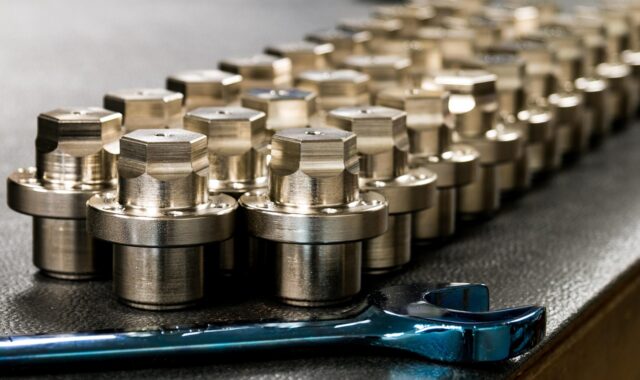
Many brass precision components are produced by CNC turning, Swiss-type turning, automatic screw machining, milling, drilling, tapping, knurling or a combination of these processes. C36000 is popular because it tends to form short chips and allows efficient cutting compared with many tougher or more ductile alloys. That advantage is most valuable in small turned parts, where chip evacuation, tool life and cycle time have a direct effect on unit cost.
Design still matters. Very thin walls can deform under clamping or cutting load. Deep micro-holes may trap chips. Long, slender features may need support to avoid vibration. Internal corners sharper than the cutting tool radius can force EDM or a secondary operation. Cross holes that break into threads may create burrs that are difficult to remove. A part may be made from brass and still become expensive if the geometry requires slow cutting, multiple setups or manual deburring.
For repeatable production, the drawing should also avoid hidden requirements. If a surface is only cosmetic, say so. If a surface is a sealing face, define roughness and flatness. If burrs can damage an O-ring, wire or mating plastic part, specify the allowed burr condition rather than relying on a general deburr note. The more clearly the functional risks are described, the easier it is to choose the machining route and inspection method.
Compliance should be checked before production
Compliance for brass precision components depends on where the final product is sold and how the part is used. A leaded brass component may be acceptable in one industrial assembly and unacceptable in another. The same alloy can trigger different obligations under electrical, chemical, drinking-water or workplace rules.
As of September 15, 2026, Commission Delegated Directive (EU) 2025/2364, dated September 8, 2025 and published in the Official Journal on November 21, 2025, lists RoHS Annex III exemption 6(c) for copper alloy containing up to 4% lead by weight, with an expiry date of June 30, 2027. This does not mean every leaded brass part is automatically acceptable. The exemption applies within the RoHS framework for electrical and electronic equipment, and the directive includes additional conditions for accessible parts that may be placed in the mouth by children.
In the United States, potable-water applications require a different review. EPA guidance on the Safe Drinking Water Act defines lead-free for pipes, pipe fittings, plumbing fittings and fixtures as a weighted average of not more than 0.25% lead across wetted surfaces, with a separate 0.2% limit for solder and flux. Common free-cutting brass should therefore not be assumed suitable for wetted drinking-water components unless the product, material and certification path support that use. See also: buying guides.
Workplace handling also matters. OSHA lead standards for general industry set a permissible exposure limit of 50 micrograms per cubic meter of air as an eight-hour time-weighted average. Machining leaded brass does not automatically mean unsafe exposure, but shops should evaluate chips, coolant, dust, housekeeping and ventilation according to the actual process. For buyers, the practical step is to request the right material declarations and avoid changing alloy or finish after qualification without a controlled review.
| End-use boundary | Main question | Typical evidence to request |
|---|---|---|
| EU electrical equipment | Does a RoHS exemption apply to this product category and date? | Material declaration, alloy composition and RoHS exemption reference |
| Drinking-water contact | Is the wetted surface compliant with lead-free requirements? | NSF/ANSI/CAN 61 or 372 evidence, approved alloy data and product certification |
| General industrial machinery | Does the alloy meet mechanical and environmental requirements? | Mill certificate, drawing review and customer material declaration |
| Machining workplace | Are lead-containing chips, dust or coolant controlled? | Exposure assessment, cleaning practice and safety documentation |
Surface finish, plating and appearance should not be afterthoughts
Brass is often selected because it machines cleanly and has an attractive metallic color. Natural brass can tarnish, however, and surface finish requirements vary widely. A threaded insert hidden inside plastic does not need the same finish as a visible knob, electrical contact, optical hardware part or sealing component. Surface roughness, burr control and cleaning should therefore be treated as part of the functional specification.
Plating adds another set of decisions. Nickel, tin, silver, chrome or other finishes may be used for corrosion resistance, solderability, contact performance or appearance, but any coating adds thickness and may affect threads, press fits and small bores. If plating is required, the drawing should state whether dimensions apply before or after plating. It should also define masked areas, adhesion expectations, cosmetic acceptance criteria and any restricted-substance requirements tied to the final market.
The corrosion environment is also important. Brasses perform well in many indoor and industrial settings, but water chemistry, ammonia exposure, dezincification risk, galvanic contact and cleaning chemicals can change the material choice. When corrosion is a known concern, the specification should not rely on a generic brass callout. It should include environment, fluid, temperature, exposure time and mating materials so that the alloy and coating can be reviewed together.
A practical checklist before ordering brass precision components
- Define the end use, including whether the part touches drinking water, skin, food-contact surfaces, children-accessible areas or electrical equipment.
- Select a recognized alloy designation and avoid generic material names.
- Confirm the procurement standard, material form and temper.
- Mark critical dimensions and fits directly instead of relying only on a title-block tolerance.
- Use datums and geometric controls where coaxiality, position, runout or flatness controls function.
- State surface roughness, burr limits and edge-break requirements on functional surfaces.
- Clarify whether plating or coating thickness is included in final dimensions.
- Request material certificates and compliance declarations before production, not after shipment.
- Use prototypes or first article inspection when changing from leaded brass to low-lead or lead-free alternatives.
- Review any regulatory expiry dates or customer substance lists before repeat orders.
The strongest specification connects design intent, material science and compliance. Brass can be an efficient choice for precision machining, but the purchase order and drawing must explain why the alloy is suitable, how the part will be inspected and which rules apply to the final product.
Frequently asked questions
Is C36000 always the right alloy for brass precision components?
No. C36000 is often a strong choice for free-machining turned components, but it contains lead. It should be reviewed carefully for potable-water, consumer-contact, children-accessible and regulated electrical applications. Low-lead or lead-free alternatives may be needed even if they machine less easily.
Can leaded brass be RoHS compliant?
It can be compliant only when the product falls within the applicable RoHS framework and the relevant exemption or condition applies. As of September 15, 2026, EU RoHS exemption 6(c) covers copper alloy containing up to 4% lead by weight until June 30, 2027, but that date and the detailed conditions should be checked before new production or repeat orders.
What tolerance should be used for machined brass parts?
The tolerance should follow the function of each feature. General tolerances may be suitable for non-critical dimensions, but mating diameters, sealing faces, threads, press fits and datum-related features should have explicit dimensional or geometric controls.
Does brass need plating or coating?
Not always. Many internal brass parts are used without plating. Coating becomes more important when the part needs controlled appearance, corrosion resistance, solderability, electrical contact performance or compatibility with a specific assembly environment.