Production processes in manufacturing explained from raw material to finished product
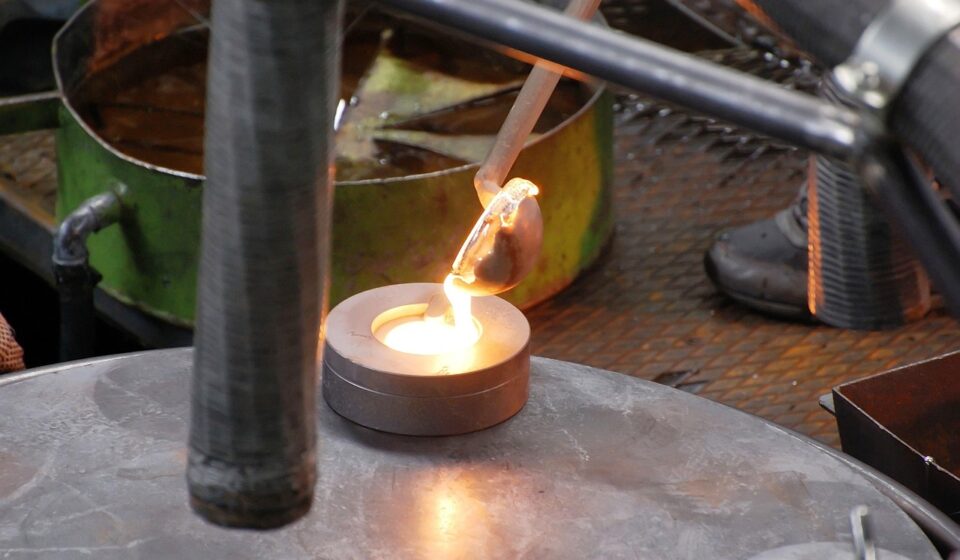
What production processes mean in manufacturing
Production processes in manufacturing are the planned sequences of work that turn materials, components, data, labor, and equipment capacity into finished products that meet defined requirements. They include more than the visible conversion step on the shop floor. A complete production process can cover order review, engineering release, material preparation, routing, tooling, machine setup, in-process checks, final inspection, packaging, and feedback for improvement. For manufacturers, the practical goal is not simply to make a part or assembly once. It is to make it repeatedly, safely, economically, and with traceable quality. That is why standards bodies, safety regulators, and manufacturing research organizations often describe production as a controlled system rather than a single operation.
This distinction matters because many quality, delivery, and cost problems do not start at the machine. A machining cell, stamping line, welding station, molding press, or assembly bench may perform as expected and still produce late or nonconforming output if drawings are unclear, material lots are mixed, inspection criteria are vague, or process changes are not controlled. A useful way to understand manufacturing production is to follow the flow from requirements to release.
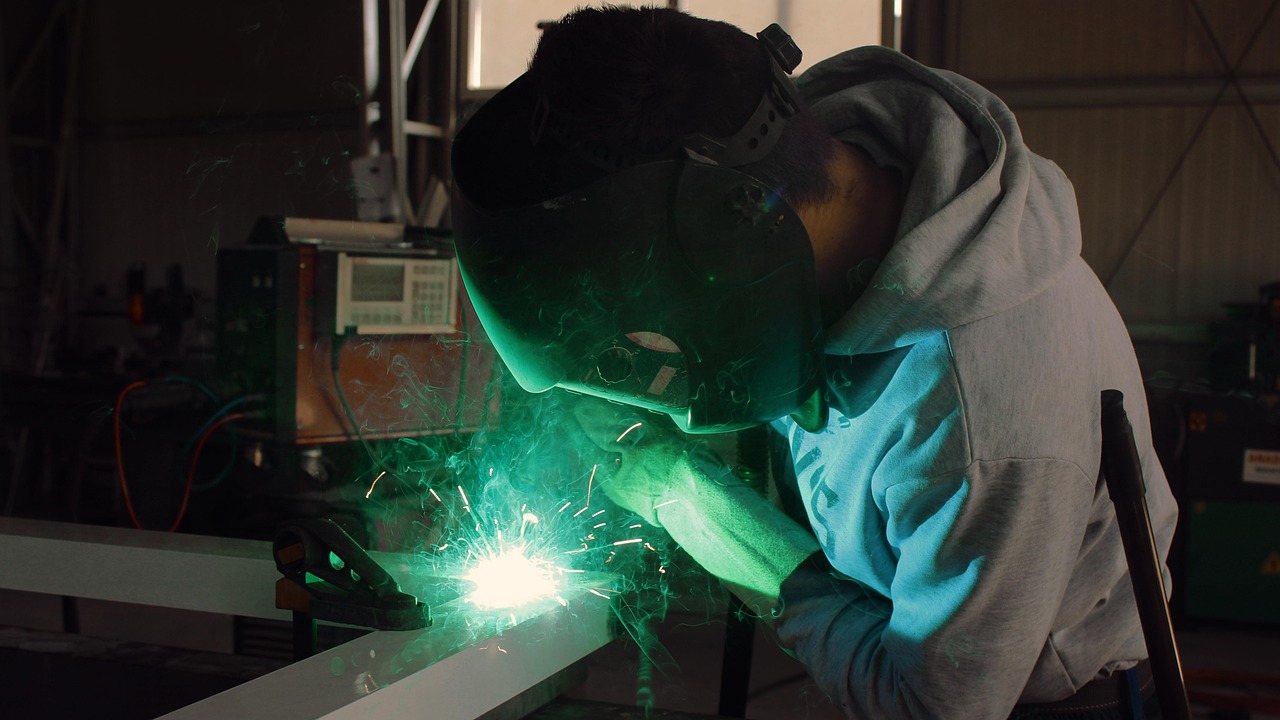
A practical flow from order to shipment
Every factory has its own layout, software, and terminology, but most production processes follow a similar logic. The route may be simple for a standard bracket and much more complex for a precision mechanical assembly. Even so, the core stages remain recognizable.
Requirements and process planning
The process starts before material is cut, formed, molded, or assembled. Customer requirements, drawings, tolerances, materials, standards, quantities, delivery expectations, and inspection needs have to be reviewed. In a well-controlled environment, this review answers several basic questions: what must be made, what acceptance criteria apply, which equipment and tooling are suitable, what risks are already known, and what records must be retained?
Process planning then converts product requirements into a routing. A routing may define operations such as cutting, heat treatment, CNC machining, deburring, surface finishing, subassembly, inspection, and packaging. It can also specify setup requirements, fixtures, gauges, operator skills, sampling plans, and hold points. Quality management standards such as ISO 9001 frame this as part of planning and controlling operations needed to meet customer and regulatory requirements. The standard does not prescribe one manufacturing method, but it does reinforce the need for controlled processes, competent people, documented information where needed, and improvement based on performance evidence.
Material preparation and transformation
Once planning is complete, production moves into material control and transformation. Materials may need incoming inspection, lot identification, cutting, cleaning, drying, preheating, mixing, or staging. In discrete manufacturing, the main transformation may be machining, forming, casting, stamping, welding, fastening, coating, or assembly. In process manufacturing, it may involve mixing, reacting, separating, heating, cooling, blending, or filling.
This is where cycle time, equipment capability, tooling condition, operator method, and environmental conditions become visible. However, the transformation step is only reliable when upstream preparation is reliable. A stable CNC program cannot overcome the wrong alloy, poor fixture location, tool wear beyond limit, or an uncontrolled drawing revision. Good production design treats material, method, machine, measurement, environment, and people as connected variables.
Inspection, packaging, and release
Manufacturing does not end when the last operation is finished. Output must be checked against defined criteria. Depending on the product and risk level, this can include dimensional inspection, visual inspection, functional testing, torque verification, hardness testing, surface finish measurement, pressure testing, documentation review, or certificate checks. Inspection can take place at incoming, in-process, final, or first-article stages.
Release should confirm that the product conforms, required records are complete, nonconformities are resolved, and packaging protects the product during storage or shipment. In industries with strict traceability expectations, release may also depend on lot records, serial numbers, operator sign-offs, calibration status, and supplier documentation.
Main types of production processes in manufacturing
Production processes are often grouped by product variety, volume, flow pattern, and transformation method. These categories are not rigid. A single manufacturer may operate a job shop for prototypes, batch production for spare parts, and flow production for high-volume components. The table below summarizes common process types and the operational questions they raise.
| Process type | Typical use | Main strength | Common control challenge |
|---|---|---|---|
| Job shop production | Custom parts, repair work, prototypes, low-volume orders | High flexibility | Scheduling, setup time, routing variation, and documentation consistency |
| Batch production | Products made in defined lots, such as machined components or molded parts | Balanced flexibility and efficiency | Lot traceability, changeover control, and batch-to-batch variation |
| Flow or line production | Repeated products moving through a fixed sequence | High throughput and stable takt time | Bottlenecks, downtime, line balancing, and defect containment |
| Continuous process production | Chemicals, metals, paper, food ingredients, and similar operations | Consistent large-scale output | Process parameter control, safety, shutdown planning, and contamination prevention |
| Additive manufacturing | Complex geometries, prototypes, tooling, and selected production parts | Design freedom and reduced tooling needs | Material qualification, build repeatability, post-processing, and inspection methods |
Choosing a production type is both a business and engineering decision. High volume alone does not justify automation if demand is unstable or design changes are frequent. Likewise, a flexible job shop may not be suitable when customers require short lead times, tight repeatability, and low unit cost at scale. The right process is the one that fits product design, demand pattern, quality risk, labor skill, capital cost, and supply chain reliability.
Controls that make production repeatable
A production process becomes repeatable when the important variables are identified, controlled, monitored, and improved. This is where many manufacturers move from informal know-how to a more robust operating system.
Work instructions and routings
Work instructions should explain the critical steps that affect safety, quality, and flow. They do not need to describe every obvious movement, but they should define what operators and inspectors must know to produce conforming work. Useful instructions may include tooling lists, setup photos, torque values, inspection points, handling precautions, acceptance criteria, and escalation rules when something is abnormal.
Routings support scheduling and traceability. They show the intended operation sequence and help planners see where capacity limits or outsourced processes may affect delivery. When routings are inaccurate, production may appear busy while orders wait between departments. Reviewing actual movement against the planned routing is one way to expose hidden queues, unnecessary transport, and rework loops.
Equipment capability and maintenance
Machines, tools, fixtures, gauges, and software programs must remain capable of producing the required output. Preventive maintenance, calibration, tool-life rules, machine warm-up routines, and setup verification all support process stability. For critical dimensions or characteristics, manufacturers may use capability studies, first-piece checks, or statistical process control to confirm that the process is not only producing acceptable parts now, but is likely to continue doing so.
Maintenance is also a safety issue. OSHA guidance on hazardous energy control, often discussed as lockout and tagout, emphasizes preventing unexpected energization or startup during servicing and maintenance. In production planning, this means uptime targets should not be pursued by bypassing guards, skipping isolation steps, or treating maintenance as an informal interruption. Safe process design is part of reliable manufacturing, not a separate concern.
Traceability and change control
Traceability connects output to the conditions under which it was made. Depending on the product, it can include material heat numbers, supplier lots, machine numbers, operators, inspection records, software versions, fixture IDs, and shipment records. Traceability is especially important when a defect is discovered after shipment because it allows the manufacturer to identify affected products more precisely.
Change control prevents silent drift. A drawing revision, material substitution, new supplier, altered heat-treatment cycle, updated CNC program, or replacement gauge can change the process outcome. The more critical the product, the more disciplined the change review should be. Change control does not mean resisting improvement; it means evaluating risk before implementation and keeping evidence of what changed, why it changed, who approved it, and how the result was verified. See also: buying guides.
Metrics that reveal process health
Manufacturing metrics should help teams see whether a production process is stable, capable, safe, and economically useful. Too many metrics create noise, while too few can hide risk. The most useful set depends on the process type and product risk.
| Metric | What it shows | Why it matters |
|---|---|---|
| First-pass yield | Share of output accepted without rework | Shows whether the process is producing quality at the first attempt |
| Scrap rate | Material or product lost to nonconformity | Connects quality problems to cost, material usage, and capacity loss |
| Cycle time | Time needed to complete an operation or unit | Supports capacity planning and bottleneck analysis |
| Overall equipment effectiveness | Availability, performance, and quality losses | Highlights downtime, speed loss, and quality loss in equipment-centered processes |
| On-time delivery | Orders shipped when promised | Shows whether production performance supports customer commitments |
| Nonconformance recurrence | Repeat defects after correction | Reveals whether corrective actions address root causes or only symptoms |
EPA lean manufacturing guidance describes waste reduction as a central part of lean practice, with environmental benefits often following from lower scrap, reduced material movement, less energy use, and fewer non-value-added activities. This is a useful reminder that process metrics should not stop at speed. A fast process that creates excessive scrap, rework, or energy waste is not truly efficient.
How automation and smart manufacturing change process design
Automation changes how production processes are designed, but it does not remove the need for process discipline. Robots, CNC systems, sensors, machine vision, automated storage, manufacturing execution systems, and data dashboards can reduce manual variation and make production data more visible. They can also create new dependencies on programming control, cybersecurity, sensor calibration, data integrity, and maintenance skills.
NIST research on smart manufacturing emphasizes the role of measurement, data, and connected systems in understanding and improving production performance. In practical factory terms, this can help manufacturers move from occasional inspection toward more continuous feedback. A press can monitor force curves. A machining center can track spindle load. A welding cell can record parameters. A vision system can detect missing features. A dashboard can show bottlenecks before they become missed shipments.
The limitation is that data is only valuable when it is connected to decisions. Collecting machine data without clear definitions, ownership, and response rules can create dashboards that look advanced but do not improve output. A stronger approach starts with a production question: which defect, delay, setup loss, or variation are we trying to reduce? The data system should then be designed around that question.
Common risks and practical safeguards
Several risks appear repeatedly across manufacturing production processes. One is designing the process around ideal conditions rather than normal variation. Material properties shift, tools wear, operators change, machines drift, and suppliers experience variation. Robust processes include tolerances, checks, maintenance routines, and reaction plans for these realities.
A second risk is treating inspection as a substitute for control. Final inspection can detect defects, but it does not prevent wasted labor, machine time, or material. Prevention usually comes from clearer requirements, capable equipment, stable setups, mistake-proofing, operator training, and in-process feedback.
A third risk is separating engineering, production, quality, purchasing, and maintenance into disconnected functions. Many production failures are cross-functional. A cost-driven material substitution can affect machinability. A design change can require new fixtures. A purchasing delay can force schedule compression. A maintenance backlog can reduce process capability. Cross-functional review is often more effective than assigning blame after defects appear.
Finally, process improvement should be prioritized. Not every process needs the same level of automation, documentation, or analysis. A high-risk, high-volume, tight-tolerance operation deserves deeper control than a low-risk manual packing step. Manufacturers get better results when they apply discipline where failure would have the greatest effect on safety, quality, delivery, or cost.
For additional articles on related factory methods and process comparisons, visit the manufacturing processes section.
Frequently asked questions
What is the difference between a manufacturing process and a production process?
A manufacturing process usually refers to the technical method used to transform material, such as machining, casting, molding, welding, or assembly. A production process is broader. It includes the manufacturing method plus planning, material control, scheduling, inspection, release, and improvement activities needed to deliver finished output.
Which production process is most suitable for mechanical manufacturing?
There is no single process that fits all mechanical manufacturing. Custom parts often suit job shop or batch production. Repeated components may suit line or cellular production. Complex prototypes or tooling may use additive manufacturing. The decision should consider volume, design stability, tolerance requirements, material, lead time, cost, and inspection needs.
Why is process control important in manufacturing?
Process control helps manufacturers produce conforming output repeatedly instead of relying on final inspection or operator memory. It reduces variation, scrap, rework, safety risk, and delivery uncertainty. It also creates evidence that the process was performed as planned.
How can a factory improve an existing production process?
A practical improvement cycle starts by mapping the current process, measuring defects and delays, identifying the main constraint or source of variation, testing a controlled change, and verifying the result. Improvements should be documented when they affect quality, safety, routing, equipment settings, inspection, or customer requirements.