American precision components in 2026 and the supplier checks that matter

What buyers mean by American precision components in 2026
American precision components are machined, molded, fabricated, or assembled parts made to controlled dimensions, material requirements, and documented quality expectations within the United States or a U.S.-linked supply chain. In 2026, buyers using this term are usually looking for more than a geographic label. They want to know whether domestic precision components can reduce supply risk, support regulated applications, and meet tighter inspection requirements.
The practical answer depends on the supplier. American sourcing can help when the manufacturer has sound process controls, disciplined inspection, complete documentation, and realistic capacity planning. It does not automatically solve every cost or lead-time problem. A strong evaluation still has to cover drawings, tolerance strategy, quality certifications, material traceability, production readiness, and change-control expectations.
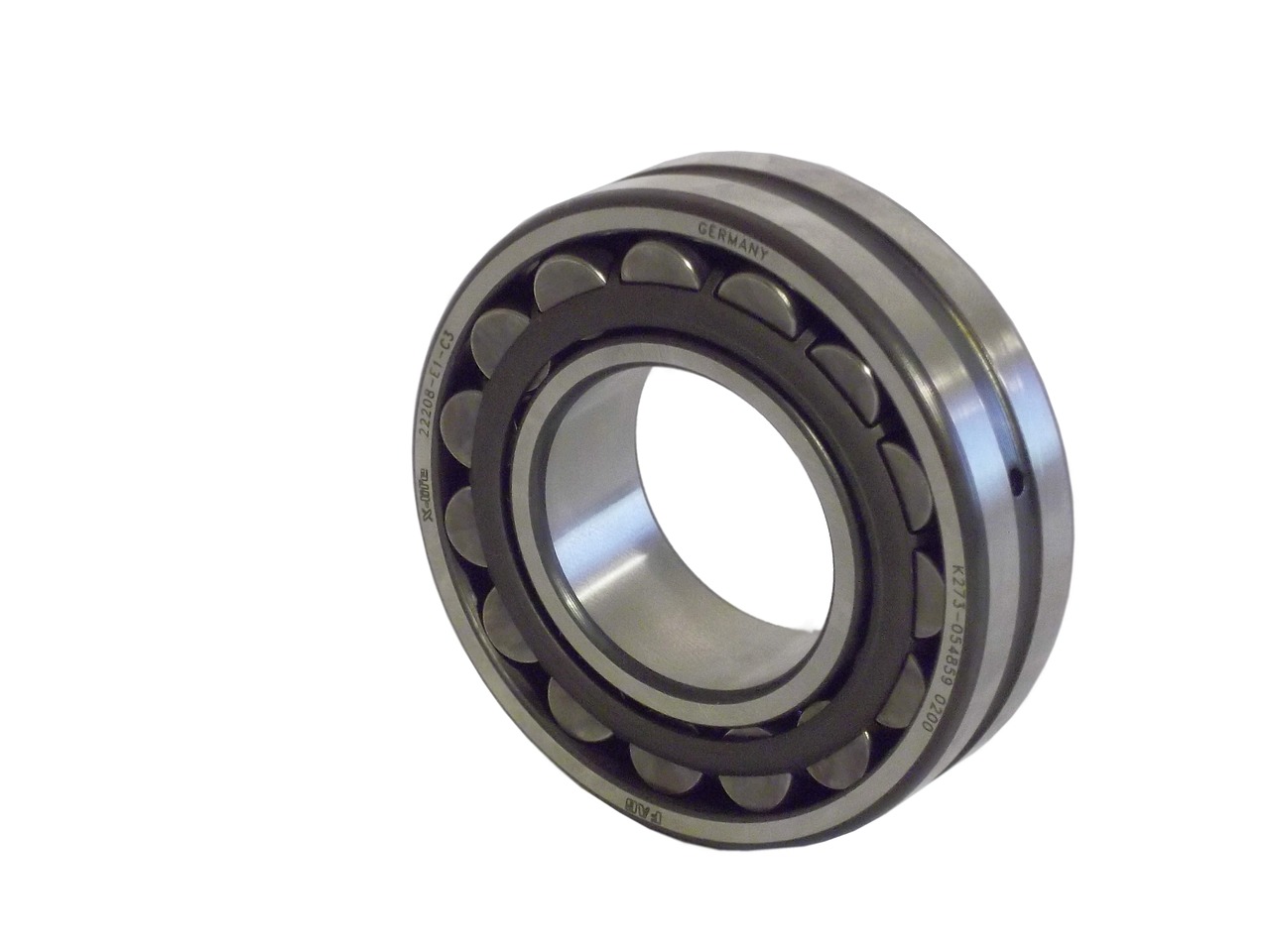
For more industry context on component manufacturing, readers can visit the precision components category.
Why domestic precision component sourcing is getting more attention
Interest in U.S.-based component supply has been shaped by several overlapping pressures: supply-chain disruption, geopolitical uncertainty, tariff exposure, shorter product-development cycles, and the need for closer engineering feedback. NIST Manufacturing Extension Partnership materials published in February 2025 describe reshoring as being driven by supply-chain resiliency, with domestic production helping reduce risk and improve responsiveness. That does not mean every part should be made domestically, but it explains why procurement teams are reconsidering total cost instead of focusing only on quoted unit price.
For precision components, the cost calculation often includes engineering time, first article approval, scrap risk, rework, warranty exposure, expedite fees, inventory buffers, and the cost of production stoppages. A component that looks inexpensive in a quote can become costly if drawings are interpreted differently, material substitutions are not controlled, or inspection records are incomplete. At the same time, a domestic supplier can still be the wrong choice if it lacks the equipment, quality system, or capacity required for the part family.
NIST’s Annual Report on the U.S. Manufacturing Economy 2025, published on February 20, 2026, frames manufacturing competitiveness through productivity, industry trends, investment, and the ability to distinguish quality and performance. For buyers of precision parts, that broader point leads to a practical supplier-selection question: can the supplier prove repeatable performance, not just quote a capability?
The quality system matters more than the country label
The phrase American precision components can be a useful starting point, but it should never replace technical qualification. A supplier’s country, region, or ownership structure does not prove process capability. Quality management systems, inspection controls, calibration discipline, operator training, and traceability are what make precision repeatable across production lots.
ISO describes ISO 9001 as a quality management standard that can be used by organizations of any size and sector to improve quality management, meet customer and applicable requirements, and enhance customer satisfaction. ISO also lists the 2026 edition of ISO 9001 as published in September 2026. That timing matters because buyers may see suppliers transitioning from ISO 9001:2015 to ISO 9001:2026 according to certification-cycle requirements. During that transition, procurement and quality teams should check the certificate scope, issuing body, expiration date, and whether the certificate actually covers the facility and processes used for the quoted component.
For aerospace, space, and defense applications, the quality bar is often higher. IAQG states that the 9100 quality management standard was developed for aviation, space, and defense organizations and can be used across the supply chain where additional requirements over ISO 9001 are needed. SAE International’s AS9100D description notes that it includes ISO 9001:2015 requirements plus additional aviation, space, and defense requirements. For buyers, AS9100D is not a decorative credential. It can be relevant when the component requires risk management, configuration control, special-process oversight, or documented flow-down of customer requirements.
Technical checks before placing a precision component order
Component qualification should begin before a purchase order is released. A useful review identifies what is truly critical to function, what can be inspected economically, and where the drawing may create unnecessary cost. The supplier should be able to discuss tolerances, datum strategy, surface finish, material condition, heat treatment, coating, packaging, and inspection method without treating the drawing as a simple price list.
Drawing and tolerance review
Tight tolerances should be tied to function. When every feature is treated as critical, cost rises and lead time can expand without improving performance. A proper review asks which dimensions affect fit, sealing, load transfer, wear, electrical contact, or assembly alignment. If geometric dimensioning and tolerancing is used, the supplier should confirm datum interpretation and inspection strategy before production.
Material and process traceability
Material traceability is essential when parts are used in regulated, safety-critical, or high-value assemblies. Buyers should define whether mill test reports, lot traceability, heat numbers, certificates of conformance, RoHS or REACH declarations, or special-process certificates are required. These expectations should be included in the quote package rather than added after parts are complete.
Inspection and measurement capability
Precision does not exist without measurement. Buyers should confirm whether the supplier has suitable inspection tools for the part geometry, such as coordinate measuring machines, optical comparators, surface roughness instruments, thread gauges, hardness testing access, or functional gauges. Just as important, inspection equipment should be calibrated, and the inspection plan should match the features that matter most.
A practical supplier qualification checklist
The following checklist gives buyers a structured way to compare American precision component suppliers without relying on broad capability claims. It is not a substitute for a formal audit, but it can expose gaps early.
| Evaluation area | What to ask | Why it matters |
|---|---|---|
| Quality system | Is the supplier certified to ISO 9001, AS9100D, ISO 13485, or another relevant standard, and what is the certificate scope? | Certification scope helps confirm whether the documented system applies to the actual process and facility. |
| Drawing review | Can the supplier identify difficult tolerances, ambiguous notes, and inspection risks before quoting? | Early review reduces rework, disputes, and late engineering changes. |
| Material control | How are material lots, heat numbers, substitutes, and certificates controlled? | Traceability supports compliance, root-cause analysis, and regulated applications. |
| Process capability | Has the supplier produced similar part families, materials, and tolerance ranges? | Similar experience is more useful than broad equipment claims. |
| Inspection plan | Which features are inspected, by what method, and at what frequency? | Inspection strategy determines whether precision can be verified consistently. |
| Capacity and lead time | What are current bottlenecks in machining, finishing, heat treatment, coating, or inspection? | Lead time often depends on the slowest linked process, not only machining time. |
| Change control | How are drawing revisions, process changes, supplier changes, and nonconforming parts communicated? | Controlled change prevents silent drift in part performance. |
Where American sourcing can add value
Domestic sourcing is most valuable when communication speed, engineering iteration, traceability, or risk reduction affects the economics of the part. Prototype and low-volume production often benefit from close supplier-engineer collaboration because design feedback can be incorporated faster. Complex machined components may also benefit when inspection results and manufacturability concerns can be discussed in the same time zone and with fewer logistical delays.
American precision component sourcing may also support programs that require domestic content, tighter supplier visibility, or easier auditing. Buyers should still avoid assuming that domestic automatically means faster. Lead time depends on raw material availability, shop loading, skilled labor, outside processing, inspection complexity, and purchase-order clarity. A supplier with strong communication but limited capacity may be less reliable than a larger qualified supplier with disciplined scheduling. See also: buying guides.
The best sourcing decision is usually part-specific. A high-volume commodity part, a defense-related machined housing, a medical device component, and a custom automation fixture may each require a different supplier profile. Procurement should segment parts by risk, tolerance, material, regulatory burden, and demand pattern before deciding how much domestic sourcing matters.
Common risks buyers should not overlook
Several risks appear repeatedly in precision component sourcing. The first is drawing ambiguity. If a drawing leaves surface finish, edge break, coating thickness, or datum interpretation open to judgment, suppliers may quote different assumptions. The second is uncontrolled outside processing. Heat treatment, plating, anodizing, passivation, welding, and nondestructive testing can introduce delays or quality issues if that part of the supply chain is not managed.
The third risk is inspection mismatch. A buyer may expect full dimensional reporting while the supplier has quoted standard in-process checks. Unless first article inspection, sampling level, and reporting format are defined, both sides may believe they agreed to different deliverables. The fourth risk is over-specification. Tighter-than-needed tolerances, premium materials, and unnecessary documentation can make an otherwise practical component expensive and slow.
Finally, buyers should watch for vague capability language. Phrases such as high precision, advanced equipment, and quality focused are not enough. Useful evidence includes process capability data when available, sample inspection reports, certification scope, equipment lists tied to the part type, documented nonconformance procedures, and clear revision-control practices.
How to prepare a better RFQ package
A complete request for quote helps suppliers respond accurately and reduces changes after award. The RFQ should include the latest drawing revision, 3D model if available, expected annual usage, target production lot size, required material grade, finish requirements, inspection requirements, packaging needs, and any flow-down terms. If the part has critical-to-quality features, identify them explicitly instead of expecting the supplier to infer them.
Buyers should also state whether prototypes, first article inspection, production part approval, process capability studies, or certificates are required. If the component will be used in aerospace, defense, medical, energy, robotics, or industrial automation, the intended application context can help the supplier identify likely risks. The goal is not to expose proprietary product details unnecessarily, but to give the supplier enough context to quote the right process rather than the cheapest assumed process.
When comparing quotes, look beyond the price column. A higher quote that includes documented inspection, controlled material, realistic lead time, and engineering review may be less expensive than a low quote that later requires rework or requalification. Precision component sourcing rewards clarity early in the process.
Frequently asked questions
Are American precision components always more expensive?
Not always. Unit price can be higher for some domestic components, but total cost depends on quality risk, freight, inventory, engineering coordination, rework, tariffs, expediting, and production downtime. For complex or high-risk parts, domestic sourcing can sometimes reduce hidden costs even when the quoted unit price is not the lowest.
Which certification should a precision component supplier have?
It depends on the application. ISO 9001 is a broad quality management standard used across many sectors. AS9100D is commonly relevant for aviation, space, and defense supply chains. ISO 13485 may be relevant for medical device components. Certification should be checked against the actual facility, process scope, and customer requirements.
What is the most important document to provide with an RFQ?
The latest controlled drawing is usually the most important document, especially when paired with a 3D model and clear notes about material, finish, tolerances, inspection requirements, and expected order volume. If the drawing is incomplete or outdated, even experienced suppliers may quote the wrong assumptions.
How can buyers verify precision before full production?
Buyers can request prototype samples, first article inspection, dimensional reports, material certificates, process documentation, and a defined control plan for production. For critical components, supplier audits or on-site process reviews may also be appropriate.
Does reshoring mean every precision part should be made in the United States?
No. Reshoring is a sourcing strategy, not a universal rule. The decision should depend on part risk, tolerance requirements, demand stability, regulatory needs, supplier capability, and total landed cost. Some parts justify domestic production strongly, while others may remain suitable for a mixed or global supply chain.
The bottom line for 2026 sourcing decisions
American precision components are most compelling when domestic production is paired with measurable supplier discipline. Buyers should evaluate quality systems, engineering support, inspection capability, material traceability, outside-process control, and change management before making sourcing decisions. In 2026, the stronger procurement approach is not simply to ask where a component is made. It is to ask whether the supplier can prove that every critical requirement will be understood, produced, measured, documented, and repeated.