Brass precision turned components for CNC turning and assembly design

What brass precision turned components mean in practice
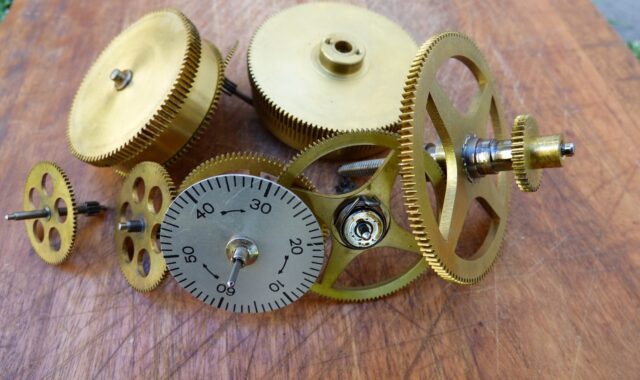
Brass precision turned components are small to medium-size parts produced mainly on automatic lathes, Swiss-type machines or CNC turning centers from brass bar, rod or shaped stock. They are used when a part needs accurate diameters, threads, grooves, shoulders, bores or mating faces, while also taking advantage of brass properties such as machinability, conductivity, corrosion resistance or appearance. Common examples include inserts, bushings, spacers, valve parts, electrical contacts, connectors, instrument fittings and threaded hardware.
For engineers and buyers comparing precision components, the main question is not simply whether brass can be machined. It is whether the selected brass grade, tolerance scheme, surface finish and compliance route suit the working environment of the part.
Brass machines differently from stainless steel, aluminum and engineering plastics. With suitable geometry, it can support high-throughput turning and consistent surface quality. The same material family also brings design and sourcing limits: lead content, dezincification risk, plating adhesion, thread form and burr control should be reviewed before a drawing is released.
Why brass is often chosen for precision turning
Brass is a copper-zinc alloy family, not a single material. In turned components, its value comes from a mix of production efficiency and useful service properties. Free-cutting brasses can form short chips, reduce tool loading and produce clean turned surfaces, which is why brass has long been used for screw-machine work and high-volume fittings.
Published industry material data from the Copper Development Association identifies C36000 free-cutting brass as a widely used machining benchmark. ASTM B16/B16M-24 covers free-cutting brass rod, bar and shapes produced from Copper Alloy UNS C36000 for high-speed screw machining and moderate thread rolling. That makes C36000 a familiar choice when the application is not limited by lead-content rules.
- Machinability: free-cutting grades support efficient turning, drilling, knurling and threading when chip evacuation is considered in the process plan.
- Dimensional repeatability: stable bar stock, sharp tools and short cycle times can help maintain consistent features across long production runs.
- Electrical and thermal conductivity: brass is useful in connectors, terminals and instrument parts where conductivity matters but pure copper may be too soft or uneconomical to machine.
- Corrosion behavior: many brass grades perform well in indoor, dry or mildly corrosive environments, although water chemistry and dezincification risk must be checked for fluid-contact parts.
- Finish options: turned brass can be polished, nickel plated, tin plated, cleaned or left as-machined depending on function and appearance requirements.
Material selection should start with function and compliance
The alloy choice for a turned brass component should be made before tolerances and finishes are finalized. A drawing that only says “brass” leaves too much room for variation. At minimum, a controlled drawing should identify the material designation, applicable standard, temper if relevant, lead or lead-free requirement, and any restrictions related to drinking water, electrical equipment or customer-specific substance lists.
| Material route | Typical reason for selection | Important limitation to check |
|---|---|---|
| C36000 free-cutting brass | High machinability for screw-machine and CNC turned parts | Lead content may be unsuitable for potable water, child-accessible products or some customer substance requirements |
| Lead-free or low-lead brass | Used where lead-content limits apply or where customers want to reduce restricted substances | Machining behavior, tool wear and chip formation may differ from C36000 and should be proven before volume production |
| Dezincification-resistant brass | Considered for certain water-contact or fluid-control environments | DZR performance depends on grade, environment and certification needs, not on the word “brass” alone |
| Special brass or copper alloy | Selected for strength, conductivity, appearance or regional standard alignment | Availability, cost and equivalent-grade assumptions need confirmation before purchasing stock |
A common mistake is to treat lead-free brass as a direct replacement for free-cutting brass. It may satisfy a compliance target while changing cutting load, cycle time, burr behavior or tool-life expectations. In precision turning, those changes can affect cost and also determine whether small grooves, deep bores and fine threads remain stable during production.
Design features that control machining difficulty
Many brass parts look simple on an assembly drawing, but small design choices often decide whether the component can be turned consistently. The highest-risk features are not always the largest diameters. They are often internal details, sharp transitions and secondary operations that increase burrs, distortion or inspection uncertainty.
Wall thickness and slender features
Thin walls can deflect under cutting force, clamping pressure or part-off stress. Brass is machinable, but a very thin sleeve or long turned pin can still bend, chatter or go out of round. If a component has a long unsupported length, the drawing should clarify straightness, concentricity and handling expectations rather than relying only on diameter tolerance.
Threads and undercuts
Threads are common in brass fittings, inserts and connectors. Designers should specify the thread standard, class of fit, thread depth, relief undercut, start requirements and whether thread rolling or cutting is expected. A missing relief can leave a burr or an incomplete last thread. On a small part, an unnecessarily tight thread tolerance can also raise inspection cost when a standard class would meet the functional need.
Bores, grooves and cross holes
Deep bores and internal grooves can create chip-packing risk, especially in small-diameter parts. Cross holes that break into threads or bores usually need a defined deburring approach. If the part carries fluid or provides electrical contact, burrs are not just cosmetic; they may affect sealing, flow, assembly or conductivity.
Tolerances and inspection need to match the real interface
Precision turned brass parts are often specified with tight diameter tolerances because turning can hold accurate round features. Even so, a tight tolerance is useful only when it controls a functional interface. ISO 286-1 establishes an ISO code system for tolerances on linear sizes such as cylindrical features and two parallel opposite surfaces. In practice, designers may use ISO fits, limit dimensions, unilateral tolerances or geometric tolerances depending on the mating part and the inspection method.
| Drawing item | Why it matters | Practical note |
|---|---|---|
| Critical outside and inside diameters | Control press fits, sliding fits, sealing and location | Use fit classes or explicit limits where the mating condition is known |
| Concentricity, runout or position | Controls alignment between turned features | Use datums that reflect how the part is assembled or measured |
| Surface roughness | Affects sealing, wear, contact resistance and appearance | Apply roughness only to surfaces where it is functionally needed |
| Burr and edge requirements | Prevents assembly damage and contamination | Define break-edge limits and burr-free zones for holes, grooves and threads |
| Plating or coating thickness | Changes final size and surface behavior | Account for thickness in pre-plate and post-plate dimensions |
Inspection planning should be realistic. A turned brass pin may be checked with micrometers, ring gauges or optical systems. A miniature connector with internal bores, plating and cross holes may require thread gauges, plug gauges, air gauging, microscopy or coordinate measurement. The drawing should not demand measurement methods that are more stringent than the application requires, but it should identify the features that cannot be left to visual judgment.
Lead content and regulated applications require early screening
Lead is one of the most important compliance issues for brass precision turned components. In C36000 and similar free-cutting brasses, lead improves machinability because it helps chip breaking and reduces friction at the cutting zone. That same benefit is also why the material may be restricted in certain products.
For electrical and electronic equipment placed on the EU market, RoHS rules restrict lead but include exemptions for some alloying uses. As of 17 October 2026, EU RoHS Annex III exemption 6(c), amended by Commission Delegated Directive (EU) 2025/2364, covers copper alloy containing up to 4 percent lead by weight and lists an expiry date of 30 June 2027. The same amendment adds conditions for certain electrical or electronic equipment supplied to the general public where accessible parts may be placed in the mouth by children. Any new project should verify the latest exemption status before release because RoHS exemptions can change. See also: buying guides.
For drinking-water applications in the United States, the Safe Drinking Water Act definition of “lead free” is different. EPA guidance describes lead free for pipes, pipe fittings, plumbing fittings and fixtures as not more than a weighted average of 0.25 percent lead across wetted surfaces, with separate requirements for solder and flux. A machinable brass grade suitable for an industrial connector may therefore be unsuitable for a potable-water fitting unless the full product and material route meet the applicable lead-free requirements.
The safest engineering approach is to screen the application first. Potable water, food contact, medical device, child-accessible consumer product, electrical equipment, general industrial machinery and decorative hardware can all have different requirements. A supplier or buyer should not describe a brass part as compliant unless the exact standard, product scope and documentation are known.
Surface finish, plating and cleaning affect final performance
Turned brass can look clean directly off the machine, but functional finishing still needs attention. Residual cutting fluids, loose chips, polishing compounds and plating residues can affect electrical contact, sealing and assembly. If a component will be soldered, crimped, bonded or used in an electrical connector, cleanliness is part of performance rather than a cosmetic detail.
Nickel plating is often used for wear resistance and appearance. Tin plating may be selected for solderability or electrical contact behavior. Other finishes may be used for decorative or corrosion-control reasons. In every case, finish thickness must be included in the dimensional plan. A bore that is correct before plating may become undersized after plating. A thread that gauges before coating may fail after coating if the process does not include the required allowance.
- Specify whether dimensions apply before or after plating.
- Identify surfaces where plating is prohibited or must be controlled.
- Define cleaning expectations if the part is used in fluid, pneumatic or electrical assemblies.
- Clarify cosmetic acceptance separately from functional surface requirements.
A practical checklist before ordering or publishing specifications
Before a brass turned component is released for sourcing, the specification should answer several practical questions. Is the material identified by a recognized grade rather than a generic name? Are the functional interfaces clear? Are the tolerances tied to real assembly needs? Is the lead-content requirement known? Are finishing and inspection requirements measurable? Clear answers reduce ambiguity for both technical buyers and manufacturing reviewers.
- Define the alloy by UNS, ASTM, EN, JIS or another applicable standard.
- Separate critical dimensions from noncritical dimensions to avoid unnecessary cost.
- Call out thread standard, fit class and gauges when threads are functional.
- State burr, edge break and cleanliness requirements for holes, grooves and sealing faces.
- Check RoHS, REACH, drinking-water, customer substance and regional requirements before choosing leaded brass.
- Confirm whether plating or coating thickness is included in final dimensions.
- Use sample inspection, first article inspection or production control plans when the part has multiple critical features.
Brass remains a strong material option for precision turning, but the best result comes from matching the alloy and drawing to the real working conditions. In modern sourcing, the question is not only “Can this part be machined?” It is also “Can this part be machined consistently, documented clearly and used legally in its intended market?”
Frequently asked questions
What are brass precision turned components used for?
They are used in assemblies that need accurate turned geometry, such as connectors, bushings, inserts, spacers, fittings, valve parts, instrument hardware and electrical contact components. The exact application determines the alloy, tolerance, surface finish and compliance requirements.
Is C36000 brass always the best choice for turned parts?
No. C36000 is widely used because it machines efficiently, but its lead content can be a limitation. If the part is used in potable water, child-accessible products or restricted electrical equipment, a lead-free or low-lead alternative may be required.
How tight can tolerances be on turned brass parts?
The achievable tolerance depends on part size, geometry, wall thickness, machine type, tooling, production volume and inspection method. Brass can support accurate turned features, but unnecessarily tight tolerances increase cost and may not improve function unless they control a real interface.
Does plating change the dimensions of a brass component?
Yes. Plating adds material and can change diameters, thread fit, bore size and surface roughness. Drawings should state whether dimensions apply before or after plating and should include allowance for coating thickness where it affects fit.
Are lead-free brass parts harder to machine?
They can be. Many lead-free brass grades do not chip or cut exactly like free-cutting leaded brass. Tooling, speeds, feeds, burr control and cycle time may need adjustment, so lead-free substitution should be validated before high-volume production.