How to choose a polishing machine for industrial metal finishing
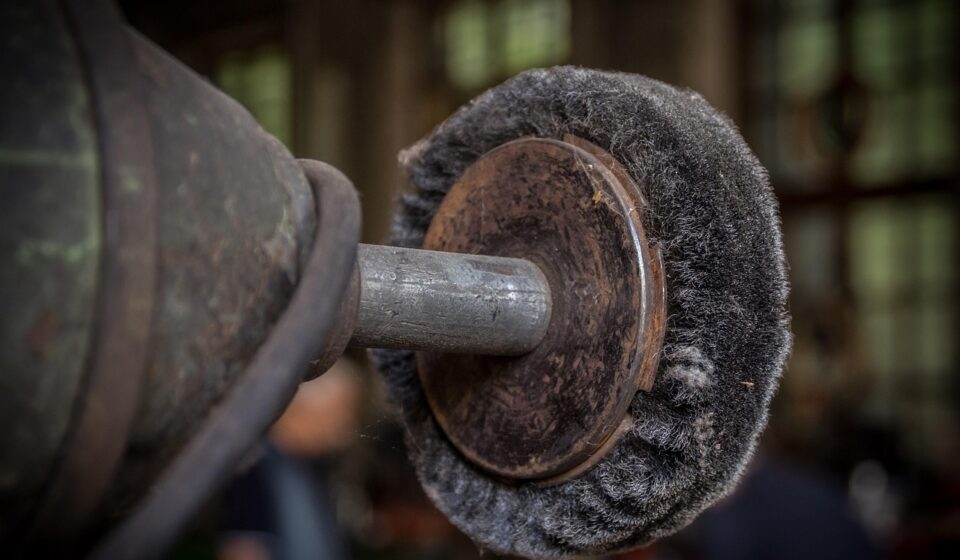
Why polishing machine selection starts with the finish requirement
A polishing machine is not just a machine for making metal look shiny. In industrial finishing, it is a controlled material-removal or surface-conditioning system. It has to match the required appearance, roughness, edge condition, production volume, and safety environment.
The right choice depends less on the machine name than on the workpiece. Stainless steel sheet, aluminum castings, brass hardware, precision shafts, cookware, medical components, and decorative parts all place different demands on the process. Before comparing models, define the required surface finish, allowable dimensional change, cycle time, material, burr condition, and inspection method. Once those limits are clear, machine type, abrasive sequence, spindle power, fixturing, dust collection, and automation level are much easier to evaluate.
This guide is written for manufacturing and machine tool readers who need a practical selection framework. For related industrial equipment topics, visit the machine tools category.
Define polishing, buffing, and finishing before comparing machines
Polishing, buffing, grinding, deburring, and mass finishing are often discussed together, but they are not the same operation. Grinding normally removes more material and corrects shape or heavy surface defects. Deburring removes sharp edges or loose material after cutting, drilling, milling, stamping, or casting. Polishing refines the surface by reducing visible scratches and leveling fine peaks. Buffing is commonly used as a lighter final operation to increase brightness or luster, often with a softer wheel and compound.
The distinction matters. A machine designed for aggressive belt grinding may not produce a cosmetic mirror finish without additional stages. A buffing spindle can create gloss, but it may not remove deep casting marks efficiently. A vibratory bowl can process many small parts at once, but it will not usually create a directional brushed finish on a flat panel. A robotic polishing cell can be highly repeatable, but only after the abrasive, force, tool path, and part holding have been engineered.
Instead of asking which polishing machine is best, manufacturers should first ask what defect must be removed, what final surface must be achieved, and how much variation the process can tolerate. Surface finish may be specified by approved visual samples, gloss, grain direction, Ra or Rz roughness values, edge radius, or a customer-approved reference part. If the finish cannot be described clearly, it will be difficult to automate, quote, inspect, or improve.
Main polishing machine types and where they fit
Industrial polishing equipment covers a wide range of machines. The table below summarizes common options and the applications where they are most useful.
| Machine type | Typical use | Strengths | Limits to check |
|---|---|---|---|
| Bench or pedestal polishing machine | Small parts, repair work, prototypes, decorative components | Low cost, flexible, easy abrasive changes | Operator variation, guarding, dust control, ergonomic risk |
| Flat sheet or plate polishing machine | Stainless steel sheet, panels, appliance parts, architectural metal | Consistent linear finish, suitable for wider workpieces | Less flexible for complex shapes and deep contours |
| Centerless or cylindrical polishing machine | Shafts, tubes, rods, round bars, hydraulic components | Repeatable finish on rotational parts | Requires stable diameter, straightness, and feeding control |
| Abrasive belt polishing machine | Weld blending, scratch removal, edge preparation, brushed finishes | Good cutting ability and clear grain direction | Belt wear changes cut rate; heat and dust must be managed |
| Vibratory or centrifugal mass finishing machine | Small batches of machined, stamped, or cast parts | Processes many parts at once and can deburr uniformly | Not ideal for selective polishing or strict cosmetic orientation |
| CNC or robotic polishing cell | Repeatable production, complex shapes, labor-intensive finishing | Programmable path, controlled force, data capture, improved consistency | Higher engineering cost, fixture sensitivity, process development required |
The table also shows why catalogue specifications are not enough on their own. A motor rating, wheel diameter, belt width, or robot payload only becomes meaningful when it is tied to part size, contact force, abrasive speed, heat generation, and required throughput. For a high-mix workshop, a flexible semi-automatic machine may outperform a dedicated cell. For a stable product with high volume and strict cosmetic standards, automation can reduce variation and rework.
Process variables that determine quality more than machine size
Abrasive sequence and compound control
Polishing normally works through a sequence, not a single pass. Coarser abrasives remove machining marks, casting texture, weld discoloration, or previous scratches. Finer abrasives then reduce scratch depth. Compounds, wheels, belts, pads, and media should be selected as a system. Skipping too many grit steps can leave scratches that reappear after buffing. Using a compound too aggressively can round edges, smear soft metals, or load the wheel.
Consumable control is part of machine selection. Check how quickly belts, wheels, pads, mops, or media can be changed. Ask whether the machine supports controlled compound dispensing, recipe storage, belt tension control, or wheel wear compensation. In repeatable production, consumable cost per accepted part can matter more than the purchase price of the machine.
Speed, pressure, and heat
Abrasive performance depends on surface speed, contact pressure, dwell time, and material. Too little speed or pressure can slow the process and glaze the abrasive. Too much can overheat the part, distort thin sections, burn stainless steel, round sharp features, or shorten wheel life. Robotic abrasive guidance from major abrasive suppliers emphasizes that abrasive wear changes performance over time; wheel diameter decreases, belt grains dull, and the process may need speed, force, or changeover compensation.
For heat-sensitive parts, consider wet polishing, coolant, lower contact pressure, intermittent contact, or multi-stage finishing. For parts with tight dimensional requirements, test material removal before production release. A shiny surface is not acceptable if it moves a critical sealing face, bearing fit, or edge radius outside tolerance.
Fixturing and part variation
Fixturing is often the hidden factor in polishing quality. A polishing machine can only be repeatable if the part is located, supported, and presented consistently. Flexible castings, thin sheet, welded assemblies, and hand-formed parts may move under contact pressure. For robotic cells, the fixture must hold the part against polishing force while still exposing the surfaces that need finishing.
Measure incoming part variation before specifying automation. If burr size, weld height, casting flash, or machining marks vary widely, the polishing system may need vision inspection, compliant tooling, adaptive force control, or an upstream process correction. Automating an unstable manual process without controlling variation often transfers the problem from the operator to the machine program.
Wet, dry, and dust-generating processes
Dry polishing and buffing can generate metal dust, abrasive dust, compound residue, and fine particles. Wet polishing can reduce airborne dust, but it adds fluid management, corrosion control, cleaning, disposal, and possible mist exposure. NIOSH has identified metalworking fluid aerosols as a workplace exposure concern in machining and grinding operations, and its long-standing recommended exposure limit is 0.4 mg per cubic meter for thoracic particulate mass or 0.5 mg per cubic meter for total particulate mass as a time-weighted average. That does not mean every polishing process uses metalworking fluid, but it does show why wet systems need exposure planning as well as finish planning.
When automation makes sense
Automation is attractive because polishing is repetitive, physically demanding, and highly dependent on operator technique. Even so, an automated polishing machine is not automatically the right answer for every shop. It makes the most sense when the product is stable, the finish standard is clear, part volume is sufficient, and the cost of manual variation, rework, or labor shortage is significant. See also: buying guides.
Robotic polishing can use two basic layouts. In one, the robot holds the part and presents it to fixed belts, mops, or wheels. In the other, the robot carries the polishing tool and follows the workpiece surface. Both layouts can work, but the choice affects payload, reach, tool changing, compound delivery, dust collection, and guarding. Complex parts may also require force control because a robot following only a position path cannot naturally feel the surface the way an experienced operator can.
Automation suppliers and abrasive manufacturers commonly highlight several success factors: motor power, abrasive speed, part grip, sequencing across multiple steps, dust collection, compliance, and sensing. The practical point is that automation should be evaluated as a finishing system, not as a robot purchase. The cell must include tooling, abrasives, guards, extraction, programming, inspection, maintenance access, and operator training.
Safety and compliance checks before buying
Polishing machines create hazards from rotating wheels, belts, nip points, ejected workpieces, broken abrasive products, dust, noise, vibration, and chemicals. Safety requirements depend on jurisdiction, machine design, abrasive type, and application, so buyers should involve qualified safety personnel before installation. Even at the early evaluation stage, several source-based checkpoints are useful.
- Guarding and exposure: OSHA 29 CFR 1910.215 covers abrasive wheel machinery and includes requirements for guards, flanges, work rests, and exposure limits on certain grinding wheels. The same section states that the adjustable tongue guard on covered abrasive wheel equipment must not exceed a one-quarter inch distance from the wheel periphery.
- Ventilation: OSHA 29 CFR 1910.94 addresses ventilation for grinding, polishing, and buffing operations. It requires local exhaust ventilation where dry grinding, dry polishing, or buffing exposures exceed applicable permissible exposure limits.
- Fluids and mist: NIOSH guidance on metalworking fluids connects aerosol exposure with respiratory and skin concerns. Wet polishing equipment should therefore be reviewed for mist control, filtration, maintenance, and worker contact.
- Machine documentation: For equipment placed on the EU market, Regulation (EU) 2023/1230 on machinery was adopted on 14 June 2023 and will generally apply from 20 January 2027, replacing the older Machinery Directive framework. CE documentation, instructions, risk assessment, and conformity obligations should be verified early.
- Standards boundaries: ISO 16089:2025 covers safety for stationary grinding machines but states that it does not apply to stationary honing, polishing, and belt grinding machines. Buyers should avoid assuming that a grinding-machine standard automatically covers every polishing application.
These points are not a substitute for a formal risk assessment. They do, however, help prevent a common purchasing mistake: treating polishing performance and safety compliance as separate decisions. In practice, guards, extraction, enclosure design, and operator access can affect finish quality, changeover time, and productivity.
A practical framework for choosing a polishing machine
- Write the finish specification first. Use approved samples, Ra or Rz values where appropriate, grain direction, gloss, edge condition, and rejected-defect examples.
- Map the current process. Record incoming surface condition, abrasive steps, operator time, rework rate, rejected defects, and inspection method.
- Match the machine architecture to the part. Flat parts, round parts, small bulk parts, and complex 3D parts usually need different equipment concepts.
- Run trials on real parts. Test production material, worst-case defects, real geometry, and actual acceptance criteria rather than perfect samples.
- Calculate cost per accepted part. Include abrasives, compounds, media, labor, energy, maintenance, cleaning, filtration, rejected parts, and downtime.
- Review safety before purchase order release. Check guards, emergency stops, dust collection, noise, access panels, lockout points, manuals, and local regulatory requirements.
- Plan maintenance and training. A polishing machine needs wheel dressing or replacement, belt tracking, fixture cleaning, dust collector service, compound management, and disciplined operation.
This framework creates a more reliable comparison than asking suppliers for a general-purpose polishing machine quotation. It also helps separate necessary features from attractive options that may not be used in production.
Common mistakes to avoid
The first mistake is buying for maximum gloss without solving upstream surface defects. If the casting, weld, or machined surface is inconsistent, polishing may become an expensive repair operation. The second mistake is ignoring consumables. A machine that looks affordable can become costly if it uses belts, wheels, compounds, or media inefficiently. The third mistake is undersizing extraction or filtration. Dust and residue can damage motors, contaminate parts, create housekeeping problems, and increase safety risk.
A fourth mistake is assuming that robotics will remove the need for process knowledge. In practice, that knowledge moves into programming, fixture design, force control, abrasive selection, and maintenance routines. The fifth mistake is failing to define inspection. If one operator judges finish by eye under bright light and another checks roughness with an instrument, the process will appear unstable even when the machine is performing consistently.
Frequently asked questions
What is the difference between a polishing machine and a buffing machine?
A polishing machine is usually associated with controlled scratch refinement or surface leveling, while a buffing machine is often used for final brightness with softer wheels and compounds. In real factories, the terms may overlap, so the abrasive, wheel, pressure, and finish target are more important than the label.
Can one polishing machine handle all metal parts?
No single machine handles every material, geometry, and finish economically. A flat sheet machine, centerless tube polisher, vibratory finishing machine, and robotic cell solve different problems. A flexible manual or semi-automatic machine may suit mixed work, while dedicated automation suits repeatable production.
Is robotic polishing always more consistent than manual polishing?
Robotic polishing can be more consistent when the part, fixture, abrasive sequence, and finish specification are stable. If incoming defects vary widely or the finish depends on subjective judgment, automation still needs process development, sensing, or upstream control.
What should be tested before purchasing a polishing machine?
Test real parts, worst-case surface defects, target finish, dimensional change, abrasive life, cycle time, cleaning needs, dust or fluid control, and inspection repeatability. A short demonstration on ideal samples is not enough for a production decision.
How should buyers compare polishing machine quotations?
Compare the complete finishing system, not only the machine price. Include guards, dust collection, fixtures, controls, abrasive consumption, changeover time, maintenance access, documentation, training, and cost per accepted part.