Assembly manufacturing explained from process design to quality control
What assembly manufacturing means
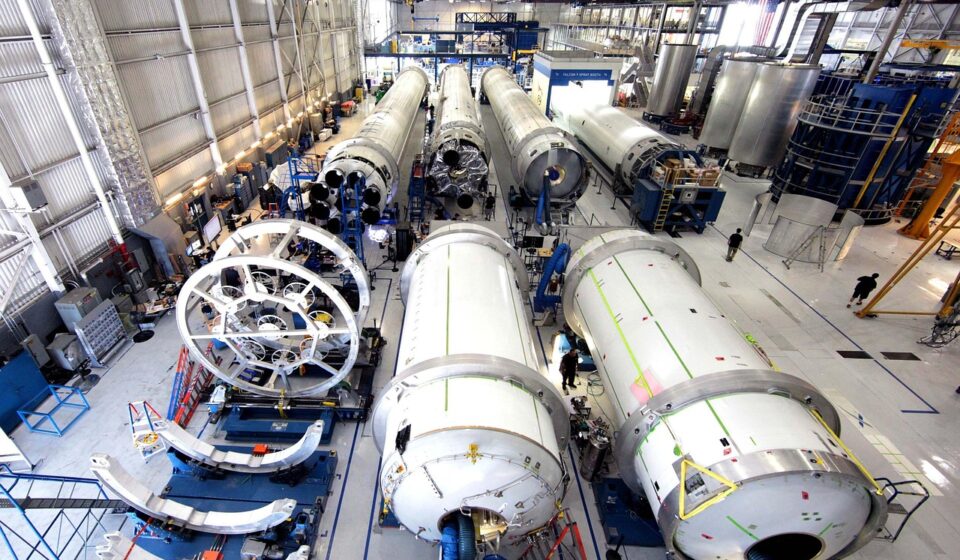
Assembly manufacturing is the production process of joining parts, subassemblies, fasteners, electronics, fittings or modules into a finished product. It is different from fabrication, where raw material is cut, formed, machined or otherwise converted into parts. In many factories, the two processes are closely linked: fabricated components arrive at assembly stations, operators or machines add value in a defined sequence, and the finished product is inspected, packed or transferred to the next operation.
For production teams, the question is not only how to put parts together. It is how to build a repeatable system that balances speed, quality, cost, safety, flexibility and traceability. A well-designed assembly process defines the product structure, the operation sequence, the required tooling, the handling method, the inspection points and the data that must be recorded. In that sense, assembly is both a physical workflow and a management system.
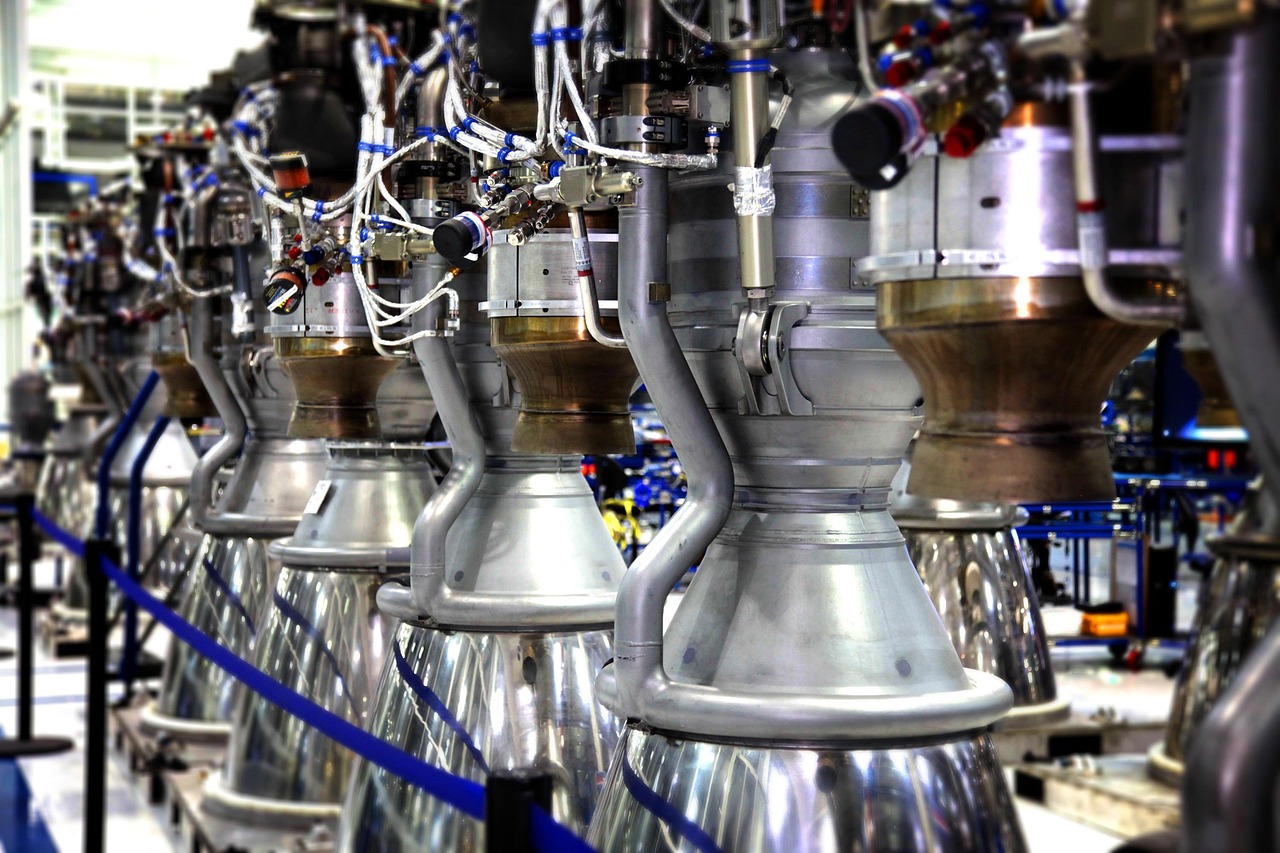
Within the broader field of manufacturing processes, assembly has become more important as products combine mechanical, electrical and software-enabled elements. Vehicles, appliances, industrial equipment, consumer electronics and medical devices may all rely on assemblies that include metal parts, molded components, circuit boards, sensors, seals, adhesives and labels. The process has to control variation across all of them.
How an assembly manufacturing process is designed
Most assembly projects start with the bill of materials and the product design. Engineers break the product into parts and subassemblies, then decide what should be built in-house, what should be purchased, and what should arrive as a completed module from a supplier. These early decisions affect inventory, tooling, skill requirements, quality risk and lead time.
The next step is process sequencing. Teams map every operation required to build the product, including part feeding, component positioning, joining, fastening, testing, labeling, rework handling and packaging. The aim is to create a route that makes sense for the product and is practical for the people and equipment doing the work.
Design for assembly has a major influence at this stage. Reducing part count, using self-locating features, standardizing fasteners, avoiding difficult orientations and improving tool access can reduce cycle time and defects. These changes are usually easier to make before production tooling is released. Once the line is running, even small design issues can create repeated handling, misalignment or inspection problems.
Common planning outputs
-
Process flow diagram: shows the order of workstations, inspections, buffers and material movement.
-
Work instructions: define the steps, tools, torque values, visual checks and acceptance criteria for each station.
-
Line balance: compares workload across stations so one operation does not become the bottleneck.
-
Control plan: identifies critical product and process characteristics, inspection methods and reaction plans.
-
Material presentation plan: defines how parts are delivered, stored, picked and replenished at the point of use.
Main types of assembly manufacturing systems
There is no single assembly model that fits every product. The right system depends on volume, product variety, labor availability, quality requirements, product size, changeover frequency and investment budget. A small-batch industrial equipment builder may need flexible benches and skilled technicians, while a high-volume consumer product line may require dedicated automation and tight takt-time control.
| Assembly system | Best suited for | Main advantage | Main limitation |
|---|---|---|---|
| Manual bench assembly | Low volume, high variety, prototypes or complex products | Flexible and relatively easy to change | Output depends heavily on operator skill and training |
| Progressive line assembly | Medium to high volume products with stable routing | Clear flow and easier line balancing | Less flexible when product mix changes sharply |
| Cellular assembly | Product families with similar steps | Supports teamwork, visibility and shorter movement | Requires careful cell design and cross-training |
| Semi-automated assembly | Processes needing both human judgment and machine precision | Improves repeatability without full automation cost | Interfaces between people and machines must be controlled |
| Fully automated assembly | High volume, repeatable operations with stable design | High throughput and consistent motion control | Higher capital cost and less tolerance for product instability |
Mixed-model assembly is also common. In this approach, variants of the same product family move through a shared line. It can reduce the need for dedicated equipment, but it also requires disciplined part presentation, mistake-proofing, scheduling and changeover control. Without that discipline, product variety can quickly lead to wrong parts, missed operations and excess work-in-process.
Key operations in assembly manufacturing
Assembly operations vary widely by industry, but several categories appear again and again. Mechanical joining includes screws, bolts, rivets, clips, pins, staking, press fits and snap fits. Adhesive bonding and sealing are used where weight, vibration, water resistance or appearance matter. Welding and soldering create permanent joints in metal structures and electronics. Electrical assembly may include harness routing, connector locking, terminal crimping and functional testing.
Precision alignment is often underestimated. Bearings, shafts, housings, optical parts, sensors and seals may require controlled positioning before joining. If alignment depends only on operator feel, variation can show up as noise, leakage, early wear or final test failures. Fixtures, gauges, sensors and poka-yoke features help reduce this risk.
Testing is part of assembly, not just an end-of-line activity. In-process tests can catch defects when they are easier and cheaper to correct. Examples include torque verification, leak testing, electrical continuity, vision inspection, weight checks, force-distance monitoring and software flashing confirmation. End-of-line testing confirms that the completed product performs as intended, but it should not be the first time the process discovers a problem.
Why tooling matters
Tooling turns a written process into repeatable physical action. Fixtures hold components in the correct orientation, torque tools control fastening, presses control force and displacement, and sensors confirm that critical steps occurred. Poor tooling can make good work instructions ineffective. Good tooling reduces the amount of judgment required in repetitive tasks and makes abnormal conditions easier to detect.
Quality control, standards and traceability
Quality in assembly manufacturing depends more on process control than on final inspection alone. ISO describes ISO 9001 as a quality management system standard that sets requirements for managing processes, customer focus, leadership, evidence-based decision-making and improvement. The standard does not prescribe a specific assembly method, but its process approach is relevant to any factory that needs consistent outputs and documented controls.
Traceability becomes especially important when products contain serialized parts, regulated components, safety-critical joints or software versions. A practical traceability system may record lot numbers, operator IDs, station results, torque curves, test data, rework decisions and final serial numbers. The level of detail should match the product risk. Too little data makes root-cause analysis difficult; too much unfocused data can slow the line without improving decisions.
Production teams should also define clear reaction plans. If a torque tool reports an out-of-range result, the line should not rely on guesswork. The instruction should state whether to stop the station, quarantine the unit, replace a fastener, repeat the operation, notify quality engineering or trigger a containment check. Quality control becomes stronger when the response is planned before the abnormal event occurs.
Useful quality metrics
-
First pass yield: the percentage of units that pass without rework at a defined point.
-
Defects per unit: the number of defects found relative to output volume.
-
Rework rate: the share of units needing correction before shipment or transfer.
-
Scrap rate: the share of material or products that cannot be recovered economically. See also: buying guides.
-
Customer returns or warranty claims: downstream indicators that may reveal assembly problems missed inside the factory.
Automation, robotics and human work
Automation is changing assembly manufacturing, but it does not remove the need for process discipline. The International Federation of Robotics reported in its World Robotics 2025 release, published on September 25, 2025, that 542,000 industrial robots were installed worldwide in 2024. The same release said annual installations exceeded 500,000 units for the fourth consecutive year, with Asia accounting for most new deployments. These figures show strong automation adoption, but they do not mean every assembly line should be fully automated.
The best automation candidates are repetitive, measurable and stable operations where machine control can improve consistency, safety or throughput. Examples include screwdriving, dispensing, pick-and-place handling, press fitting, welding, soldering, labeling, machine vision inspection and end-of-line testing. Automation is less attractive when product design is unstable, part variation is high, volumes are uncertain or manual judgment is still needed to handle exceptions.
Collaborative and semi-automated systems can be a practical middle path. Operators may load parts, handle exceptions or make visual judgments while machines complete force-controlled, motion-controlled or data-recorded tasks. This arrangement can improve repeatability while preserving flexibility. It still requires careful risk assessment, guarding strategy, training and maintenance planning.
OSHA’s machine guarding guidance for U.S. workplaces emphasizes that machine hazards can involve points of operation, rotating parts, flying chips, sparks and other exposure risks. For assembly lines, safety planning should include guarding, lockout procedures, ergonomics, pinch-point control, safe tool reaction forces and clear access for maintenance. Safety should be designed into the station, not added after an incident or audit finding.
Cost, productivity and line balancing
Assembly cost is shaped by more than labor minutes. It includes tooling, fixtures, floor space, material handling, training, downtime, scrap, rework, inspection, maintenance, packaging and inventory. A process that appears cheap at the station level may become expensive if it creates rework loops, excess buffers or frequent shortages.
Line balancing is one of the most practical methods for improving productivity. The team compares the time required at each station with takt time, which is the available production time divided by customer demand. If one station takes much longer than the rest, it limits total output. The answer may be to split tasks, add tooling, improve material presentation, simplify the product design or add another operator or machine.
Work-in-process control is equally important. Buffers can protect output from small disturbances, but large buffers hide problems and extend lead time. When unfinished units accumulate between stations, it becomes harder to see where the line is truly constrained. Smaller, visible buffers often make shortages, quality problems and imbalance easier to detect.
Practical improvement questions
-
Which station most often delays the next operation?
-
Which parts are most often missing, damaged or confused with similar parts?
-
Which defects are found late but created early?
-
Which tasks depend on operator memory instead of fixtures, sensors or visual controls?
-
Which changeovers create the most downtime or wrong-part risk?
Common risks and how to reduce them
One major risk in assembly manufacturing is assuming that a correct design will automatically produce a stable process. Even when parts meet drawings, assembly can fail because tolerances stack up, access is poor, fasteners are similar, connectors can be reversed, adhesives cure inconsistently or operators receive unclear instructions. Process validation should test the real interaction between parts, tools, people and equipment.
A second risk is over-automating too early. Automation can lock in an immature product design and make changes expensive. Before buying dedicated equipment, teams should confirm expected volume, product life, part quality, cycle-time targets and maintenance capability. Manual or semi-automated pilots often reveal design and handling issues before capital is committed.
A third risk is separating production engineering from quality and supply chain decisions. Assembly performance depends on all three. If suppliers deliver parts in packaging that slows picking, the line suffers. If quality requirements are unclear, operators may pass defects or reject acceptable variation. If engineering changes are not controlled, the line may build with mixed revisions. Strong change control and cross-functional review reduce these failures.
Frequently asked questions
Is assembly manufacturing the same as production?
No. Production is a broader term that can include material preparation, fabrication, machining, assembly, testing and packaging. Assembly manufacturing specifically refers to joining parts or subassemblies into a higher-level product or finished good.
When should a company automate an assembly process?
Automation is most useful when the product design is stable, volumes justify the investment, the task is repetitive, and the operation can be measured or controlled better by equipment than by manual work. If design changes are still frequent, a flexible manual or semi-automated setup may be safer.
What is the difference between line assembly and cellular assembly?
Line assembly moves products through a sequence of stations, often optimized for steady flow and takt time. Cellular assembly groups people, tools and equipment around a product family or set of related tasks. Cells can be more flexible, while lines can be more efficient for stable high-volume work.
What makes an assembly process reliable?
A reliable process has clear work instructions, controlled parts, capable fixtures, trained operators, measurable quality checks, planned reaction steps and feedback from defects. Reliability improves when the process prevents mistakes instead of relying only on final inspection.
Why is traceability important in assembly manufacturing?
Traceability helps teams identify which parts, operators, tools, test results or process conditions were connected to a finished unit. This supports root-cause analysis, containment, warranty investigation and continuous improvement, especially for safety-critical or regulated products.