Aluminum manufacturing processes from casting to finishing
Aluminum manufacturing is a chain of material conversion steps, not a single operation. For mechanical products, the practical question is how to turn aluminum into a part that meets requirements for shape, strength, tolerance, surface condition and cost. The main routes are casting, extrusion, rolling, forging, machining and, for selected applications, additive manufacturing. Each route changes the metal in a different way, so process selection depends on geometry, production volume, alloy, heat treatment and inspection needs. This article gives a process-focused overview for readers comparing manufacturing processes, with emphasis on what each aluminum route can and cannot deliver.
What aluminum manufacturing includes
In industry, aluminum manufacturing can mean both upstream metal production and downstream part-making. Upstream production starts with aluminum-bearing ore, continues through refining and smelting, and produces primary aluminum. Downstream production converts primary or recycled aluminum into billets, slabs, castings, extrusions, rolled sheet, plate, forgings and machined components.
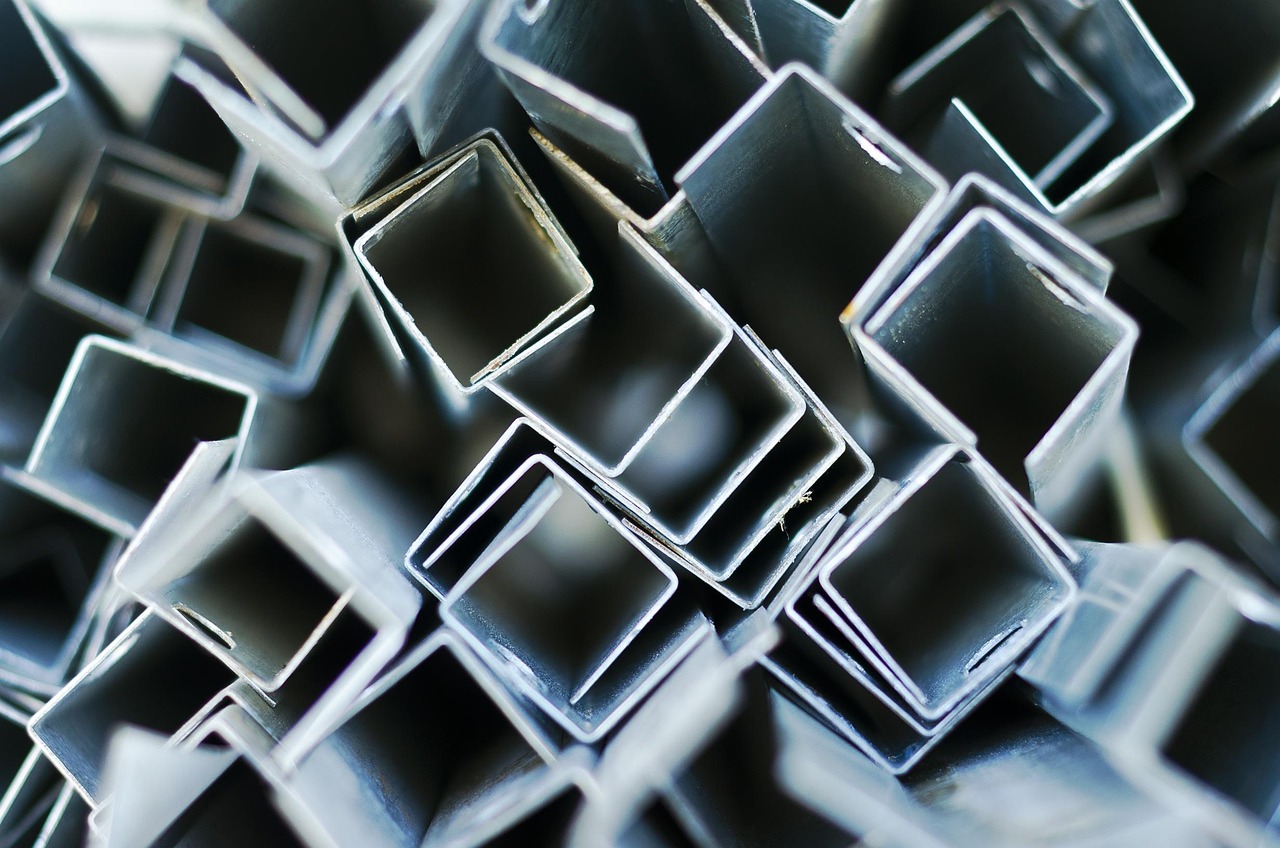
For engineers and purchasing teams, most design decisions appear in downstream manufacturing. A housing may be die cast, sand cast or machined from billet. A rail may be extruded and cut to length. A panel may come from rolled sheet. A high-load arm may be forged and then finish machined. The final part may also require heat treatment, anodizing, coating, dimensional inspection and mechanical testing.
Aluminum is widely used because it combines low density, corrosion resistance, high thermal and electrical conductivity, and useful alloying flexibility. Those advantages do not remove the trade-offs. Aluminum has a lower modulus of elasticity than steel, can be sensitive to welding heat depending on alloy and temper, and may require close control of porosity, distortion or surface damage. Good process selection starts with these material realities rather than with a default manufacturing method.
From ore, primary metal and recycling to feedstock
Aluminum does not usually enter factories as pure mined metal. In the conventional primary route, bauxite is refined into alumina, and alumina is reduced into aluminum by electrolytic smelting. The International Aluminium Institute describes primary aluminum as liquid aluminum tapped from electrolytic cells during the reduction of metallurgical alumina. That definition matters because primary production has a different cost and energy profile from remelting scrap.
After smelting, molten aluminum is usually cast into standard feedstock forms such as ingot, billet or slab. Billet can feed extrusion or forging operations. Slab can feed rolling mills. Ingots and remelted metal can supply foundries. Alloying elements such as silicon, magnesium, copper, manganese or zinc are added to create families with different casting behavior, strength, corrosion resistance and heat-treatment response.
Recycling is a major part of aluminum manufacturing because aluminum can be remelted repeatedly when scrap is properly sorted and controlled. Natural Resources Canada states that secondary aluminum production requires about 95% less energy than primary aluminum production. The Aluminum Association also reports that nearly 75% of all aluminum ever produced remains in use, a figure often cited to explain aluminum’s long material life. These numbers should not be read as a guarantee that every recycled product is low-impact; collection efficiency, alloy separation, contamination and the energy source still matter.
Main aluminum manufacturing routes for parts and products
The main downstream processes differ in how they shape the metal. Some pour liquid metal into a mold. Others deform solid or semi-solid metal under pressure. Others remove material from stock or build geometry layer by layer. The selected route strongly influences grain structure, surface finish, tooling cost, defect risk and achievable tolerances.
Casting
Casting forms aluminum by pouring or injecting molten metal into a mold. Common methods include sand casting, permanent mold casting, investment casting and high-pressure die casting. Casting is useful when a part has internal cavities, ribs, bosses or complex shapes that would be expensive to machine from solid stock. High-pressure die casting is especially common for high-volume products that need thin walls and repeatable near-net-shape geometry.
The main limitation is defect control. Castings can contain porosity, shrinkage defects or inclusions if melting, mold design, gating, venting and solidification are not well controlled. Cast parts may also have lower fatigue performance than wrought parts unless the design, alloy and inspection plan account for casting defects. Aluminum-silicon alloy systems are widely used in castings because silicon improves fluidity and casting behavior.
Extrusion
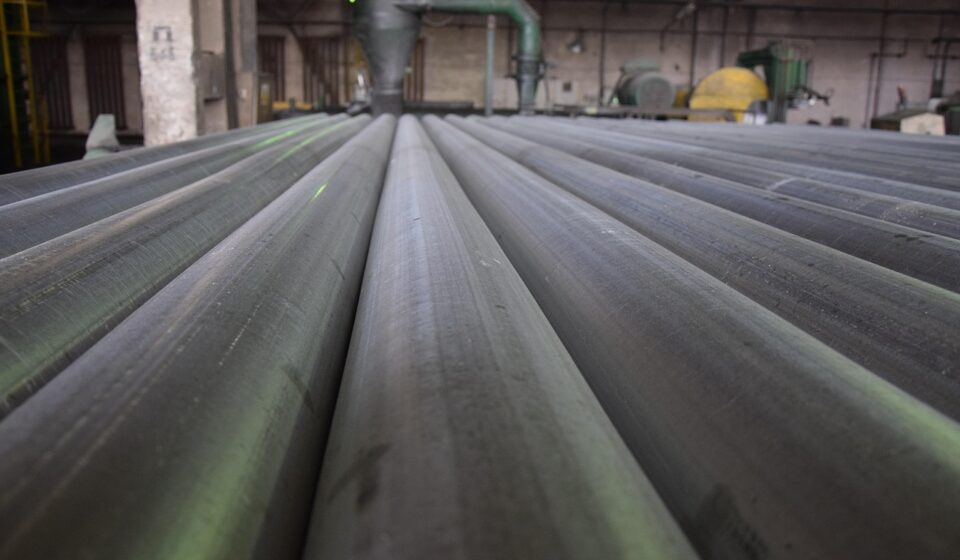
Extrusion pushes a heated aluminum billet through a die opening to create a long product with a constant cross-section. It is well suited to rails, frames, heat sinks, channels, tubes and structural profiles. The Aluminum Association describes extrusion as a plastic deformation process in which a solid aluminum billet is forced through a smaller die opening.
Extrusion can reduce machining by placing material only where the section needs strength, stiffness or heat-transfer area. It is often followed by cutting, drilling, tapping, bending, surface finishing and assembly. The trade-off is that the cross-section must be extrudable, die design requires expertise, and very tight dimensional or flatness requirements may need secondary operations.
Rolling
Rolling converts cast slab into plate, sheet or foil by passing metal through rolls. Hot rolling reduces thickness at elevated temperature, while cold rolling can improve surface finish and dimensional control. Rolled aluminum is used for panels, enclosures, automotive body sheet, aerospace plate, packaging and many fabricated products.
Rolled plate can also be a starting point for CNC machining when designers need stable stock and predictable mechanical properties. However, machining a deep part from thick plate may create high material waste. For that reason, rolled stock should be compared with casting, forging or extrusion when volumes justify tooling.
Forging
Forging shapes aluminum through compressive force, often using open dies, closed dies or rolled rings. It is chosen when strength, toughness and controlled grain flow are more important than near-net complexity. Forged aluminum parts are common in demanding mechanical applications because deformation can align the metal structure with load paths.
Forging usually requires tooling, presses, temperature control and subsequent trimming or machining. It may not be economical for low-volume parts unless performance requirements justify the cost. The design must also allow material to flow during forging; a geometry that looks simple in CAD may still be difficult to forge without laps, folds or underfilled features.
Machining and additive manufacturing
CNC machining removes material from billet, plate, casting, extrusion or forging. It is flexible, precise and useful for prototypes, fixtures, low-volume components and high-accuracy features on near-net parts. Aluminum generally machines well, but cutting parameters, chip evacuation, workholding and thermal growth still need attention. Burrs, chatter and part distortion can become serious problems on thin walls or deep pockets.
Additive manufacturing builds parts layer by layer from powder or wire. NIST describes additive manufacturing as building parts layer by layer rather than cutting material away or molding it. For aluminum, the technology can create complex channels, lightweight lattice features and consolidated geometries. Its limits include powder handling, process qualification, anisotropy, porosity, surface roughness and inspection requirements. NIST also identifies fatigue and fracture performance in metal additive manufacturing as an active technical challenge, which is why safety-critical use requires careful qualification rather than simple substitution for wrought or forged parts.
How to choose the right aluminum process
A useful way to compare aluminum manufacturing options is to start with the part’s dominant requirement. Shape complexity, annual volume, mechanical load, tolerance, surface requirement and scrap target rarely point to the same route. The table below summarizes common decision logic. See also: buying guides.
| Requirement | Often suitable process | Why it fits | Main limitation |
|---|---|---|---|
| Complex housing with ribs and bosses | Die casting or sand casting | Near-net geometry and internal features | Porosity control and tooling cost |
| Long constant-section profile | Extrusion | Efficient section design with low machining | Geometry must pass through a die |
| Flat panel, sheet part or thick plate blank | Rolling | Consistent sheet or plate supply | Deep 3D shapes may waste material if machined |
| High-load structural component | Forging plus machining | Strength, toughness and grain flow | Tooling and design-for-forging constraints |
| Prototype or precision low-volume part | CNC machining | Fast design changes and tight features | Material waste and cycle time |
| Internal channels or topology-optimized form | Additive manufacturing plus finishing | Geometry not practical by conventional methods | Qualification, surface finish and cost |
Volume is one of the clearest dividing lines. CNC machining can be practical for one-off and low-volume work because it avoids dedicated tooling. Die casting, extrusion and forging become more attractive when tooling cost can be spread across many units. However, volume alone is not enough. A high-volume aerospace part may still require forging because of fatigue requirements, while a low-volume thermal prototype may use extrusion if a standard profile already exists.
Alloy availability also matters. A design that requires a specific alloy and temper may narrow the manufacturing route. For example, many 6xxx-series alloys are widely associated with extrusion and heat-treatable structural products, while 5xxx-series alloys are known for corrosion resistance and weldability in sheet and plate applications. Cast alloys and wrought alloys are not automatically interchangeable because they are optimized for different processing behavior and property targets.
Heat treatment, finishing and quality control
Many aluminum parts are not complete after shaping. Heat treatment can change strength and stability through solution treatment, quenching, natural aging or artificial aging, depending on the alloy family. Tempers such as T5 or T6 are shorthand for controlled processing histories, not decorative labels. If a part is welded, heavily machined or exposed to elevated service temperature, the original temper may not fully describe the final performance in every region of the component.
Finishing adds another layer of function. Anodizing can improve corrosion resistance and wear behavior while allowing decorative color options. Conversion coatings can support paint adhesion and corrosion protection. Powder coating and liquid coating can provide color, barrier protection and brand appearance. Mechanical finishing such as brushing, bead blasting or polishing changes surface texture and may also reveal defects if upstream handling was poor.
Quality control should be matched to the process risk. Castings may require X-ray inspection, leak testing or section analysis for critical applications. Forgings may need ultrasonic inspection, hardness checks and grain-flow validation. Machined parts require dimensional inspection, surface roughness control and burr management. Extrusions and rolled products may require checks for straightness, flatness, wall thickness, tensile properties and surface defects. Inspection should be planned with the manufacturing route, not added as an afterthought.
Sustainability and supply chain considerations
Aluminum manufacturing is closely tied to energy, scrap recovery and regional supply chains. Primary smelting is electricity intensive, so the carbon footprint of primary aluminum depends heavily on the power mix used for smelting. The International Aluminium Institute has reported sector-level greenhouse gas intensity indicators, while the International Energy Agency tracks aluminum energy demand and emissions as part of its industrial analysis. These sources show why the same material can have different environmental profiles depending on where and how it is produced.
The Aluminum Association reports that the North American aluminum industry has reduced its carbon footprint by more than half over the past 30 years, and it also reports substantial reductions in U.S. industry greenhouse gas emissions and energy consumption over multi-decade periods. Those are industry-reported figures, but they align with a broader manufacturing trend: recycled input, efficient melting, process control and cleaner electricity can materially change the environmental profile of aluminum parts.
For part buyers, sustainability is not only a material claim. It is also a specification issue. Useful questions include whether recycled content is verified, whether machining scrap is segregated by alloy, whether the selected process minimizes buy-to-fly or buy-to-part ratios, and whether a near-net process can reduce waste without compromising strength or inspection requirements. In some cases, paying for a better starting form can reduce total cost and waste more than simply choosing the cheapest raw stock.
Common design mistakes in aluminum manufacturing
One common mistake is selecting aluminum only because it is lightweight, then designing the part as if it were steel. Because aluminum has lower stiffness than steel, a direct material swap may increase deflection unless the geometry changes. Ribs, larger sections or closed profiles can often solve stiffness problems more efficiently than increasing wall thickness everywhere.
Another mistake is ignoring process-specific design rules. A die casting with thick isolated sections may suffer from shrinkage. An extrusion with abrupt wall changes may be hard to control. A forged part with poor draft or difficult flow paths may need expensive tooling changes. A machined part with deep thin walls may distort after roughing. These are not minor shop-floor issues; they are design issues that influence cost and reliability.
A third mistake is treating finishing as cosmetic only. Anodizing, coating, blasting and polishing can change dimensions, fatigue-sensitive surface conditions, electrical contact behavior and corrosion performance. If the part has tight fits, sealing surfaces, grounding requirements or sliding contact, finishing should be included in the drawing and tolerance plan from the beginning.
Frequently asked questions
What is the most common aluminum manufacturing process?
There is no single most common process for every product category. Casting, extrusion and rolling are all major routes, while machining, forging and finishing are often used as secondary or specialized operations. The answer depends on whether the final product is a casting, profile, sheet, plate, structural component or precision machined part.
Is recycled aluminum lower quality than primary aluminum?
Not necessarily. Recycled aluminum can meet demanding specifications when scrap is properly sorted, melted, alloyed and tested. The main challenge is chemistry control. Mixed or contaminated scrap can limit which alloys can be made, while clean segregated scrap can re-enter high-value manufacturing routes.
Which aluminum process is best for complex parts?
For complex external and internal geometry, casting is often the first route to evaluate, especially at higher volumes. Additive manufacturing can make geometries that casting or machining cannot, but cost, qualification and finishing may limit its use. For tight precision features, a near-net casting or forging is often combined with CNC machining.
Why is aluminum often heat treated?
Heat treatment is used to develop strength, hardness and stability in heat-treatable aluminum alloys. It changes the material condition after forming and can be essential for meeting mechanical property requirements. Not all aluminum alloys respond to heat treatment in the same way, so alloy selection and temper requirements must be defined together.
How should a manufacturer reduce waste in aluminum parts?
Waste reduction starts with process selection. Extrusion, forging and casting can reduce material removal when they match the geometry. CNC machining can still be efficient for prototypes and precision parts, but chip segregation and recycling should be planned. Designing closer to the final shape usually saves more material than optimizing machining alone.