How to choose a braiding machine for technical textiles and cable production
A practical answer before comparing models
A braiding machine interlaces yarns, wires, filaments, tapes, or other flexible elements into a controlled structure. For manufacturers, the question is not simply whether a machine can braid. It is whether it can repeatedly produce the required braid angle, coverage, tension, diameter, and surface quality at a cost and safety level that fits the line. A machine used for decorative cord is not specified in the same way as equipment for cable shielding, hose reinforcement, composite preforms, or medical textile components.
The best starting point is the product itself: material type, finished geometry, required strength, allowable defects, inspection method, and expected production volume. Once those points are defined, it becomes much easier to evaluate carrier count, bobbin size, horn gear arrangement, take-up design, guarding, controls, and maintenance access. This article focuses on practical selection factors for manufacturers and technical buyers. For more equipment topics, visit the machine tools category.
What a braiding machine does
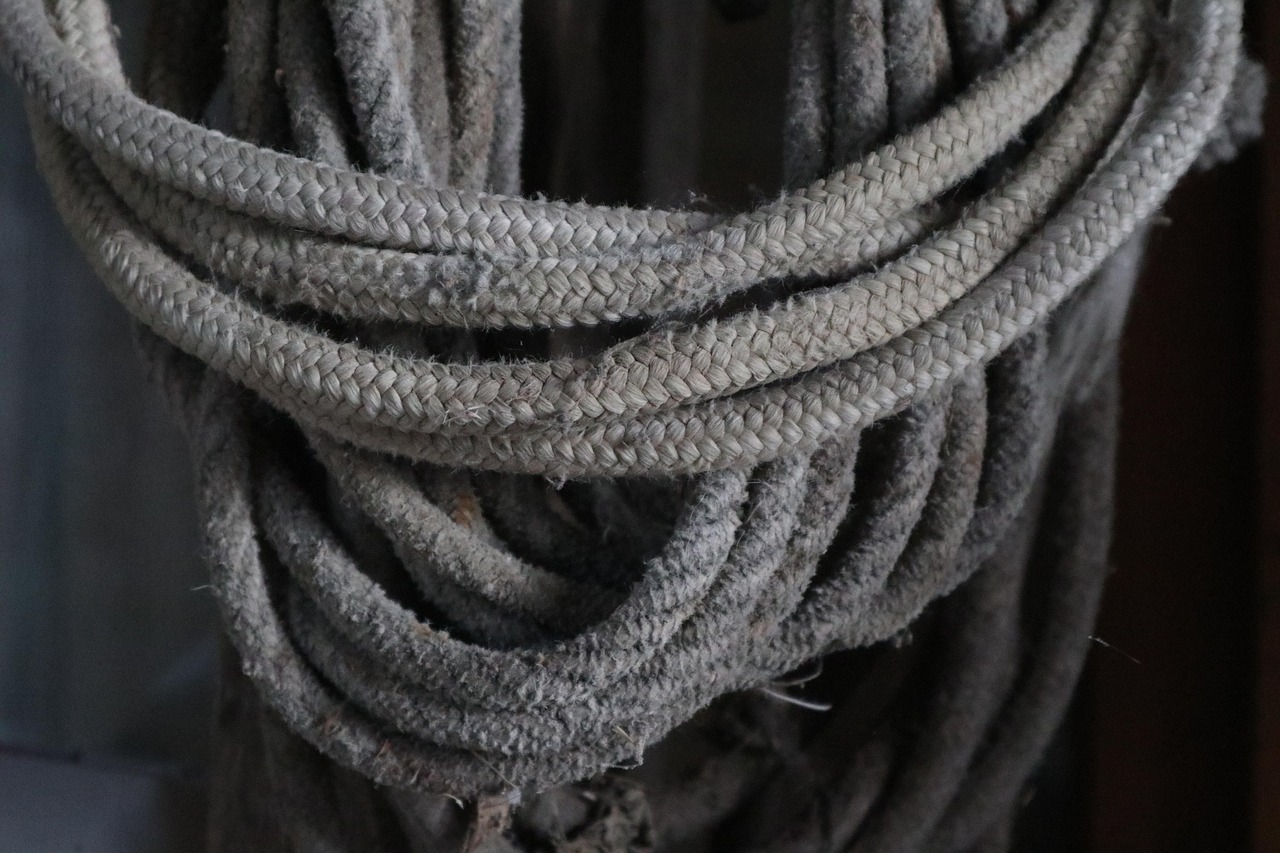
In industrial production, braiding is a controlled interlacing process. Multiple carriers move packages of material around a fixed or moving axis so that the strands cross each other in a repeated pattern. The result may be a flat braid, a tubular braid, an over-braid around a core, or a near-net-shape textile preform. Unlike weaving, which normally uses warp and weft systems at right angles, braiding often creates angled yarn paths that can improve flexibility, torsional behavior, radial reinforcement, or damage tolerance, depending on the application.
Maypole motion and carrier control
Many circular braiders are commonly described as maypole-type machines. In this layout, carriers travel along intersecting paths guided by horn gears and tracks. That motion makes strands from different carriers pass over and under one another in a predictable sequence. Technical literature on braiding technology consistently treats the carrier as a critical component because it holds the bobbin, transports the material, helps maintain tension, and supports stable strand delivery.
This is not a minor mechanical detail. Poor carrier motion or uneven tension can create visible and functional defects. In cable shielding, uneven coverage may reduce shielding consistency. In hose reinforcement, variation in braid angle can affect pressure behavior. In composites, strand misalignment may lower the value of the preform even if the machine appears to be running smoothly.
Flat, tubular and over-braiding work
A flat braider produces braid in a strip or tape-like form. A circular braider can produce tubular braid or braid over a central core such as a cable, hose mandrel, rope core, or composite mandrel. Over-braiding is especially important when the braid must conform to a substrate while maintaining coverage and tension. Some advanced systems are designed for three-dimensional preforms, where the goal is not only surface coverage but also a shaped reinforcement architecture.
Because these output forms are different, buyers should not treat every braider as interchangeable. The right machine depends on the carrier path, available carrier count, mandrel or core handling, take-up accuracy, package size, operator access, and the level of process control required by the end product.
Match the machine to the product, not the other way around
The most reliable specification process starts with the finished braid. A supplier can only recommend a suitable machine if the buyer can define the product in measurable terms. Even when a project is still in development, target ranges are more useful than general requirements such as high strength, smooth surface, or fast production.
| Product requirement | Why it matters | Machine implication |
|---|---|---|
| Finished diameter or width | Defines the physical forming zone and take-up arrangement | Check machine size, core guide, mandrel clearance, and winding path |
| Braid angle | Affects flexibility, coverage, reinforcement behavior, and appearance | Review take-up speed control, carrier speed range, and repeatability |
| Material type | Different fibers, wires, and tapes behave differently under tension and bending | Confirm carrier design, tension range, eyelets, guides, and wear surfaces |
| Coverage or openness | Important for shielding, reinforcement, filtration, and decorative use | Match carrier count, strand size, take-up ratio, and inspection method |
| Production volume | Influences automation needs and changeover economics | Evaluate bobbin capacity, speed, downtime, controls, and maintenance intervals |
| Quality tolerance | Determines how much variation the process can accept | Consider sensors, recipe control, tension monitoring, and traceability |
A decorative braid may tolerate more visual variation than an aerospace composite preform or a safety-critical hose reinforcement. A cable plant may prioritize continuous running, shielding consistency, and integration with extrusion or winding operations. A technical textile producer may need flexible changeover across materials and braid structures. These differences should drive the machine specification before price becomes the main discussion.
Core specifications to review before purchase
Carrier count and package size
Carrier count is one of the first specifications buyers notice, but it should not be judged in isolation. More carriers can support denser structures or larger braid patterns, yet the final result also depends on strand size, material behavior, tension, take-up speed, and braid geometry. A machine with the right carrier count but unsuitable bobbin capacity may still create excessive downtime. A machine with large packages but poor tension stability may waste material and labor.
Package size affects run length, operator workload, and changeover frequency. For high-volume production, larger bobbins or efficient loading systems can reduce stoppages. For development work or small-batch technical textiles, quick changeover and easy threading may be more valuable than maximum package capacity.
Tension control, take-up and braid angle
Tension control is central to braid quality. If one strand feeds at noticeably different tension from neighboring strands, the braid can distort, twist, open, or develop local defects. The take-up system is just as important because it controls how quickly the product is pulled away from the braiding point. The relationship between carrier motion and take-up speed strongly influences braid angle.
For practical evaluation, buyers should ask how the machine maintains tension as bobbin diameter changes, how operators adjust take-up speed, whether recipes can be stored, and how repeatability is verified after a changeover. For a production line, the important question is not whether a sample can be made once. It is whether the same structure can be repeated across shifts, operators, and material lots.
Controls, sensors and changeover needs
Modern braiding equipment may include programmable controls, broken-end detection, safety interlocks, recipe storage, speed synchronization, and alarms. The value of these features depends on the application. A simple cord producer may not need extensive data collection, while a technical component manufacturer may need documented settings and consistent restart behavior after stoppages.
Changeover should also be treated as a cost factor. Machines that are difficult to clean, thread, access, or adjust can lose their apparent productivity advantage in real production. Before buying, review how long it takes to change material, adjust guides, replace bobbins, set the take-up, clear a broken strand, and restart without damaging the product.
Materials and applications that change the machine choice
Different materials place different demands on the braiding process. Textile yarns, metal wires, aramid fibers, carbon fibers, glass fibers, thermoplastic tapes, and hybrid bundles do not behave the same way. Some are sensitive to abrasion. Some are stiff. Some require careful control to avoid filament damage. Others need suitable guides or tensioning methods because they spring back, flatten, or kink.
- Cable shielding: The focus is usually coverage, electrical performance consistency, compatibility with the cable core, and integration with upstream or downstream cable handling.
- Hydraulic and industrial hoses: Braid angle and reinforcement consistency are important because the braid helps manage pressure behavior and dimensional stability.
- Ropes and cords: Productivity, appearance, abrasion resistance, and package handling often carry significant weight in machine selection.
- Composite preforms: Fiber orientation, damage control, repeatability, and compatibility with mandrels or near-net-shape production are critical.
- Medical and precision textile parts: Clean handling, small-diameter control, documentation, and defect prevention may be more important than maximum speed.
For any of these applications, material trials are more useful than brochure specifications alone. A realistic trial should use the intended material, target speed range, expected bobbin size, actual core or mandrel where relevant, and the same quality checks planned for production. See also: buying guides.
Safety, standards and maintainability
Braiding machines contain rotating parts, moving carriers, tensioned strands, power transmission components, and potential nip or entanglement points. Public machine guarding guidance from OSHA identifies hazards such as rotating parts, ingoing nip points, and power transmission areas as issues that must be controlled. The United Kingdom Health and Safety Executive also lists BS EN ISO 11111-4:2005 + A1:2009 under textile machinery safety requirements for yarn processing, cordage, and rope manufacturing machinery, including braiding machines.
These references do not replace a project-specific risk assessment, but they show why safety should be considered during machine selection rather than after installation. Guarding, interlocks, emergency stops, lockout procedures, braking behavior, safe threading access, and training requirements all affect whether a machine can be operated efficiently and responsibly.
Maintainability is closely connected to safety and output. A machine that is difficult to inspect may continue running with worn carriers, damaged guides, misaligned tracks, or inconsistent tensioning devices until defects appear in the finished product. A practical maintenance review should include lubrication access, spare carrier availability, guide replacement, belt or gear inspection, tension device calibration, cleaning time, and the ease of checking the take-up system.
Common selection mistakes to avoid
One common mistake is buying for maximum speed without confirming product quality at that speed. A braiding machine may be mechanically capable of running fast, but the material, carrier behavior, take-up accuracy, and inspection requirements may limit practical production speed. Stable output is usually more valuable than a high top speed that cannot be used consistently.
A second mistake is ignoring downstream handling. If the braided product must be wound, cut, coated, cured, tested, or combined with another process, the braider should fit the complete line. A mismatch between braiding speed and downstream capacity can create bottlenecks or handling damage.
A third mistake is underestimating operator skill. Threading, tension setting, bobbin replacement, defect recognition, and safe restart procedures all influence output. Clear controls and accessible design reduce dependence on informal knowledge and make training easier.
A fourth mistake is treating samples as proof of production readiness. A short sample can show that a structure is possible. It does not prove long-run stability, material yield, maintenance cost, or repeatability across shifts. Buyers should ask for trials that reflect actual production conditions whenever the application is demanding.
Frequently asked questions
What is the main purpose of a braiding machine?
The main purpose is to interlace multiple strands into a controlled braid structure. Depending on the machine and application, the braid may be decorative, protective, conductive, structural, flexible, or reinforcing.
Is a higher carrier count always better?
No. A higher carrier count can support denser or more complex structures, but it is only useful if it matches the product design. Material size, tension control, take-up accuracy, bobbin capacity, and quality tolerance are just as important.
What should be tested before buying a braiding machine?
Test the intended material, finished diameter or width, braid angle, coverage, production speed, bobbin changes, broken-strand response, take-up behavior, and inspection results. For technical products, a realistic production trial is more informative than a short demonstration.
How does take-up speed affect braid quality?
Take-up speed changes how quickly the product leaves the braiding point. In combination with carrier speed, it influences braid angle, coverage, compactness, and sometimes dimensional stability. Poor take-up control can create variation even when the carrier motion is correct.
Why is safety review important for braiding equipment?
Braiding equipment includes moving carriers, rotating mechanisms, tensioned strands, and possible nip or entanglement hazards. Guarding, interlocks, emergency stops, lockout procedures, and operator training should be reviewed before the machine enters production.
Final selection checklist
A good braiding machine decision connects product requirements to machine capability. Before comparing quotations, define the braid structure, material, finished geometry, quality standard, output target, changeover pattern, safety requirements, and maintenance expectations. Then ask suppliers to show how their equipment meets those conditions in practical operation.
For manufacturers working with technical textiles, cables, hoses, ropes, or composites, the right braider is not simply the largest or fastest option. It is the machine that can hold the required structure, protect the material, run safely, and repeat the process with acceptable downtime and cost.