What to know before choosing a CNC laser cutting machine

Why the decision is more than laser power
A CNC laser cutting machine is a computer-controlled machine tool that uses a focused laser beam, assist gas, and programmed motion to cut sheet or plate materials. In metal fabrication, it is often compared with punching, plasma cutting, waterjet cutting, or outsourced blanking. The buying decision should not start and end with the highest wattage on a quotation. A practical specification begins with material type, thickness range, edge quality requirements, part volume, automation needs, and the safety controls required in the facility.
Public safety and standards sources, including the U.S. Food and Drug Administration, OSHA guidance, ANSI laser safety practice, and ISO 11553-1:2020, frame industrial lasers as powerful production tools that must be selected, installed, and maintained as controlled machine systems. This article focuses on what a fabrication manager, engineer, or manufacturing buyer should verify before specifying a laser cutting cell.
For related manufacturing topics, visit the machine tools category.
What a CNC laser cutting machine does in production
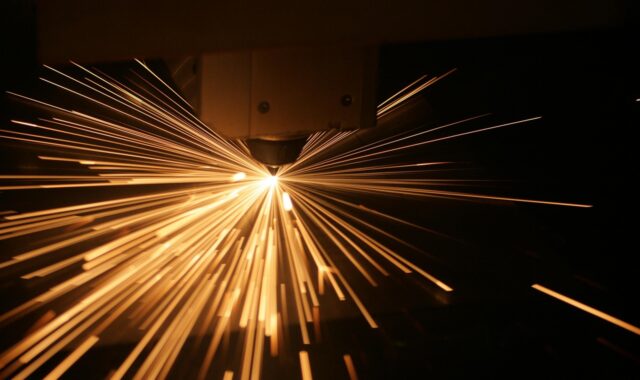
In a typical flatbed sheet metal setup, the CNC program controls the cutting head path while the laser source supplies the energy needed to melt, vaporize, or chemically assist the cut. A nozzle directs assist gas into the kerf to remove molten material, protect the cut zone, and influence the finished edge. The result is a fast, non-contact cutting process that can produce complex profiles without a dedicated hard tool for each shape.
The machine normally works from CAD/CAM data. Part geometry is imported, nested on a sheet, assigned process parameters, and sent to the control. The process may include piercing, contour cutting, micro-joints, common-line cutting, part marking, and lead-in or lead-out strategies. The quality of this programming work often matters as much as the machine hardware. Poor nesting and unsuitable cutting conditions can waste material, slow production, or add downstream deburring.
Laser cutting is especially useful when a shop needs short lead times, frequent design changes, clean profiles, and repeatability across batches. It is less attractive when the work mainly involves simple straight cuts in very thick plate, very low-cost rough separation, or materials that create unacceptable fumes or fire hazards. In those cases, plasma, sawing, punching, machining, or waterjet cutting may still be the better process.
Fiber, CO2, and other laser types
The most common industrial comparison today is fiber laser versus CO2 laser. Major laser equipment makers generally describe fiber lasers as a strong fit for metal cutting because they use a solid-state source, can be efficient in electrical conversion, and are widely applied to mild steel, stainless steel, aluminum, brass, and copper. CO2 systems, by contrast, have a long history in cutting and engraving non-metallic materials such as acrylic, wood, textiles, plastics, glass, and some stone applications.
That does not mean fiber is automatically the right answer for every user. The material list comes first. A shop focused on sheet metal parts will usually put fiber laser cutting at the top of the evaluation. A shop processing a broad mix of non-metals may still need CO2 capability or a separate process. A job shop that cuts both metals and plastics should not assume one machine can process every material safely and economically.
The second distinction is maintenance and beam delivery. Fiber machines do not use the same external mirror beam path associated with many CO2 systems, which can reduce alignment-related maintenance. However, fiber machines still require disciplined care of protective windows, nozzles, lenses, cooling systems, gas supply, slat beds, extraction filters, and motion components. A lower-maintenance laser source does not eliminate machine maintenance.
The third distinction is cut behavior. Fiber systems can be very productive in thin and medium metal thicknesses, especially when paired with suitable assist gas and automation. CO2 may still be considered where a specific edge result, material behavior, existing operator knowledge, or non-metal work makes it suitable. The practical question is not which technology is more fashionable, but which one produces acceptable parts at the lowest total cost in the user’s real material mix.
Specifications that matter before purchase
Laser power receives the most attention, but it should not be read in isolation. Higher power can improve speed and extend thickness capability, yet the benefit depends on material, gas, optics, machine rigidity, piercing strategy, and the ability to load, unload, and sort parts quickly enough. If the rest of the cell cannot keep up, a higher-power laser may spend too much time waiting.
Material and thickness range
Start with the actual work portfolio, not the maximum thickness shown in a brochure. List the materials by grade, thickness, annual volume, edge requirement, tolerance, and downstream operation. Stainless steel parts that will be welded, polished, or used in visible assemblies may require different edge expectations than carbon steel brackets that will be painted. Aluminum and reflective metals require attention to both process capability and operator training.
Bed size and sheet handling
Common flatbed formats are designed around standard sheet sizes, but the right bed size depends on the supply chain and part geometry. A larger bed can reduce sheet changes and accommodate larger parts, but it also increases floor-space, handling, and sometimes foundation requirements. If the shop regularly processes small parts from standard sheets, automation and sorting may provide more value than an oversized bed.
Accuracy, repeatability, and edge quality
Buyers should separate positional accuracy from cut quality. A machine may position accurately but still produce dross, taper, burr, discoloration, or roughness if the process window is wrong. Edge quality is shaped by laser power, focus, speed, nozzle condition, gas type, gas pressure, material surface, and operator settings. Sample cutting should therefore use the buyer’s real materials, not only demonstration coupons.
Software and nesting
CAD/CAM software can affect material yield, programming time, collision avoidance, remnant management, and scheduling. Good nesting is not a cosmetic feature; it directly affects the amount of sheet consumed per finished part. Shops with high-mix work should evaluate how quickly programs can be created, revised, simulated, and released to the floor.
Assist gas, edge quality, and operating cost
Assist gas is one of the most important cost and quality variables in laser cutting. Oxygen, nitrogen, compressed air, and mixed gas strategies each affect the cut differently. Oxygen can support an exothermic reaction in carbon steel, which may help cutting efficiency in some conditions, but it can leave an oxidized edge. Nitrogen is widely used where a cleaner, less oxidized edge is desired, especially on stainless steel and aluminum, but it can raise gas cost if consumption is high. Compressed air can lower gas cost for some work, but results depend heavily on material, dryer performance, oil control, filtration, and the finish required.
Gas decisions should be tied to downstream operations. If the part will be powder coated, welded, plated, or exposed to corrosion testing, edge chemistry and oxide formation matter. A part that looks acceptable at the machine may create extra labor later if the edge must be cleaned before welding or finishing. For this reason, the cost model should include deburring, grinding, rework, and inspection time, not only cutting speed.
Gas infrastructure also deserves attention before installation. Bulk nitrogen, bottled gas, liquid supply, on-site nitrogen generation, oxygen systems, compressed air, filtration, and pressure stability all have space, safety, and maintenance implications. A machine that looks affordable at purchase can become expensive if the facility is not prepared for its gas demand. See also: buying guides.
| Decision area | What to verify | Why it matters |
|---|---|---|
| Primary material | Mild steel, stainless steel, aluminum, brass, copper, or non-metal mix | Determines whether fiber, CO2, or another process is most suitable |
| Thickness range | Daily work range, not only occasional maximum thickness | Prevents overspending on power that is rarely used |
| Assist gas | Oxygen, nitrogen, air, or approved mixtures | Affects edge quality, speed, oxidation, and operating cost |
| Automation | Load, unload, tower storage, sorting, and part tracking | Improves utilization when cutting speed exceeds manual handling capacity |
| Safety system | Enclosure, interlocks, extraction, training, and maintenance procedure | Controls laser radiation, fume, fire, and service hazards |
Automation and production flow
A CNC laser cutting machine is rarely a standalone productivity solution. It is part of a production flow that includes material storage, programming, sheet loading, cutting, unloading, part separation, inspection, deburring, bending, welding, coating, and shipping. If any step is poorly matched, the laser becomes a local improvement rather than a plant-wide gain.
Automation should be justified by real utilization. A single-shift shop with varied prototype work may benefit first from better software, operator training, and faster setup. A high-volume or lights-out operation may need automatic loading and unloading, sheet towers, nozzle changers, camera alignment, slug detection, scrap conveyors, and integrated job scheduling. The more unattended the operation becomes, the more important process monitoring and maintenance discipline become.
Part sorting is often underestimated. Faster cutting creates more parts to identify, separate, and move. Small components can tip, fall through slats, or remain attached by micro-joints. If operators spend excessive time shaking parts from sheets or sorting mixed nests, the machine’s headline cutting speed will not translate into shipped output. Buyers should ask how the proposed system handles small parts, remnant sheets, skeleton removal, and traceability.
Safety, standards, and installation responsibilities
Industrial laser systems require formal safety review. The FDA classifies laser products by hazard, with Class IV products presenting immediate eye and skin hazards from direct or reflected beams and potential fire hazards when used improperly. Many production machines use enclosures and interlocks to control accessible radiation during normal operation, but maintenance, setup, bypassed guarding, or damaged viewing windows can create different risk conditions.
ISO 11553-1:2020 covers laser radiation hazards in laser processing machines and specifies safety requirements and manufacturer information for such equipment. ISO’s listing shows the standard was published in April 2020 and reviewed and confirmed in 2025. OSHA guidance in the United States also points employers toward recognized laser safety practices, including procedures, training, protective measures, and controlled areas for higher-hazard lasers.
Safety review should include more than the beam. Laser cutting can generate fumes, aerosols, particulate, hot slag, reflected light, noise, sharp skeletons, and combustible dust depending on the material being processed. Public health guidance from NIOSH on metal fumes and local exhaust ventilation is relevant to the broader risk assessment because fume composition and exposure risk depend on the material and process conditions. Stainless steel, coated metals, galvanized materials, plastics, painted materials, and unknown alloys deserve special caution.
Before installation, the buyer should confirm floor loading, electrical service, grounding, chiller placement, ambient temperature control, compressed air quality, assist gas storage, extraction ducting, fire detection, emergency stops, guarding, access control, and operator training. The machine supplier, facility engineer, safety professional, and local code authority may all have roles. Treating installation as a turnkey delivery without a site-specific hazard review is a common mistake.
A practical buying checklist
The most useful evaluation process combines sample parts, cost modeling, and risk review. Ask suppliers to cut representative materials at the thicknesses and finishes actually required. Record cutting time, gas used, edge condition, pierce quality, dross, thermal distortion, part removal time, and any post-processing needed. If possible, compare the same part across different power levels and assist gases.
- Define the work mix. Build a list of the top materials, thicknesses, part sizes, and annual volumes before discussing machine models.
- Test real parts. Use production drawings and actual material grades rather than idealized demonstration samples.
- Model total cost. Include power, gas, optics, nozzles, filters, slats, maintenance labor, software, training, floor space, and scrap.
- Check service support. Confirm local response time, spare parts availability, remote diagnostics, training options, and warranty boundaries.
- Review safety early. Evaluate laser radiation, fumes, fire risk, gas storage, extraction, interlocks, and lockout procedures before the machine arrives.
- Plan the downstream flow. Make sure bending, welding, deburring, and finishing capacity can absorb the laser’s output.
In practice, the strongest choice is usually the machine that fits the shop’s repeatable work, not the one with the most impressive maximum rating. A CNC laser cutting machine should shorten lead time, reduce outsourced work, improve material utilization, or support better product flexibility. If those benefits cannot be measured in the buyer’s actual parts, the specification needs more work before purchase.
Frequently asked questions
Is a fiber laser always better than a CO2 laser?
No. Fiber is often preferred for metal fabrication, especially sheet metal work, but CO2 can still be relevant for many non-metal materials and certain established processes. The right choice depends on the material mix, edge requirements, and operating cost.
How much laser power is enough?
Enough power is the level that cuts the normal thickness range at the required quality and production rate. Occasional maximum-thickness jobs should not dominate the decision unless they are strategically important or expensive to outsource.
Which assist gas should be used?
Oxygen, nitrogen, air, and approved gas mixtures all have different effects. Nitrogen is often selected for cleaner edges on stainless steel and aluminum, oxygen is common in carbon steel cutting, and air may reduce cost in suitable applications. The final choice should be validated by cut tests and downstream finishing requirements.
What safety items should be checked before installation?
At minimum, review enclosure integrity, interlocks, warning labels, operator training, maintenance access, fume extraction, fire controls, gas storage, emergency stops, and lockout procedures. A site-specific risk assessment is important because hazards vary with material and facility layout.
Can laser cutting replace punching or plasma cutting?
Sometimes, but not always. Laser cutting is strong for flexible profiles, clean sheet metal blanks, and quick programming changes. Punching may remain efficient for repeated holes and formed features, while plasma can be economical for rougher cuts in thicker plate. Many fabrication shops use more than one process.