Materials and processes in manufacturing explained for practical process selection
What the phrase means in practical manufacturing
Materials and processes in manufacturing should be treated as one decision system, not as two independent checklists. A material brings properties such as strength, hardness, corrosion resistance, thermal behavior, weight and formability. A process determines how that material is shaped, joined, finished, inspected and repeated at production scale. A good match can reduce scrap, stabilize quality and simplify assembly. A poor match can lead to cracking, distortion, tolerance drift, excessive tooling cost or weak surface performance.
For manufacturers, engineers and buyers, the practical question is not only “Which material is strong enough?” It is also “Can this material be processed consistently into the required geometry, tolerance, surface and production volume?” Material selection should therefore be evaluated together with casting, forming, machining, molding, joining, additive manufacturing, heat treatment and surface finishing. For more background articles on production methods, see the manufacturing processes section.

The main material families that shape process decisions
Most production planning starts with a material family. Each family has typical advantages, limits and compatible processes, but the final choice depends on the exact grade, part design, quality requirements and production volume.
Metals and alloys
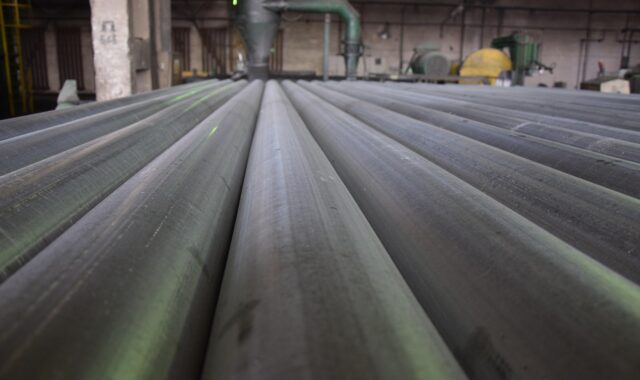
Steels, stainless steels, aluminum alloys, copper alloys, titanium alloys and nickel alloys are common in structural, thermal and precision applications. Metals can often be cast, forged, rolled, stamped, welded, machined, heat treated or additively manufactured. Their process behavior still varies widely. Aluminum is attractive for lightweight parts, but welding and casting often require careful control. Tool steels can provide wear resistance, but they may need heat treatment and grinding after shaping. Titanium offers a strong strength-to-weight profile, yet it is more difficult and costly to machine than many steels.
Polymers
Thermoplastics, thermosets and elastomers are often selected for low weight, insulation, chemical resistance, flexibility or low-cost, high-volume production. Injection molding is widely used when volumes justify tooling. Extrusion is common for continuous profiles, films, tubes and sheets. CNC machining is useful for prototypes and low-volume engineering plastics, while additive manufacturing can support design iteration and small batches. The main limitation is that polymer properties can be highly sensitive to temperature, UV exposure, creep and chemical environment.
Ceramics, glass and advanced hard materials
Ceramics are selected for hardness, heat resistance, electrical insulation and wear resistance. They are usually more brittle than metals, so process selection must account for cracking risk, shrinkage during sintering and the cost of final grinding. These materials are not simply “machined like metal.” Many ceramic parts are pressed, cast, sintered and then finished with abrasive processes.
Composites
Fiber-reinforced composites combine matrix materials with fibers such as carbon, glass or aramid. They can deliver high stiffness-to-weight ratios, but performance depends on fiber orientation, layup, curing, void control and joining design. Processes include hand layup, resin transfer molding, compression molding, filament winding and automated fiber placement. The part design must be built around the process because cutting holes, joining edges or changing fiber direction can reduce performance.
How manufacturing process families compare
A useful way to compare processes is to ask what the process does to the material: does it melt and solidify it, deform it, remove it, join it, build it layer by layer, or modify its surface and internal structure?
| Process family | Typical processes | Best fit | Common constraints |
|---|---|---|---|
| Casting and molding | Sand casting, die casting, investment casting, injection molding, compression molding | Complex shapes, repeatable production, internal cavities | Tooling cost, shrinkage, porosity, draft angles, material flow |
| Forming | Forging, rolling, stamping, bending, extrusion, deep drawing | High-volume metal parts, improved grain flow, efficient material use | Tooling, springback, cracking, forming limits |
| Machining | Turning, milling, drilling, grinding, EDM | Precision features, tight tolerances, prototypes, finishing operations | Material waste, tool wear, cycle time, workholding |
| Joining | Welding, brazing, soldering, adhesive bonding, riveting, fastening | Assemblies, mixed parts, modular construction | Heat-affected zones, distortion, joint access, inspection |
| Additive manufacturing | Powder bed fusion, material extrusion, directed energy deposition, binder jetting, vat photopolymerization | Complex geometry, low-volume production, lightweight structures, rapid iteration | Build size, surface finish, feedstock control, qualification, post-processing |
| Heat treatment and finishing | Hardening, annealing, coating, plating, polishing, shot peening, anodizing | Property improvement, wear resistance, corrosion protection, appearance | Distortion, surface preparation, coating adhesion, process control |
International standards help clarify terminology in newer process areas. ISO/ASTM 52900:2021 defines additive manufacturing as a process that joins materials to make parts from 3D model data, usually layer upon layer, and the ISO page states that this 2021 edition was reviewed and confirmed in 2025. (iso.org) ASTM also describes additive manufacturing standards as covering terminology, process performance, product quality and calibration procedures, which reflects the shift from simple prototyping language toward production qualification. (store.astm.org)
A practical workflow for selecting a material and process
A disciplined workflow reduces the risk of selecting a material that looks good on a datasheet but performs poorly in production. The following sequence applies to many mechanical components, enclosures, brackets, housings and industrial parts.
Define the functional requirements first
Start with measurable requirements. These may include load, stiffness, fatigue life, operating temperature, corrosion exposure, wear, electrical behavior, mass target, appearance, cleaning method, safety factor and expected service life. Avoid choosing a familiar material before these requirements are clear. A low-cost metal may become expensive if it needs several finishing steps, while a higher-cost polymer may reduce assembly work and corrosion risk.
Check material and process compatibility
Next, confirm whether the material can be processed into the required shape. A part with thin ribs, deep pockets and internal channels may suit casting, molding or additive manufacturing better than machining from solid stock. A flat bracket with high annual volume may suit stamping more than milling. A safety-critical welded structure may need a material grade with proven weldability and a process plan that includes inspection and heat control.
Match geometry, tolerance and volume
Geometry and volume often determine the economic route. Machining is flexible and accurate, but it may be inefficient for high-volume parts with heavy material removal. Injection molding requires tooling investment, but per-part cost can fall sharply at high volume. Additive manufacturing can remove tooling and enable complex geometry, but post-processing, inspection and machine capacity must be included in the cost model.
Plan inspection and process control early
Inspection should not be left until the end of the project. Critical dimensions, material certificates, hardness checks, surface roughness, weld inspection, coating thickness and non-destructive testing should be considered during process selection. ISO describes ISO 9001 as a quality management standard used across sectors including manufacturing, and its guidance emphasizes a process-oriented approach and continual improvement. (iso.org) See also: buying guides.
Key trade-offs that affect the final choice
The best route is rarely the one that maximizes a single property. Manufacturing decisions usually involve several trade-offs.
- Strength versus manufacturability: A stronger alloy may be harder to form, weld or machine. The stronger material is not always the lower-risk choice.
- Tooling cost versus unit cost: Casting dies, injection molds and stamping tools can be expensive, but they may be justified when production volume is high and geometry is stable.
- Precision versus throughput: Grinding and multi-axis machining can produce precise features, but they may slow output compared with forming or molding processes.
- Weight versus durability: Lightweight materials can improve product performance, but they may require different joining methods, coatings or fatigue validation.
- Design freedom versus qualification burden: Additive manufacturing can create complex geometries, yet production use may require careful feedstock control, build validation, post-processing and inspection.
Smart manufacturing research increasingly focuses on measuring these trade-offs in real time. NIST describes work on smart manufacturing measurement science that includes material characterization, in-process sensing, monitoring, model-based control, and qualification of materials, machines, processes and parts. (nist.gov) In practical terms, process selection is becoming less about choosing from a static list and more about using measured production data to keep the chosen route stable.
Material-process fit examples
The following examples show how the same product function can lead to different process routes depending on volume, geometry and performance priorities.
Aluminum housing
For a low-volume aluminum housing, CNC machining from billet may be the fastest route because it avoids casting tooling and allows design changes. For a high-volume housing with stable geometry, die casting may reduce unit cost and create thin walls and integrated features. If the housing has cooling channels that cannot be machined, additive manufacturing may be considered, but finishing and inspection requirements still need to be evaluated.
Steel bracket
A simple steel bracket can be laser cut and bent at low to medium volume. At higher volume, stamping may become more economical. If the bracket carries heavy cyclic loads, forging or a redesigned formed part may improve strength. The material grade, bend radius, grain direction and coating should be selected together rather than treated as separate purchasing decisions.
Plastic enclosure
A plastic enclosure can be 3D printed for prototypes, machined from sheet or block for small batches, or injection molded for large production runs. The selected polymer must match temperature, impact, flame, chemical and appearance requirements. If the design includes snap fits, bosses and living hinges, the molding process and material behavior become part of the design itself.
Common mistakes to avoid
- Choosing a material before defining the process: A material may meet property targets but fail on formability, weldability, surface finish or cost.
- Ignoring secondary operations: Heat treatment, coating, deburring, cleaning and inspection can dominate lead time and cost.
- Using prototype results as production proof: A machined prototype does not prove that a cast, molded or printed production part will behave the same way.
- Overlooking joining and assembly: A part material may be excellent alone but difficult to weld, bond, fasten or repair.
- Treating standards as paperwork only: Terminology, qualification and quality standards help align design, production, purchasing and inspection expectations.
Frequently asked questions
What is the relationship between materials and manufacturing processes?
Materials provide the properties a part needs, while processes determine how those properties are achieved in a real product. The two decisions are linked because processing can change microstructure, surface condition, tolerance, strength, residual stress and cost.
Which manufacturing process is the most flexible?
For many mechanical parts, CNC machining and additive manufacturing are flexible because they can support low-volume production and design changes without dedicated hard tooling. However, flexibility does not automatically mean lowest cost or best production stability.
Why can the same material perform differently in two processes?
The same alloy or polymer can have different properties depending on casting cooling rate, forging deformation, molding conditions, heat treatment, print parameters or finishing. Processing history affects internal structure, defects, surface condition and residual stress.
How should a company choose between machining and casting?
Machining is often attractive for precision, prototypes and low-volume production. Casting is often attractive for complex shapes and higher volumes, especially when material removal would be excessive. The choice should compare tooling cost, tolerance needs, surface finish, scrap, lead time and inspection requirements.
Is additive manufacturing replacing traditional processes?
Additive manufacturing is expanding the range of possible designs, especially for complex and low-volume parts, but it usually complements rather than replaces casting, forming, machining and joining. Many additively manufactured parts still require heat treatment, machining, surface finishing and inspection.